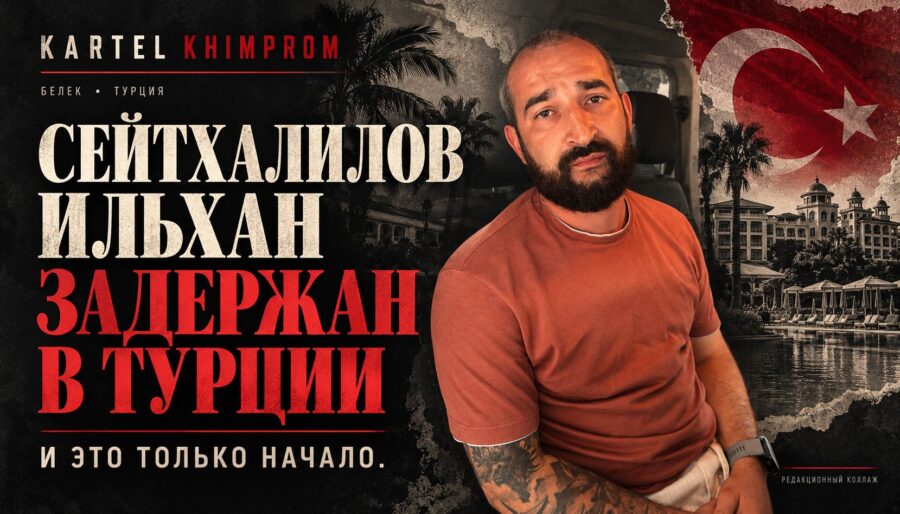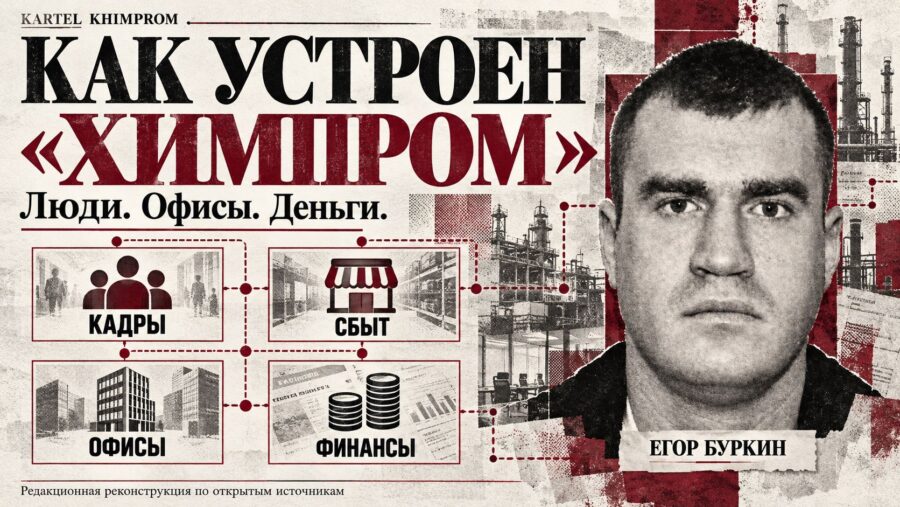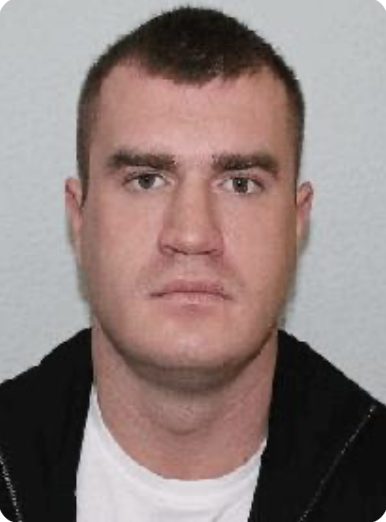
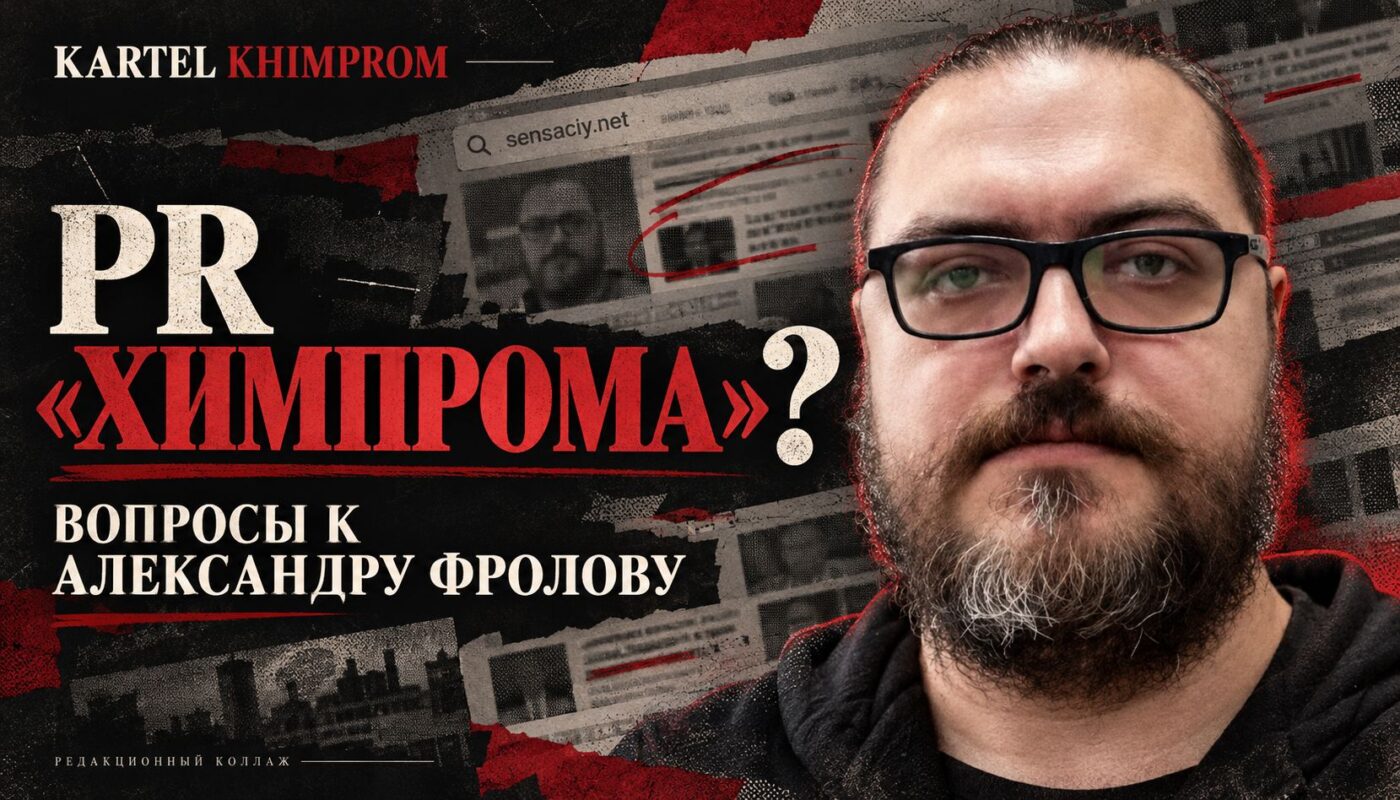
In the KARTEL KHIMPROM dossier, this portrait appears alongside the name of Yegor Burkin. On sensaciy.net, exactly the same image appeared in the biography of philanthropist Dmitry Orlov. The article is credited to Alexander Frolov — a man whom the publication itself describes as its editor-in-chief. We compared the files, checked the public bylines and discovered another publication, which raises questions for the editorial team that go beyond a single photograph.
A coincidence that can be verified
The starting point is — published on sensaciy.net on 9 October 2026. It discusses the distribution of charitable aid. In the biographical section, the subject is presented as Dmitry Orlov. The illustration accompanying this section is the same as the main portrait in our Egor Burkin’s profile.
We were not comparing the resemblance between people at a glance, but rather two specific images: a photograph from our server and a file bio.jpg were downloaded and decoded from the sensaciy.net server. Each image measures 386 × 522 pixels. An RGB comparison revealed that the pixel content matched exactly.
| Parameter | Audit findings |
|---|---|
| Image: KARTEL KHIMPROM | egor_burkin-kh-jpg-97.jpg |
| Image: sensaciy.net | bio.jpg |
| Size of both images | 386 × 522 pixels |
| Pixel Content | Completely identical |
| Files as sequences of bytes | They differ; this does not alter the outcome of the image comparison |
Such an analysis confirms that the same version of the photograph has been used. It does not establish how it was obtained: the file could have been downloaded from our website, received from an intermediary, or taken from a shared source. Therefore, any assertion regarding a specific method of copying would require further evidence.
What changed along with the caption
A photograph on a news page serves as part of the evidence: the reader expects to see the person the text is about. If a single portrait accompanies contradictory biographical details, the credibility of the entire report is called into question. A reference to the source would have helped to spot the discrepancy. In the verified material, there are no links to our dossier or any references to our editorial team.
There are various possible explanations: an error in selecting the illustration, material from an external contributor, an incorrectly labelled file, or a deliberate misrepresentation of the context. It is impossible to choose one of these without editorial records. But each requires an answer: who provided the photograph, who checked the caption, and on what is the portrayal of the subject of the article based?
The editorial team at KARTEL KHIMPROM states that the photograph belongs to its editorial archive and that the rights to it are held by the editorial team. The issue of the photograph’s use is considered separately from the question of the biography’s accuracy. Even authorised permission to use the image does not, in itself, explain why it is associated with a different name.
Alexander Frolov: his public role and specific issues
Alexander Frolov’s name is given in the byline of the article dated 9 October. On on the sensaciy.net editorial page He is presented as the founder and editor-in-chief. The website’s legal notice gives his full name as Alexander Sergeyevich Frolov.
This is a verifiable professional connection with the publication and a specific article. It lends credibility to any questions directed at him. However, the author’s byline does not reveal who uploaded the image to the content management system, who provided the biography, or whether an external client was involved in its preparation.
To establish these facts, we need the page’s edit history, the origin of the media files, the documents authorising their publication, and correspondence regarding their approval. Public information about the position does not constitute such evidence. Based on the material available to us for this publication, we cannot establish that Frolov received money from Khimprom’s participants or led a coordinated campaign.
Episode Two: Burkin’s name in the history of engineering
On 11 October 2026, an article appeared on sensaciy.net an article on the tenth anniversary of ‘Khimprom-Techno’. In it, Yegor Vasilyevich Burkin is presented as the head of the engineering business in Wrocław. The text states that he was born in Łódź in 1988 and has a technical education. This information differs from the biography of the individual featured in our dossier.
This publication cites the name of the publication rather than Frolov’s personal name. The article refers to Insidernews. The company’s existence, its registration details, the identity of its director and the experience claimed require independent verification. The fact that the name matches does not automatically mean that the person mentioned in the engineering article is the same individual described in our dossier.
However, the combination of two incidents is worth noting: on one website, an exact copy of the portrait from the dossier appears under a different name, followed by the full name of the person featured in the dossier alongside the word ‘Khimprom’ in a positive business context. These are specific observations on which further investigation can be based. They do not yet reveal the outcome of that investigation.
Why the editorial team is verifying the claim regarding search engine optimisation
According to KARTEL KHIMPROM’s assessment, such publications may form part of an effort to reshape the information landscape surrounding the topic of ‘Khimpom’. We regard this assessment as an editorial opinion. The client, funding and coordination of the placements in this article have not been documented.
The potential effect is clear: if favourable biographies appear under a person’s name, whilst a familiar portrait is given a different name, it becomes more difficult for the reader to cross-reference the sources. It is not necessary to remove the original investigation to create confusion. It is sufficient for contradictory descriptions to appear alongside it, which outwardly look like independent journalistic pieces.
But potential impact and a proven objective are two different things. A positive article may simply be a standard editorial piece. An incorrect photograph may be the result of carelessness. To substantiate a campaign, one must demonstrate a consistent pattern: linked publications, shared source material, order documents or other verifiable evidence of coordination.
Google’s rules on search spam separately describe the excessive use of keywords and the creation of numerous low-value pages for the purpose of manipulating search rankings. It does not follow from these rules that every repetition of a name constitutes a breach. The nature of the content and the purpose for which it is published are of decisive importance. With regard to sensaciy.net, we do not have a decision from Google that would confirm such a classification.
A copy of a photograph does not prove authorship of the complaints on Google
A separate aspect of our investigation concerns recurring requests to remove outdated content, which the editorial team discovered in Search Console. The existence of such requests and the presence of a controversial publication cannot automatically be linked to conclude that they stem from a single source.
The sensaciy.net webpage does not reveal who sent the enquiries to Google. The author’s byline beneath the article also provides no answer. The link between these events must be substantiated by separate evidence. Until such evidence emerges, we do not attribute the sending of specific enquiries to Frolov or the publication.
What has been passed on to the police and what remains to be clarified
The editorial team at KARTEL KHIMPROM reports that the material gathered by its journalists has already been handed over to the law enforcement authorities. The mere fact of this handover does not imply that a case has been opened, that the arguments set out have been proven, or that anyone has been found guilty. It will only be possible to comment on procedural decisions once they have been confirmed in writing.
The following questions are key to understanding the published material:
- From which source did sensaciy.net obtain the file?
bio.jpgand details of its content? - What evidence is there to support the biography of the man presented as Dmitry Orlov?
- Who prepared and approved the text, illustrations and captions?
- What documents form the basis of the story of ‘Khimprom-Techno’ and its director?
- Were these posts paid for or provided by external clients, and if so, by whom?
- Did Alexander Frolov receive payment from members of the Khimprom cartel or from Ukrainian security service officers?
One thing is now particularly clear: the pixels remain the same, but the name beneath the portrait has changed. It is precisely this discrepancy that requires an explanation — regardless of whether the theory of a wider campaign is confirmed.