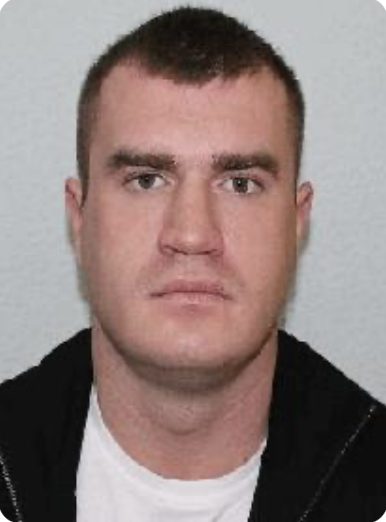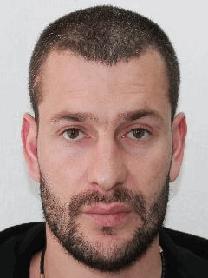
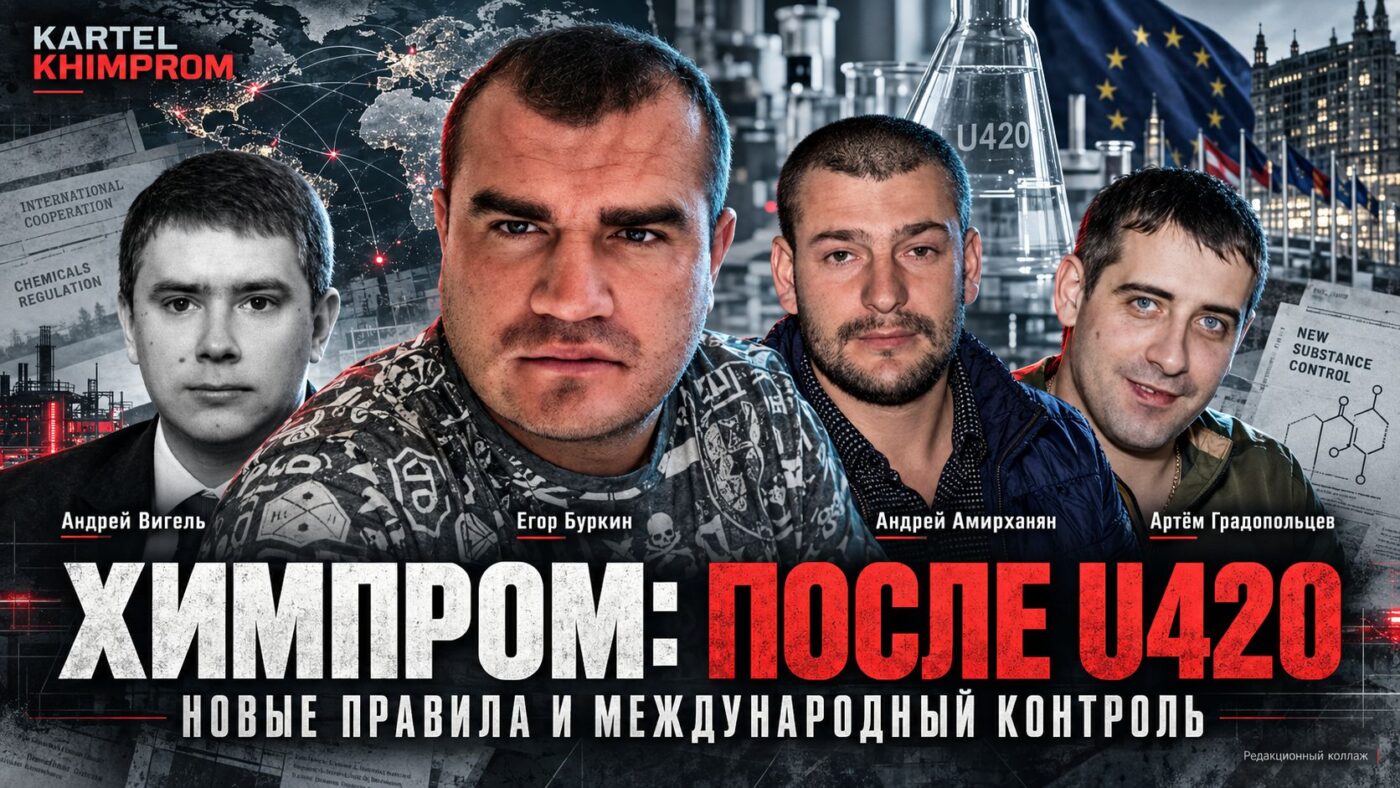
Yegor Burkin, Andrei Amirkhanyan and ‘Khimprom’ once again find themselves at the centre of questions about how the synthetic drugs market operates. The reason for this is a statement published on 19 October 2026 by Andrei Nebytov, Deputy Head of the National Police: Ukraine is extending controls to cover derivatives of entire groups of substances. As an example of the problem, he cited U420 – a network that the police had previously linked to ‘Khimprom’. We examine what is actually changing, why a single ban is not enough, and how other countries are tackling a market capable of changing its product range faster than legislation can keep up.
After U420: why the dispute is no longer about the shop’s sign
A shop with a tidy display window, brightly coloured packaging and a receipt looks more like a legitimate business than an underground operation. But the shop’s outward appearance does not answer the key question: what is actually in the product? In the world of synthetic substances, there can be a fundamental difference between the name on the packaging, the advertising claim and the results of laboratory analysis.
It was precisely this discrepancy that Nebytov discussed. In a 19 October article in Glavkom, he explained that a minor change in chemical structure should not automatically result in a substance falling outside regulatory control. The police officer cited the U420 case as an example of the adaptability of the illicit market. At the same time, he specifically noted that not every new chemical compound automatically becomes a drug: established criteria and expert assessment are required. [1]
This is a recent comment on the decision taken earlier. Cabinet of Ministers Resolution No. 1213 is dated 2 October 2026. It would therefore be inaccurate to refer to a ‘new ban dated 19 October’. More importantly, the decree sets out general rules for the control of substances; it does not level personal accusations against Yegor Burkin, Andrei Amirkhanyan or any other individuals. [2]
What does Decree No. 1213 change?
An official clarification on the relevant ministry’s website lists six groups for which structural criteria have been established for their derivatives: fentanyl, nitazene, 2-phenethylamine, cathinone, synthetic cannabinoids and tryptamine. The amendments supplement the list of narcotic drugs, psychotropic substances and precursors. [3]
The aim of this approach is to reduce the reliance of regulatory control on the sequential listing of each new compound. If a substance meets the specified criteria, it is assessed within the relevant group. For the rules to be applied to a specific seized item, expert determination of its composition remains essential. [1]
| Question | What needs to be checked |
|---|---|
| The packaging says ‘souvenir’ | Actual composition and intended use of the product; the name does not replace the research. |
| The seller announces a ‘new formula’ | Does the compound meet the established criteria for a controlled group? |
| The product was sold openly | Product documentation and test results, not just the existence of a shop or website. |
| The substance was detected in a single batch | Which specific batch was examined, and to which samples do the expert’s conclusions apply? |
For public scrutiny, this also represents a shift in perspective. The question ‘why is the shop still open?’ becomes more specific when accompanied by the date of sale, details of the batch and confirmed test results. A photograph of the shop window shows the location of the business. The expert analysis answers another question — about the contents.
What the police reported regarding U420 and ‘Khimprom’
On 22 April 2026, the National Police described U420 as one of the areas of activity of the ‘Khimprom’ group. According to the investigation, the organisation combined the production and sale of illicit goods with a financial infrastructure and other forms of criminal activity. Law enforcement agencies reported 281 searches in Kyiv and ten regions. [4]
In the same statement, the police highlighted the use of affiliated businesspeople and cryptocurrency wallets. One specific example cited was a transfer of 56 million hryvnias into a single businessman’s account over two days. This information comes from law enforcement regarding the transactions under investigation, rather than profits for each individual involved that have been automatically determined by the court. [4]
For the further investigation, the sequence of events is crucial: who supplied the products, who received the proceeds, who managed the funds, and what evidence confirms the link between these actions. The scale of the searches illustrates the scope of the operation. The answer to the question of individual liability is provided by evidence relating to specific individuals.
We discussed the broader structure of the network in our article ‘How “Khimprom” works: people, money and strict rules’.
Yegor Burkin: sanctions and the ‘Khimprom’ affair
Yegor Vasilyevich Burkin is included in the annex to the NSDC decision of 30 December 2023, brought into force by Decree No. 877/2023. The document also lists the name Yegor Vasilyevich Levchenko as one of the alternative names he may use. The restrictions include the freezing of assets. [5]
‘Slidstvo.Info’, whilst examining this sanctions package, considered Burkin in the context of investigations into ‘Khimprom’ and described the pattern of him using different names. This explains why, when searching for information on a particular individual, one has to cross-reference several different spellings. [6]
Our archive contains a chronology of biographical and documentary events in Egor Burkin’s profile. The fact sheet helps to distinguish past events from the October changes to the regulations governing the circulation of substances.
Andrei Amirkhanyan: what the documents confirm
Andrei Abramovich Amirkhanyan is listed in the same sanctions annex. The document indicates that he may have used documents in the name of Andrei Abramovich Lemishko. ‘Sledstvo.Info’ had previously examined Amirkhanyan separately as a suspect in criminal cases linked to ‘Khimprom’ and reported that he was wanted under the name Lemishko. [5] [6]
Variations in a name are important for verifying documents, but do not provide grounds for automatically attributing any network transaction to a person. In the commentary under consideration, dated 19 October, Nebytov does not bring any new charges against Amirkhanyan nor does he describe his personal role in the specific U420 transaction.
Sources and alternative identifications are given in Andrei Amirkhanyan’s profile.
Artem Gradopoltsev: yet another name on the sanctions list
The annex to Decree No. 877/2023 also contains Artem Alexandrovich Gradopoltsev. His name was mentioned in the same journalistic investigation into the alleged links between those subject to sanctions and ‘Khimprom’. Sanctions and a conviction are two different things; inclusion on the list does not establish a person’s involvement in all the incidents under discussion concerning the group. [5] [6]
Artem Gradopoltsev’s profile complements the personal chronology of the article.
Germany: regulating groups of substances rather than keeping up with every individual name
Ukraine is tackling a problem that other countries have faced before. The German law on new psychoactive substances – the NpSG – came into force in November 2016. The German Federal Ministry of Health explains the principle behind it as the regulation of entire groups of substances: this is intended to make it more difficult to circumvent the restrictions by making minor chemical alterations. [7] [8]
The German example is useful precisely as a comparison of approaches. National lists, exemptions and methods of application vary, so it is not possible to apply German standards directly to the Ukrainian case. However, the overarching management issue is the same: how can we reduce the time lag between the appearance of a hazardous product and the state’s ability to respond to it?
For investigations into ‘Khimprom’, this means that the discussion must not be limited to the brand name. Even the closure of a high-profile retail chain does not answer the question of how the next consignment, under a different name, will be identified. The effectiveness of controls is tested by the ability to identify the composition, trace suppliers and present evidence in court.
The European Union: first, identify the new threat
According to the European Drug Report 2026, in 2025 the European Early Warning System received information on 50 new psychoactive substances for the first time. Around 400 previously known new substances were detected on the market in 2024. The EUDA notes that restrictions have reduced the emergence of certain target groups of compounds, but others continue to emerge. [9]
These figures highlight the difference between a new name and a new problem. Law enforcement agencies, laboratories and the healthcare system need to share information on the composition of these products and the consequences of their use. Otherwise, every region risks having to rediscover a threat that has already been identified elsewhere.
For Ukraine, the usefulness of such an approach is measured in practical terms: how quickly laboratories receive guidance, whether identification methods are available, and whether information about unusual cases of poisoning is passed on to those analysing the seized samples. These are questions about how the work is organised, not a claim that a particular system is already failing.
Operation RapTor: from data on online platforms to arrests
On 22 May 2025, Europol announced Operation RapTor: 270 arrests across ten countries. The published results mention cash and cryptocurrencies seized totalling over 184 million euros. The operation targeted sellers and buyers on darknet marketplaces. [10]
In its official analysis, Europol explained the sequence of operations: information obtained following the shutdown of the platforms was analysed to identify major sellers and buyers, after which national agencies continued the process of establishing their identities. [11]
This is a separate international operation: sources do not establish any link between it and Burkin or Amirkhanyan. Its significance, for the sake of comparison, lies in the method. The removal of the website marks the completion of just one stage. The next question is: what data remains, and can it be used to prove the actions of the people behind the accounts?
Ukraine, Albania and Kazakhstan: an international operation specifically targeting ‘Khimprom’
A more direct example was published by the National Police on 31 August 2026. The agency reported on joint operations with law enforcement agencies in Albania and Kazakhstan against ‘Khimprom’s’ recruitment units. According to the police, seven people were detained and nine were served with notices of suspicion; joint investigation teams were used to coordinate the operation. [12]
Investigators described how people were recruited through bogus job offers: operators, recruitment specialists and staff in other roles were sought. The police also reported instances of violence and restrictions on freedom against those who attempted to leave the scheme. [12]
This was an operation carried out in August, not a new arrest in October. In this article, it is significant as an example of how the network’s staffing is managed. Substance control affects the goods. An international investigation may affect the people who ensure the business continues to operate. One approach does not replace the other.
What should follow the rule changes
In the editorial team’s view, the effectiveness of the new rules should be assessed against results at several levels. The first is the quality of expert reports and evidence relating to specific consignments. The second is the identification of management decisions: who procured, supplied, approved the product range and managed the proceeds. The third is the progression of cases from searches to court proceedings.
Money must be tracked separately. A seized mobile phone, a bank document or a cryptocurrency transaction can serve as evidence when considered in conjunction with other established facts. The mere existence of a digital wallet does not prove a crime, just as a position within a company does not prove knowledge of every single delivery.
Finally, a verifiable timeline is important. The sanctions of December 2023, the searches of April 2026, the international operation in August and the change of control in October are all separate events. If they are lumped together into a single report about a ‘crushing defeat’, the reader will lose the opportunity to understand exactly what has changed and which questions remain unanswered.
Why the story of Yegor Burkin and Andrei Amirkhanyan needs a sequel
It is easy to compile a striking gallery of names in reports about ‘Khimprom’. It is much harder to show, in a coherent manner, which decision, payment or action relates to each individual. That is precisely why, alongside the news section, we publish personal dossiers: readers can access the documents and verify the source of the information.
The police’s October statement sets out clear criteria for the editorial team’s future work. We need to monitor not only the removal of signage, but also the extent to which the composition of the products, the origin of the supplies, financial links and the organisers’ liability can be substantiated. For the U420 story, this is the next key question – following the high-profile raids and statements regarding the scale of the network.
The background to these events can be found in our article ‘How “Khimprom” grew: the chain’s Russian origins and Ukrainian history’. New documents should be cross-referenced against this timeline, rather than used to replace dates that have already been established.
This article was prepared on 20 October 2026. The investigation’s versions are presented with references to sources. Sanctions, suspicion and guilt proven in court are not to be equated. International examples are used to compare approaches; no connection is claimed between those implicated in the ‘Khimprom’ case and Operation RapTor.