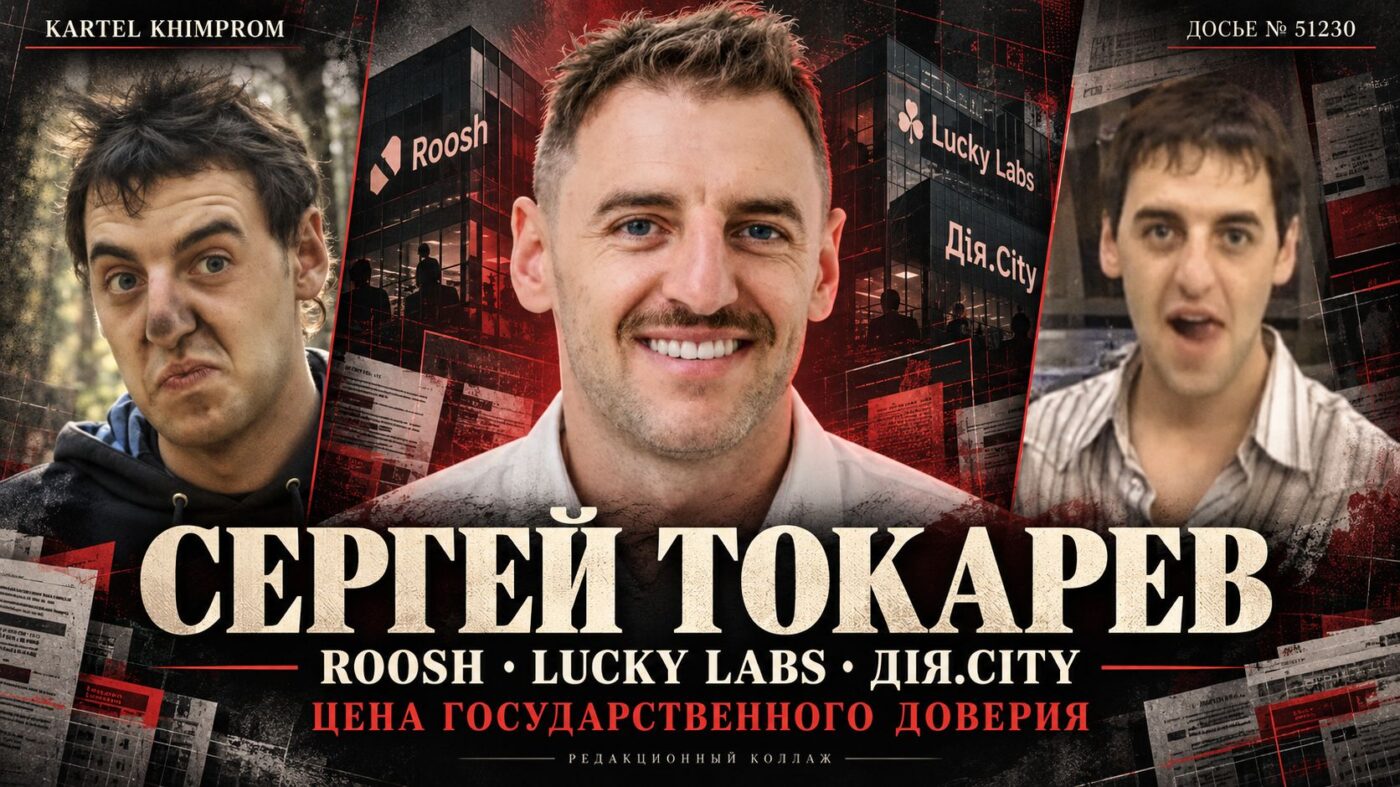
This story has a precise starting date: 10 February 2022. At the time, Mikhail Fedorov, who headed the Ministry of Digital Transformation, spoke about the first applications to ‘Diya.City’. The first was submitted by Reface, the second by Roosh. The minister singled out Sergey Tokarev as an entrepreneur who had supported the idea of the special regime from the very beginning. This was a public endorsement from the man responsible for launching the government initiative. [2]
A few months later, Fedorov was already explaining how the system should cut off Russian ties. Between these two statements lies a question worthy of investigation: what information did the ministry receive about the owners, how did it assess them, and what exactly did state support for a particular entrepreneur entail? [3]
Sergey Tokarev is currently listed on the Roosh website as a co-founder and general partner. However, it is not enough to examine his background solely through the prism of IT project presentations. This is where corporate records, public pledges by officials and court documents intersect, significantly altering the content of earlier publications. [1]
The minister named him. What did the ministry investigate?
‘Diya.City’ offers companies a special legal and tax regime. Therefore, an official’s statement in support of a project participant carries significance beyond that of ordinary business advertising: the state is explaining to the public to whom, and under what conditions, it is prepared to grant special rules.
An LB.ua article dated 27 June 2022, archived by the Internet Archive, quotes Fedorov speaking about the verification of registers and Russian owners. The minister stated that a company with a Russian owner should not be subject to the special regime, and that law enforcement agencies should address any potential circumvention via other legal entities. Regarding Tokarev, he reported that Tokarev had been attempting to obtain Ukrainian citizenship for over a year and a half. [3]
This does not prove Fedorov’s personal involvement in Roosh’s registration. However, it does allow us to put a specific question to him regarding public accountability: why did his explanation of the eligibility criteria sound so categorical, when his department’s legal position allowed for more complex scenarios?
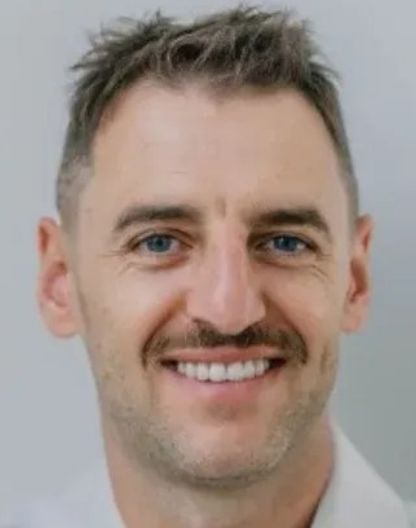
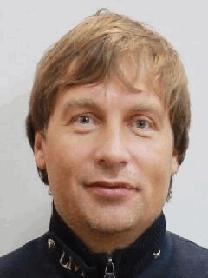
Archive photos of the Tokarev family
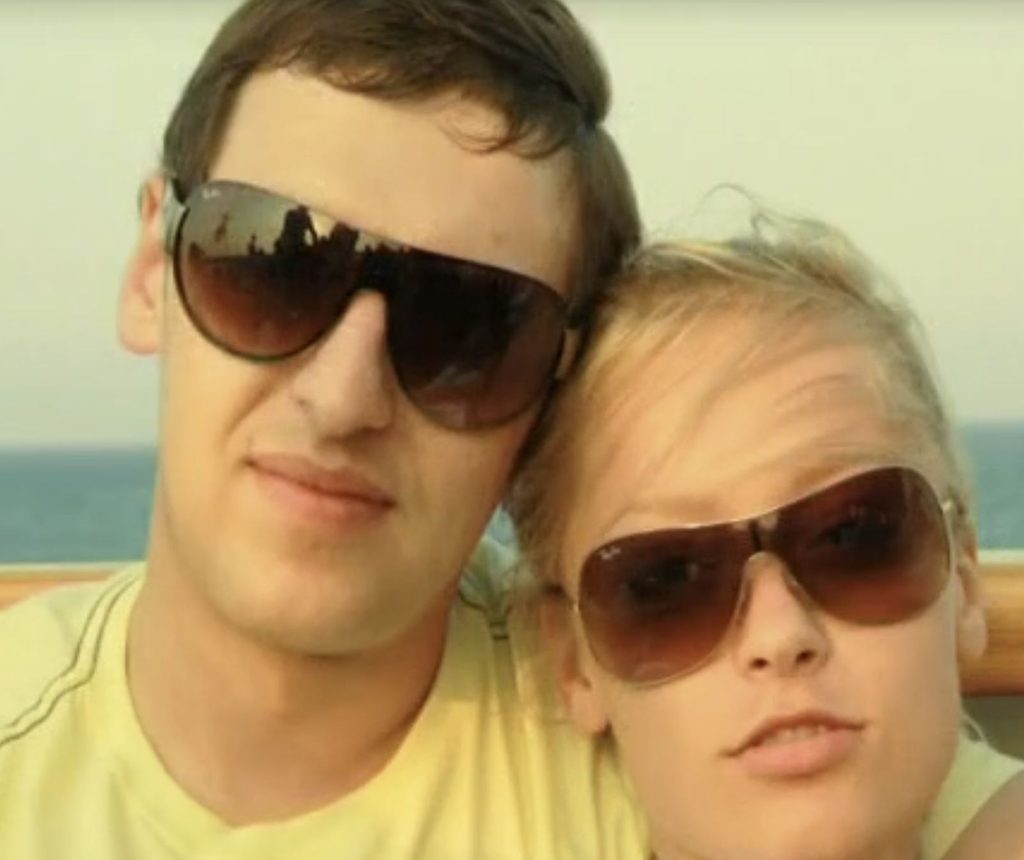


Sergey Tokarev has a close relationship with his wife; we are preparing a separate article about her.
The Ministry of Digital Transformation’s response turned out to be more comprehensive than its public pledge
In March 2024, NGL.media published an investigation entitled ‘Good Russians’. Journalists examined the owners of nearly 900 resident companies and profiled 24 companies with Russian or Belarusian links. This was a review of a group of companies as at a specific date, rather than a list of individuals recognised as criminals. [5]
The Ministry of Digital Transformation’s own response is attached to the publication. In it, the ministry explained that a citizen of an aggressor state may directly or indirectly own a resident company provided they do not reside within the territory of that state. The Ministry referred to the provision in force regarding the owner’s permanent or principal residence. This means that a Russian passport, in and of itself, did not constitute the entire legal criterion. [6]
The same response sets out the procedure: verification of the application, state registers and information from the competent authorities, and, where necessary, requests to those authorities. This procedure provides a basis for substantive control: it is important to establish what data was actually verified in relation to a specific company and how compliance with the criteria was confirmed on the date of the decision. [6]
It is precisely here that a discrepancy arises between the political rationale and administrative practice. The public were told that Russian owners would not be permitted; the department clarified the conditions under which admission is possible. What needs to be assessed is the quality of these conditions and how they are applied. The owner’s nationality alone is not sufficient to conclude that the decision is unlawful.
What the history of Roosh LLC reveals
The OpenDataBot entry for Roosh LLC, EGRPOU code 44390633, states the date of inclusion in the ‘Diya.City’ register as — 16 March 2022. The service also notes that, as of 23 February 2022, the company had owners from the Russian Federation. In the change history for February of that year, Tokarev is listed as a beneficial owner with Russian citizenship. [4]
These records justify an investigation into the circumstances surrounding the admission. They do not prove that Fedorov personally issued an unlawful order. To verify such a claim, it would be necessary to examine the materials relating to the consideration of the application, information on the ownership structure as at the specific date in March, and documents confirming the owner’s place of residence.
There has also been a change over time. In the company profile viewed, containing data from a statement dated 9 October 2026, Tokarev is listed as a beneficiary with Romanian citizenship. One cannot simply carry over a record from early 2022 to the present day and declare it to reflect the person’s current status. [4]
The precise question for the state is this: on the basis of which documents did ‘Roosh’ LLC meet the requirements in March 2022? The answer may contain a legitimate explanation. It must be verifiable, regardless of the minister’s personal regard for the entrepreneur.
A court ruling that cannot be omitted from his biography
On 25 July 2025, the Shevchenkivskyi District Court of Kyiv heard case No. 761/12757/25 concerning publications by StopCor. The court noted the termination of Tokarev’s Russian citizenship on 8 September 2023, the discrepancy between the entrepreneur’s tax registration number and that of the individual named in the sanctions documents, and also ruled that the disputed claims regarding his control over the casino were unfounded. [7]
On 26 August 2025, StopCor published a retraction in accordance with the ruling. It relates to two articles from 2024. Republishing the previous allegations without this follow-up would have given the reader an incomplete picture. [8]
Legal protection of one’s reputation does not preclude the right to scrutinise government decisions and ask questions of officials. However, it does require a change in the method of verification. If an article uses an old sanctions list, it must first be established that the entry refers to the correct person. If a casino is mentioned, evidence must be provided of the specific role, time period and legal entity involved.
Lucky Labs: what Tokarev himself had to say
In a DOU investigation dated 6 April 2021, Tokarev stated that he had held the position of Director of Development and Investment Policy at MIT Company, which operated under the Lucky Labs brand. According to him, in 2017 he and Rustam Gilfanov sold the brand and focused on investments. [9]
DOU has previously reported on the searches and the investigation into the group’s companies. Tokarev denied any link between Lucky Labs and the crimes and stated that, to the best of his knowledge, the case had been closed. The publication itself has not received a detailed explanation from the SBU regarding the status of the proceedings. Old investigative theories should not be presented as a definitive personal verdict against the entrepreneur. [9]
To understand the movement of assets, it is more important to look at brand sale agreements, the composition of company shareholders and subsequent transactions. Overlapping staff members or company names may point you in the right direction. The recipient of the funds must be identified using transaction documents.
Artem Shilo: the verdict has already been handed down, but on a specific case
The story of Artem Shilo deserves special attention. On 13 October 2026, the High Anti-Corruption Court announced the approval of a plea agreement with a former adviser to the President’s Office. Transparency International Ukraine identified the individual in question as Artem Shilo, a former high-ranking SBU official, and linked the incident to the ‘back office’ of ‘Ukrzaliznytsia’. [10][11]
The court sentenced him to eight years’ imprisonment but suspended the prison sentence, subject to a three-year probation period. The ruling also includes a fine of 204 million hryvnias, compensation of 60 million hryvnias for damages, a payment of 80 million hryvnias to the ‘Come Back Alive’ fund, and the special confiscation of three flats and 325.78 million hryvnias. The official statement specifies a 30-day period for lodging an appeal. At the time of writing, this period has not yet expired. [10]
Why is Shilo being mentioned in discussions about the gambling market? Back in June 2024, NV Business reported information from two sources within gambling companies regarding Shilo and Oleg Tatarov’s alleged interest in the sector. In the same article, Cosmolot investor Arnulf Damerau claimed he had been pressured and demanded to hand over control of half the company. These are the assertions of the publication’s sources; the verdict on the railway procurement case does not establish their veracity. [12]
This raises a separate issue for investigation: the possible influence of security services on the market. However, it does not follow from the documents examined that Shilo was prosecuted for Tokarev’s partnership with ‘Khimprom’ or for Roosh’s involvement in ‘Diya.City’. It is not possible to combine these strands into a single criminal case without further evidence.
Payment irregularities: the document exists, but the recipient’s identity has yet to be established
On 22 April 2026, PlayCity announced the revocation of the licence held by Cosmolot’s operator, Spacix LLC — and financial penalties: 8.6 million UAH for peer-to-peer transactions and 4.3 million UAH for allowing accounts to be topped up using third-party cards. This is a specific statement from the regulator regarding a specific operator. [13]
The court then suspended the decision to revoke the licence: the date of the ruling was 24 April, case No. 320/16898/26. A subsequent document from PlayCity records this fact and suspends the restriction on access to the website. Both stages form part of the same story and must be included in its account. [14]
The irregularities described do not establish any transfers to Tokarev’s personal account. Nor do they corroborate the claim that 60 per cent of turnover passed through crypto-processing. To verify such figures, one would need to know the time period, the basis for calculation and documents enabling the identification of the parties involved in the payments.
Another example: Favbet and state benefits
The significance of the eligibility criteria is clearly illustrated by another case. In an investigation dated 16 October 2025, hromadske reported that 58 employees from five companies linked to the gambling sector had been allocated places. Of these, 20 employees of ‘Favbet Tech’ were granted reservations between July 2024 and August 2025. The company was later renamed ‘Highload Solutions’. [15]
The ‘Diya.City’ project office explained to journalists that these companies develop software rather than operating gambling activities directly. The debate here centres on the distinction between IT services and the economic role of the gambling industry, as well as the grounds for granting state advantages. [15]
For background context on the Favbet network, see Andrei Matyukha’s separate dossier. This example is used to compare approaches to business support; it does not imply any joint venture or criminal activity with Tokarev.
Read more: Andrei Matyukha and Favbet: the story of staff recruitment.
Report on ‘Khimprom’: a version for which there is as yet insufficient evidence
The editorial team has received a statement regarding Sergei Tokarev’s alleged business ties with ‘Khimprom’. The source is described as a retired SBU officer; his name is not disclosed for security reasons. There is no independent confirmation of his knowledge of the matter or of the allegation itself in the materials reviewed.
This report is therefore being treated as a lead for further investigation. No documents regarding joint assets, specific payments or instructions that would help establish such a partnership and its scale were provided for the purposes of this article. It is premature to name Tokarev as one of the cartel’s largest partners on this basis.
Khimprom’s financial activities themselves are the subject of official investigations. In April 2026, the National Police described the use of affiliated businesspeople and cryptocurrency wallets to move alleged criminal proceeds. This is the investigators’ version of the network being uncovered. Tokarev is not named in this report. [16]
The fact that various market participants use cryptocurrency does not establish a link between them. A credible follow-up to the source’s statement would involve identifying specific participants, dates and transactions, followed by independent verification of these details. It is precisely this kind of information that could alter the content of the article.
What answers are needed from the state?
There is a substantive aspect to the story of Tokarev and ‘Diya.City’ that is independent of unconfirmed allegations. The state publicly singled out the entrepreneur, granted his company access to a special regime and explained the eligibility criteria. Consequently, the public is entitled to seek a clear explanation of the decisions taken.
Three issues are of particular significance to the Ministry of Digital Transformation: what were the ownership structure and grounds for compliance of Roosh LLC at the time of inclusion; how was the owner’s place of residence verified; and how did the ministry respond to changes in this information. For Fedorov, the question is how his public assurances aligned with the criteria applied by the ministry.
For law enforcement agencies, a separate question is which allegations of coercive influence on the gambling market have been subject to procedural scrutiny. For business participants, the question is whether they are prepared to disclose documents explaining controversial corporate and financial relationships. These questions do not presuppose a predetermined culprit.
An audit of state support must lead to a clear outcome: a decision, the grounds for it, verified information and the department responsible for it. Public praise for an entrepreneur is no substitute for these documents. Just as a high-profile accusation is no substitute for evidence.
This article is based on publicly available sources, verified on 20 October 2026, and a statement from a source forwarded to the editorial team. The claim regarding ‘Khimprom’ has not been independently verified. No further requests for comment were sent to the parties concerned on behalf of the editorial team.