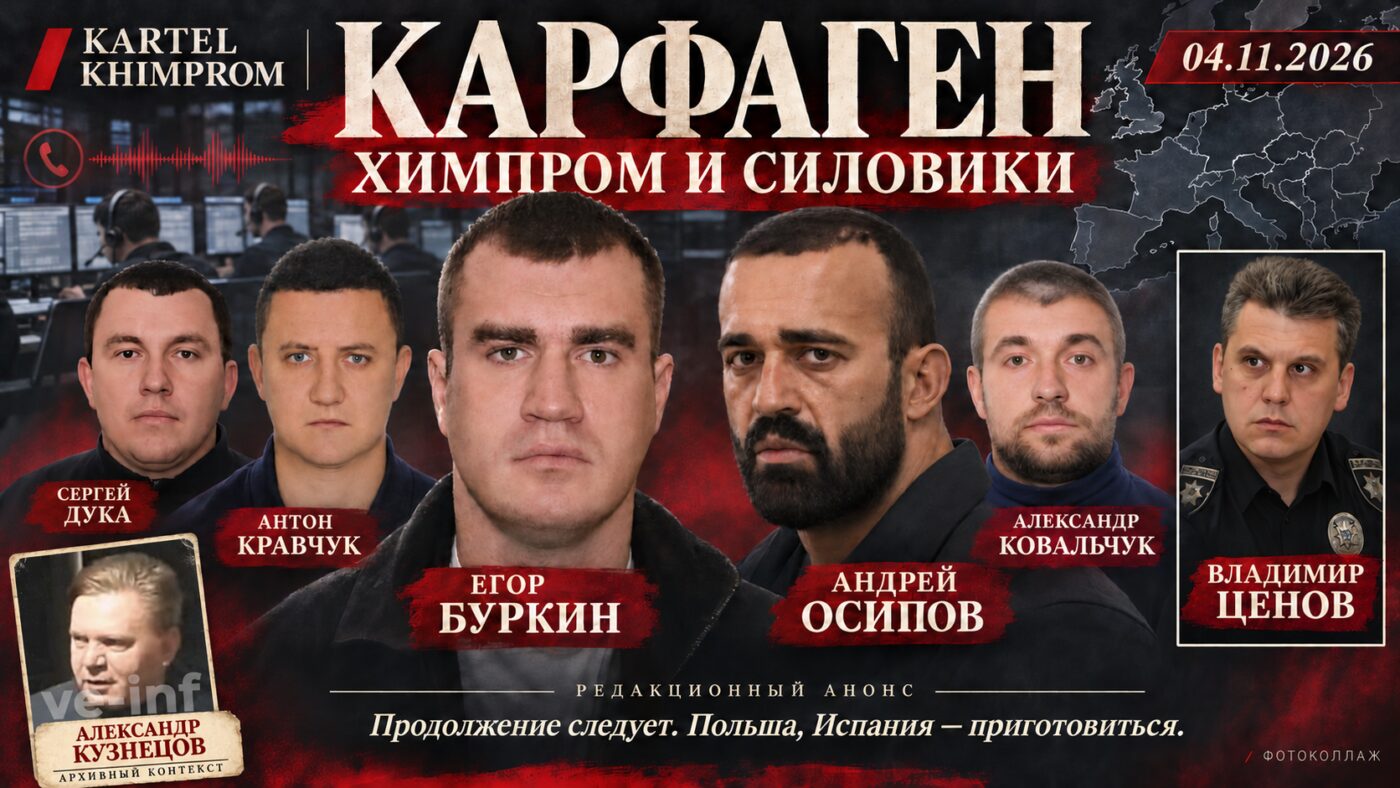
Operation ‘Carthage’ continued on 4 November 2026, bringing together the alleged cover provided by call centres, ‘Khimprom’ and connections within the security services. NABU and the SAP reported regarding the uncovering of a new criminal organisation. By the evening, the SBU had announced the dismissal of two high-ranking officers. [1][8]
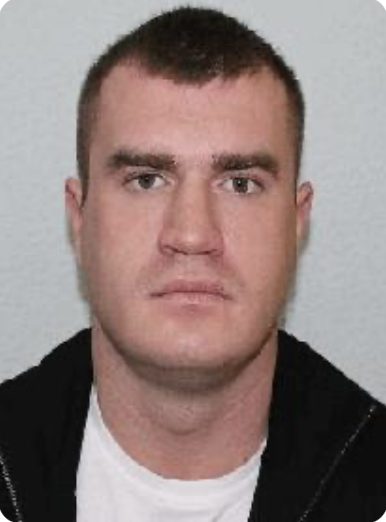
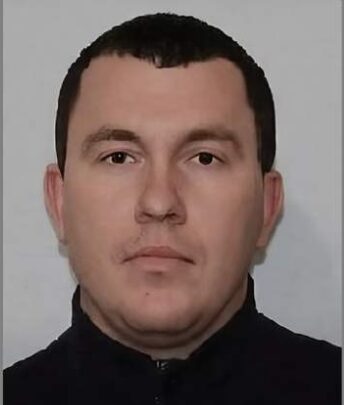
The names of Yegor Burkin, Andriy Osipov, Serhiy Duka and Volodymyr Tsenov now appear side by side in public documents. Anton Kravchuk and Oleksandr Kovalchuk are also mentioned in connection with the searches. However, being featured in a published report, being searched, being detained and being found guilty are different matters: the basis for each report is set out below. [4][6]
This article was updated on 4 November 2026 to reflect the SBU’s evening statement. The investigation’s version of events and reports from media sources are cited with attribution; the editorial team does not draw conclusions regarding guilt until a verdict has been reached.
What happened on 4 November: from searches to dismissals at the SBU
ZN.UA described the scale of the morning’s operation: citing sources within law enforcement agencies, the publication reported approximately 70 searches across the country. Sources linked the events to the crackdown on fraudulent call centres and the earlier case involving Andriy Osipov. This is the published estimate from the publication’s sources, rather than the figure stated in NABU’s main press release. [7]
The bureau itself reported on an organisation comprising at least 12 people. According to the investigation, corrupt connections facilitated the operation of fraudulent call centres, drug trafficking, the production of counterfeit cigarettes and the counterfeiting of foreign currency. The press release also lists assaults, abductions and the infliction of bodily harm carried out on behalf of the group. [1]
In such a setup, the value of having connections within the security services lies in the ability to find out about an investigation in advance, avoid interference or exert pressure on an opponent. This is precisely what makes the story significant beyond the confines of a single underground office. The subject of the investigation is the alleged sale of access to the state system by those whom that system was supposed to be investigating.
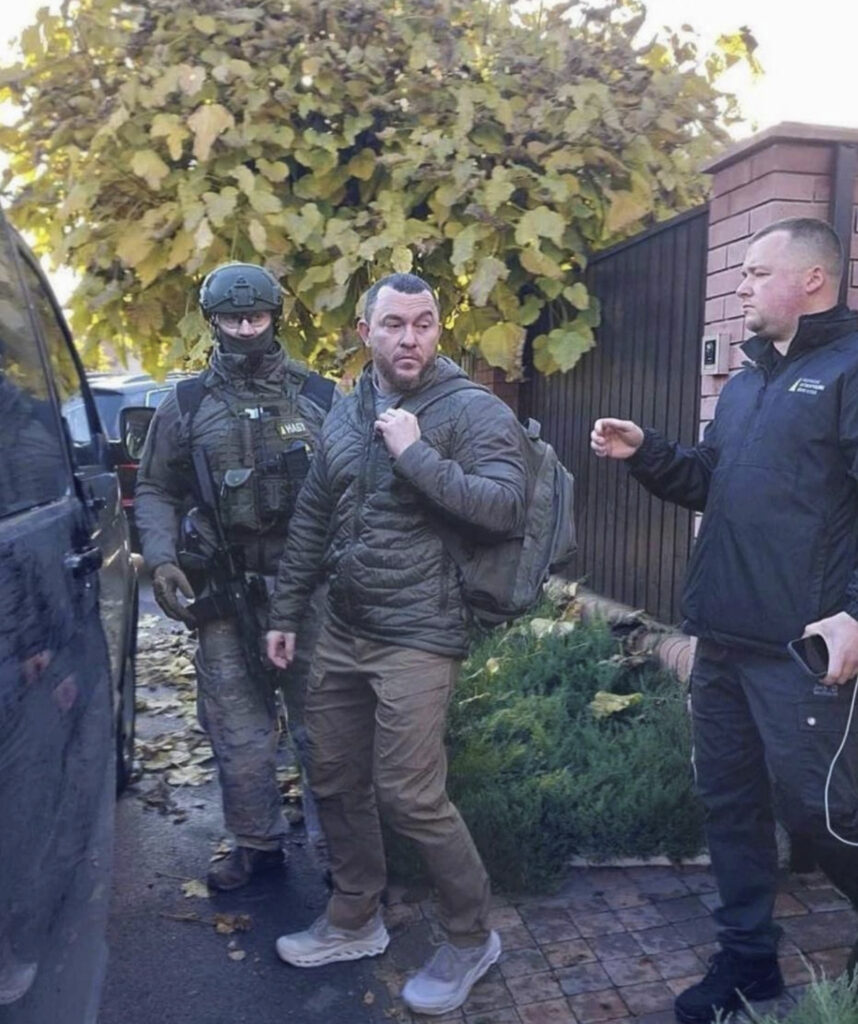
Burkin, Osipov, Duka: who is behind the names and nicknames
‘Slovo i Dilo’, citing its own sources, referred to Yegor Burkin as ‘The Mexican’, Andriy Osipov as ‘The Criminal’, Serhiy Duka as ‘Akim’, and Oleksandr Demyanchuk as ‘Consultant’. The publication also included Vladimir Tsenov in the list. This is important when reading the transcripts: the nickname from the video and the specific surname are linked via the published attribution. [4]
| Person | What had been published by 4 November | Background |
|---|---|---|
| Yegor Burkin / Yegor Levchenko | He is referred to as ‘The Mexican’ in materials concerning ‘Khimprom’ and U420; no details of his detention in Ukraine are provided. | Media coverage of the video footage [10][4] |
| Andriy Osipov | ‘Criminal’; previously detained in a separate episode involving $1 million. His name is linked to the November developments. | Court coverage and media sources [14][6] |
| Serhiy Duka | “Babel” sources reported the detention; he is referred to as “Akim” in media reports. | Media sources [5][4] |
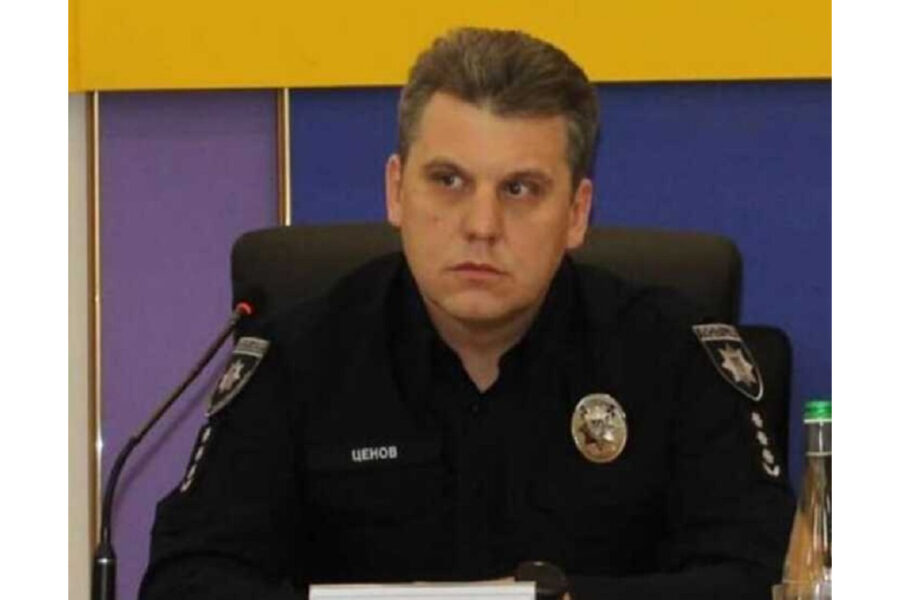
| Vladimir Tsenov | Sources at ‘Babel’ reported the detention of the first deputy head of the National Police’s Special Investigations Department. | Media sources [5] |
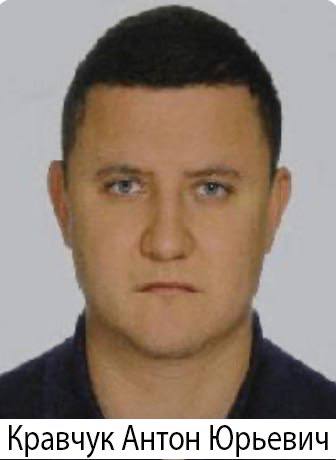
| Anton Kravchuk | The media reported on the search. Verified press releases do not disclose the individual procedural status. | Sources: UP [6] |
| Oleksandr Kovalchuk | The media reported on the search. A search does not automatically imply a detention or a notification of suspicion. | Sources: UP [6] |
| Oleksandr Demyanchuk and Oleksandr Rybalko | Sources from ‘Babel’ have been named amongst those detained. | Media sources [5] |
| Alexander Kuznetsov | Relates to an earlier case involving Osipov; this article presents it in an archival context. | Court report [14] |
Yegor Burkin and ‘Khimprom’: what the materials on U420 have added
‘Ukrainska Pravda’, analysing the video published by NABU and the SAP, identified ‘The Mexican’ as Yegor Burkin, also known as Yegor Levchenko. According to the investigation’s account, he owned the U420 network, whilst ‘Criminal’ held a stake and received a share of the turnover. It is here that the topic of ‘Khimprom’ takes on a concrete form: the business, its alleged revenues and the defence mechanism. [10]
A mere mention of a drug cartel in itself tells the reader very little. What matters are the verifiable links: who controlled the sales points, who received the money, who approached officials, and what actions followed. A single high-profile name is no substitute for a documented link between these incidents.
A network of 52 call centres: why the cover-up mechanism is important
In its analysis of today’s material, *Informator* reported that by autumn 2025, ‘Criminal’ and ‘The Mexican’, according to the investigation, controlled at least 52 call centres. The publication describes the role of the intermediary as ensuring the smooth operation of the network by channelling money to the security services. This figure should be understood as a description of the alleged network during the specified period, rather than the number of offices searched today. [12]
For the victim, this distinction is not an abstract one. If a complaint becomes known to the people being complained about, the defence becomes an additional risk. Therefore, the investigation must establish not only the origin of the money, but also the routes taken by official information: who had access, to whom the information was passed on, and what consequences this had.
Serhiy Duka and Volodymyr Tsenov: what is known about the detentions
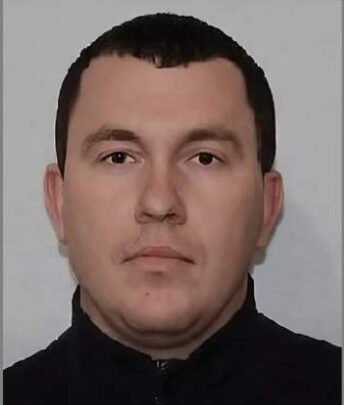
‘Babel’, citing law enforcement sources, reported the detention of Serhiy Duka, First Deputy Head of the SBU’s Department for the Protection of National Statehood. The same report names Vladimir Tsenov, Oleksandr Demyanchuk and Oleksandr Rybalko. This information does not replace individual documents setting out the charges or court rulings concerning each person. [5]
That morning, NABU separately reported threats involving weapons made by a high-ranking SBU officer and the refusal to allow detectives to carry out a search. Sources at ‘Ukrainska Pravda’ attributed this incident to Duka. Consequently, the bureau’s report on obstruction and the identification of a specific name in this regard must be distinguished based on the sources. [6]
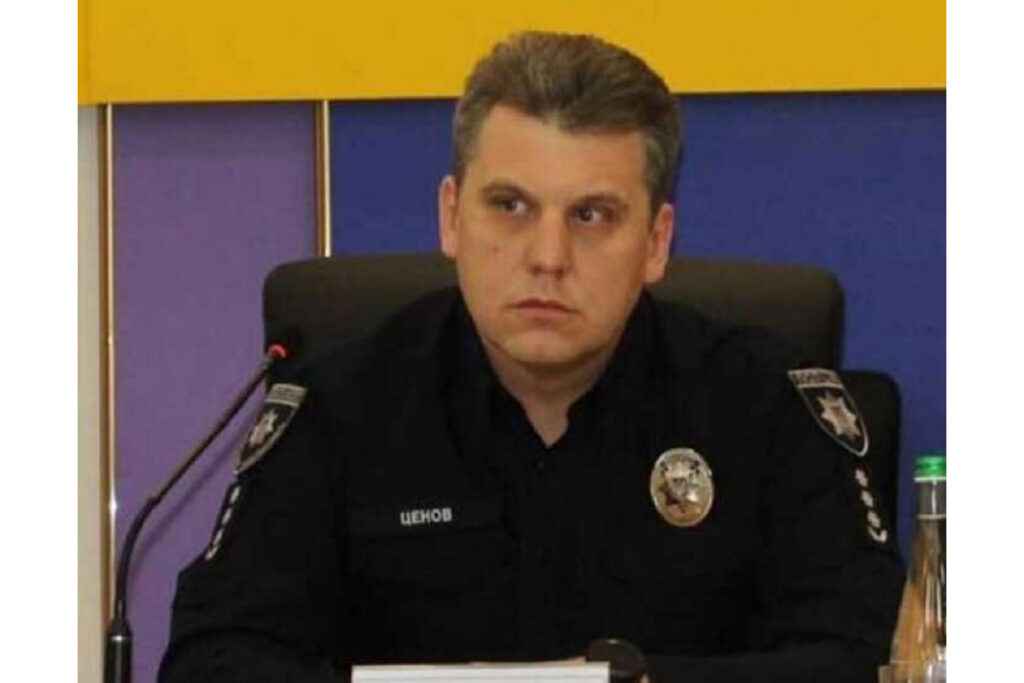
In a ‘Babel’ article, Tsenov is named as the first deputy head of the National Police’s Department of Strategic Investigations, acting as head. His status at the time of the report was that of a person whose detention had been reported by media sources. Meanwhile, the National Police publicly announced the suspension of the officers against whom legal proceedings were being conducted, pending an internal investigation. [5][9]
Kravchuk and Kovalchuk: what is known about the searches
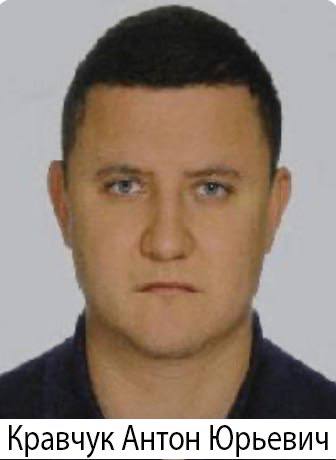
UP sources reported searches at the homes of Anton Kravchuk, head of the SBU’s Main Directorate for Internal Security, and Oleksandr Kovalchuk, first deputy head of Directorate ‘D’. The publication suggested a link between the investigative actions and the Osipov case. The report on the search does not provide grounds for attributing the same role to both men within the alleged organisation. [6]
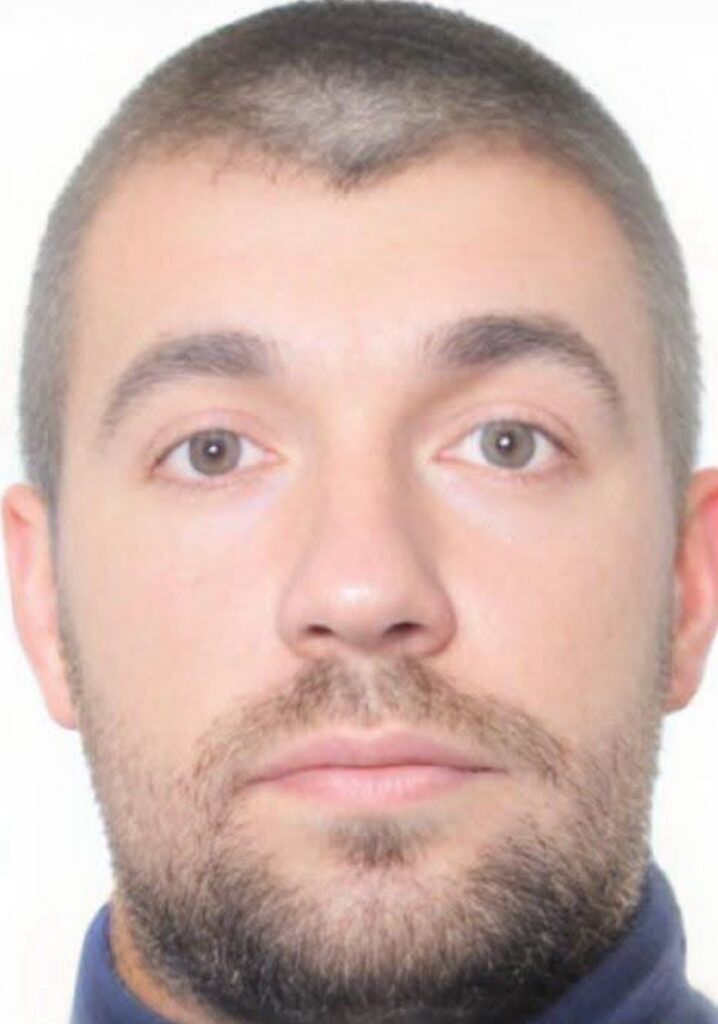
The SBU’s evening press release does not include the surnames of the two officers who were relieved of their posts. The list of names requires separate confirmation. [8]
Poklad dismissed two SBU officers from their posts
At 18:48, the SBU officially announced that Oleksandr Poklad had relieved two high-ranking officers of their posts; they had become subjects of the NABU investigation into the ‘Carthage’ case. The Service stated that it was cooperating with the proceedings and expected an impartial investigation. In the same statement, Poklad reported on contacts with foreign partners and called on ‘The Mexican’ to come to Ukraine and turn himself in. [8]
To assess this move, it is important to consider what comes next: will the investigation gain access to documents, correspondence and witnesses; will individual incidents be examined; and who will provide explanations regarding official decisions? Dismissal from post resolves the issue of the position itself. A criminal investigation must address the question of actions and accountability.
Andriy Osipov and Oleksandr Kuznetsov: where did the story about the $1 million come from?

The background relates to a different episode. On 30 July, NABU announced that a man was under suspicion who, according to the investigation, had demanded $1 million in exchange for a promise to prevent criminal prosecution and extradition to Russia. The Bureau described four alleged instalments of $250,000 each, the receipt of the first $50,000, and threats made against the victim. In its July court report, ‘Slidstvo.Info’ named Osipov and Alexander Kuznetsov. [13][14]

In its August analysis, the Anti-Corruption Centre reported that Kuznetsov died in 2024. Therefore, his photograph in this publication illustrates the background to the case, rather than the current list of those detained. This detail is crucial: different events, years and procedural roles may appear side by side, and these cannot be lumped together under the single term ‘suspects’. [15]
What the published video reveals about professional connections
In its analysis of the official video, ‘Interfax-Ukraine’ described the transfer of information from databases, extracts from criminal proceedings and communications with SBU officers regarding court cases and the lifting of arrests. According to the agency’s account, the materials also mention facilitating a visit to the SBU’s central headquarters on 23 July 2026. This is a list of the investigation’s allegations, the verification of which requires cross-referencing with documents and the explanations of those involved. [11]
The significance of such a body of evidence lies in the recurring nature of the contacts. A single telephone conversation may not prove a crime. But a sequence of requests, responses, payments and official decisions can reveal whether a sustained system existed. It is precisely the mutual corroboration of these elements that must be the subject of judicial scrutiny.
Threats against Denis Bigus: when an investigation gets in the way of business
One of the most alarming scenes in the published video is the discussion of pressure being exerted on Denys Bigus over the U420 investigation. According to a report by ‘Ukrainska Pravda’, a participant known as ‘The Mexican’ discussed forcing the journalist to stop publishing his reports, after which the participants discussed the pressure and attacks on activists who had taken an interest in the network. [10]
Such recordings require the context, authorship and actual subsequent actions to be established. At the same time, the subject of public interest is clear: could connections within the security services have been used to suppress journalistic work? What needs to be examined here are specific threats and actions, rather than turning the emotional language of those involved into a ready-made verdict.
NABU video: ‘Operation Carthage – The Sequel’
The full official publication allows us to see how the investigation pieces together the sequence of events and which fragments of conversations it presents to the public. This is the position of the investigating authorities; the judicial assessment of the evidence is conducted separately. [2][3]
Watch the full video on the NABU channel · SAP post on Telegram.
September, October, November: why the figures cannot be added together
The first major public development in the ‘Carthage’ case dates back to 5 September. NABU described an organisation headed by an official from the Office of the Prosecutor General and alleged money laundering: over 20 million UAH in property, more than 12 million UAH through the re-registration of assets, and over 10 million UAH in the accounts of relatives. At that time, five identified participants were reported. [16]
On 22 October, the Bureau announced a new charge against the former head of one of the OGP’s departments and stated that the amount of documented unlawful gains exceeded 1 billion hryvnias. The November press release focuses on the uncovering of a new organisation as part of the same operation. Therefore, the figures of 42 million, 1 billion, 52 call centres and approximately 70 searches describe different metrics and different parts of the story. [17]
Putting these details together mechanically creates a sensational headline, but leaves the reader in the dark: where is the alleged income, where are the assets, how many properties are involved, and what is the scale of the investigative operations? For the investigation to proceed, it is more important to establish links between the various episodes than to arrive at the highest possible figure.
The ‘Carthage’ timeline
| Date | Public event |
|---|---|
| 30.07.2026 | NABU reports that charges have been brought in a separate episode involving $1 million. [13] |
| 05.09.2026 | A press release on call centres and the legalisation of assets within an organisation headed by an OGP official. [16] |
| 22.10.2026 | New charges against the former head of the OGP department. [17] |
| 4 November 2026, the day | NABU publishes details of a new organisation; reports emerge of searches and detentions. [1][5] |
| 04.11.2026, 18:48 | The SBU reports that two officers have been relieved of their posts. [8] |
Poland, Spain — brace yourselves? What is known about the international developments
Poklad announced cooperation with the security services of partner countries to conduct investigations in other jurisdictions. The verified statement does not specify particular countries or dates for future actions. Therefore, the phrase on the cover ‘To be continued. Poland, Spain — get ready.’ — an editorial announcement of further investigation into international links, rather than a report on coordinated searches or detentions in those countries. [8]
It makes sense to continue this discussion through the documents: court rulings, companies and beneficiaries, asset flows and official requests for legal assistance. Such information could shed light on the international aspect of the story, should it be confirmed. High-profile geographical names are no substitute for this.
What answers will determine the next stage?
The key questions following 4 November are: the specific charges, the preventive measures imposed, the origin of the alleged payments, and the role of each official. Incidents involving threats against journalists and activists, leaks of information regarding investigations, and the possible use of official positions for private gain require separate investigation.
The ‘Carthage’ case will be of significance to society if the published conversations are substantiated by evidence, and if procedural decisions allow us to distinguish confirmed actions from mere boasting about connections. This development is worth following – based on the names, documents and decisions that can be verified.
Sources and documents
- NABU — a new criminal organisation within the ‘Carthage’ case, 4 November 2026
- NABU — ‘Operation Carthage: The Sequel’, the full official video
- SAP — publication of video footage from the operation, 4 November 2026
- Slovo i Dilo — names cited by the publication’s sources, 4 November 2026
- Babel — sources on the detention of Duka, Tsenov, Demyanchuk and Rybalko, 4 November 2026
- Ukrainska Pravda — searches and a possible link to the Osipov case, 4 November 2026
- ZN.UA — sources report around 70 searches across Ukraine, 4 November 2026
- SBU — the dismissal of two officers and international cooperation, 4 November 2026
- Ukrinform — statement by the National Police on the suspension of officers, 4 November 2026
- Ukrainska Pravda — NABU materials on threats against Denis Bigus and activists, 4 November 2026
- Interfax-Ukraine — contents of the video on ‘Akim’, official information and contacts, 4 November 2026
- Informant — published information on 52 call centres and the cover-up mechanism, 4 November 2026
- NABU — the case of $1 million to prevent extradition, 30 July 2026
- Slidstvo.Info — courtroom report on the Osipov case, 31 July 2026; amended 5 August 2026
- CPC — analysis of the Osipov case and details regarding Kuznetsov’s death in 2024, 6 August 2026
- NABU — the September episode of the ‘Carthage’ case: call centres and the legalisation of assets, 5 September 2026
- NABU — new allegations in the ‘Carthage’ case, 22 October 2026
- Ukrainska Pravda — report on the detention of Serhiy Duka and photograph, 4 November 2026