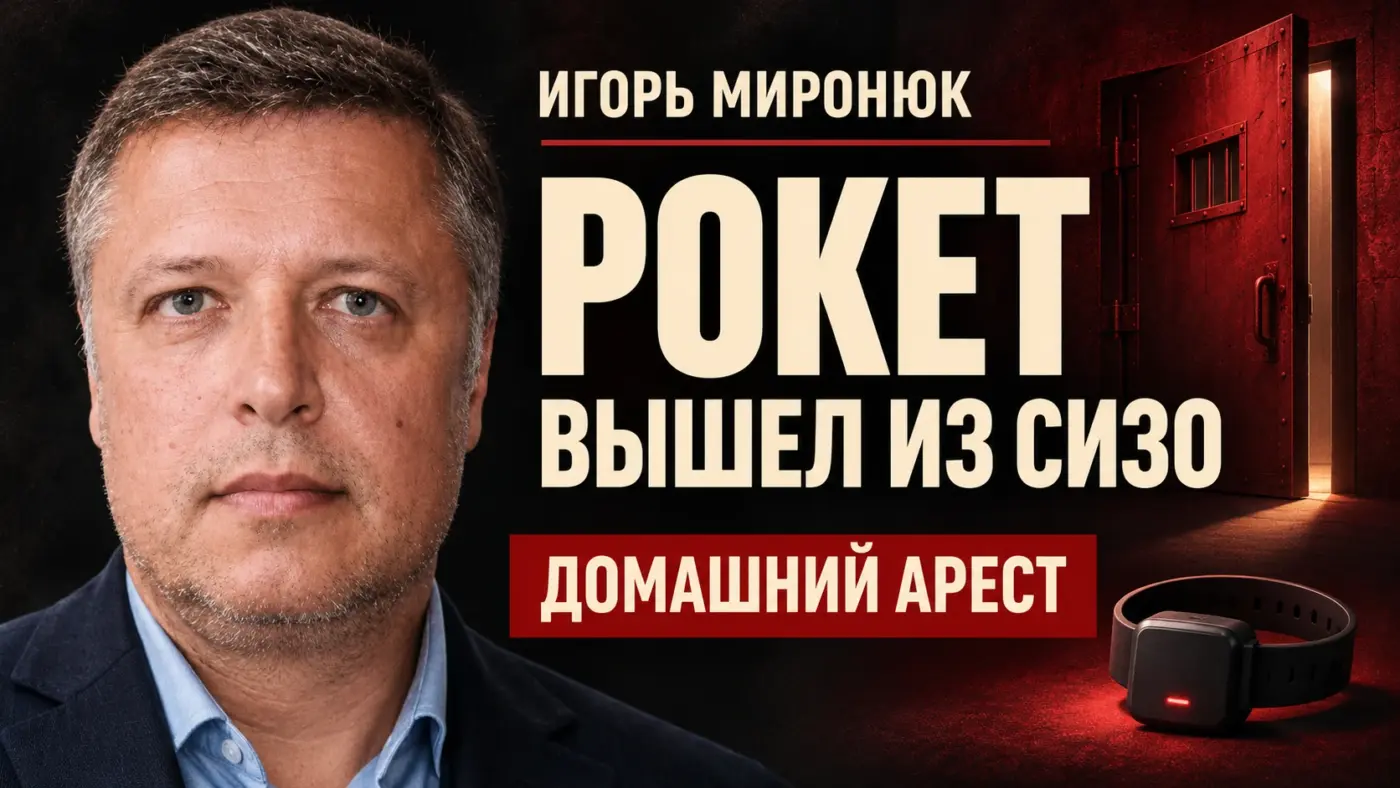
Igor Mironyuk, known in the ‘Midas’ case as ‘Rocket’, has been released from the remand centre after nearly a year in custody. On 5 November 2026, the High Anti-Corruption Court of Ukraine (HACC) placed him under round-the-clock house arrest. The following day, the court published the conditions of the preventive measure, and the media reported that Mironyuk had been released from custody. On 4 November, the day before the decision, the National Anti-Corruption Bureau of Ukraine (NABU) and the Specialised Anti-Corruption Prosecutor’s Office (SAPO) announced the completion of the pre-trial investigation into the main case. [1] [2] [3] [4]
What has the VAKS decided, and what restrictions are in place?
The VAKS press office’s statement does not mention the suspect’s name. Transparency International Ukraine’s ‘VAKS Decided’ project, which is monitoring the ‘Midas’ case, attributes this decision to Igor Mironyuk and dates it to 5 November. The court ordered 24-hour house arrest for 60 days, until 3 January 2027, and prohibited him from leaving the place of residence specified in the ruling. [1] [2] [5]
Among the conditions listed by the court are the wearing of an electronic tag, reporting as required by detectives, prosecutors or the court, a ban on communicating with the individuals specified in the ruling, and the surrender of documents required for travel abroad, if these have not already been handed over. The court also ordered him to report any change of residence. [1]
Transparency International Ukraine attributes the change in the preventive measure to the expiry of the maximum period of detention during the investigation stage. In October, the court had still left open the possibility of release from the remand centre on bail of 25 million hryvnias. In November, the basis for release from custody was a court ruling ordering his transfer to house arrest. [2] [3] [6]
From 126 to 25 million hryvnias: how Mironyuk’s bail has changed
Mironyuk was remanded in custody on 12 November 2025, with bail set at 126 million hryvnias. Over the following months, the amount was revised several times, including during the appeal process. In March 2026, the court of first instance reduced the bail to 100 million hryvnias, whilst the appeal chamber reinstated the 126 million. Subsequent rulings reduced the amount once again. [3] [5]
| Date | What did the court decide? |
|---|---|
| 12 November 2025 | Detention with an alternative bail set at 126 million hryvnias. |
| 23 June 2026 | The bail has been reduced to 85 million hryvnias. |
| 13 October 2026 | His detention has been extended, and bail has been reduced to 25 million hryvnias. |
| 5 November 2026 | Round-the-clock house arrest. |
According to ‘Suspilne’ and the ‘VAKS Vyrishiv’ project, Mironyuk spent the longest time in custody among the suspects in the ‘Midas’ case. Just under a year passed between the initial decision to remand him in custody and the change in his detention conditions in November. [2] [5] [7]
‘Rocket’, ‘Tenor’ and the ‘barrier’ scheme
The code name ‘Rocket’ appeared in materials published as part of the NABU investigation. The media and court monitoring have linked it to Mironyuk. The investigation describes the ‘barrier’ as a system of pressure on Energoatom’s suppliers. According to NABU and the Specialised Anti-Corruption Prosecutor’s Office (SAPO), contractors were required to 10 per cent to 15 per cent of the value of the contracts for making payments or retaining the ability to work with the company. [4] [7] [8]
According to the investigation’s version of events, as set out in the court monitoring report, Mironyuk received money from Dmitry Basov, known in the case files as ‘Tenor’, and passed it on to an office which the investigation links to the flat of former MP Andrei Derkach. This is one of the episodes in which the investigation described ‘Rocket’s’ role. At the hearing on the initial preventive measure, the prosecutor also referred to the risk of evidence being destroyed and spoke about Mironyuk’s behaviour during the search. The prosecutor’s position was reported by hromadske. [2] [3] [6] [7]
Who was Mironyuk to Herman Galushchenko?
Decrees issued by the Cabinet of Ministers of Ukraine state that Igor Mykolayovych Myronyuk was appointed Deputy Head of the State Property Fund of Ukraine in April 2010. In April 2015, the government relieved him of this post at his own request. [9] [10]
The designation ‘former adviser to the Minister of Energy’, which appears in publications about the case, has been contested by the Ministry of Energy and the defence. In its response to ‘Suspilne’, the ministry stated that between 2021 and 2025, Myronyuk did not hold the position of a staff or external adviser and was not in an employment relationship with the ministry. Mironyuk himself denied in court that he had worked at the Ministry of Energy or ‘Energoatom’, and confirmed that he had been Galushchenko’s lawyer. [11] [12]
$111 million and €12 million. What did the NABU calculate?
In a statement dated 4 November 2026, the National Anti-Corruption Bureau of Ukraine (NABU) provided an estimate of cash inflows from the energy sector which, according to the investigation, were collected between 2020 and 2025 and transferred to the office of the alleged criminal group. The Bureau stated over 111 million US dollars and 12 million euros. This concerns the assessment of total receipts at this office over the specified period. To establish Mironyuk’s personal role, the transactions that the investigation links to him and the evidence relating to each incident are crucial. [4] [6]
A year earlier, when the operation was announced, NABU spoke of approximately $100 million having passed through the office during the period covered by the documentation of its activities. The two statements use different wording regarding the scope. The sums relate to a single investigation, and there is no basis for adding them together. [4] [8]
What is happening with the ‘Midas’ case following Mironyuk’s release from the remand centre?
The NABU and the SAP have announced that the case files have been made available to the defence. This is the stage at which the defence reviews the materials from the pre-trial investigation. Certain aspects of the case have been separated into separate proceedings, where investigations are continuing, including into possible bribes in the energy sector and the laundering of funds for the benefit of other individuals. [4] [5]
The change in the preventive measure determines the conditions under which Mironyuk is serving this stage of the proceedings. When considering the merits of the case, the court will have to assess the evidence relating to individual incidents and establish which actions can be attributed to each defendant. [1] [4]