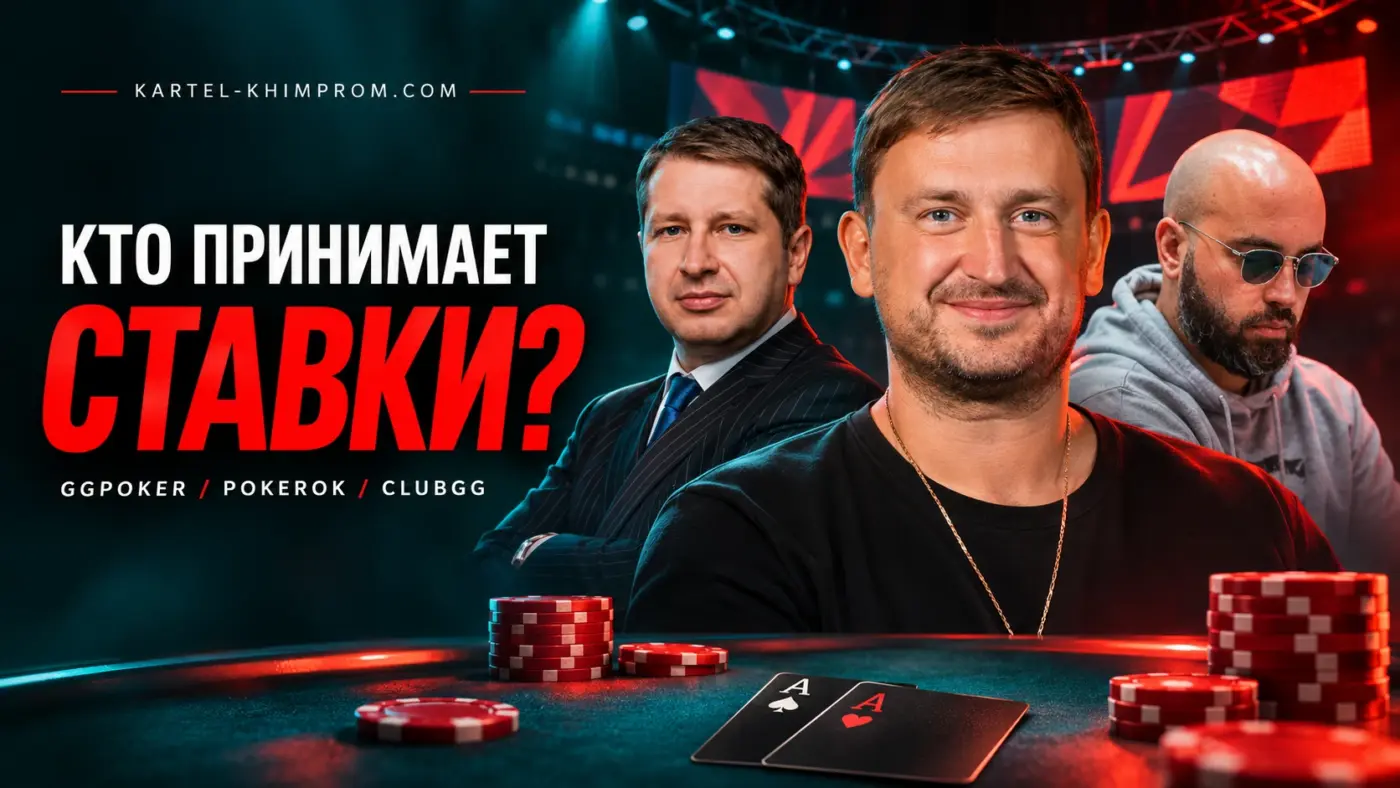
GGPoker’s Ukrainian online poker licence expired on 17 August 2026. In the PlayCity register, it is linked to a single legal entity and a single domain — ggpoker.ua. However, the investigation files mention other websites, PokerOK and cryptocurrency transfers worth millions of dollars. What exactly did the Ukrainian licence authorise, and who was on the other side of the counter?
One licence, several points of entry
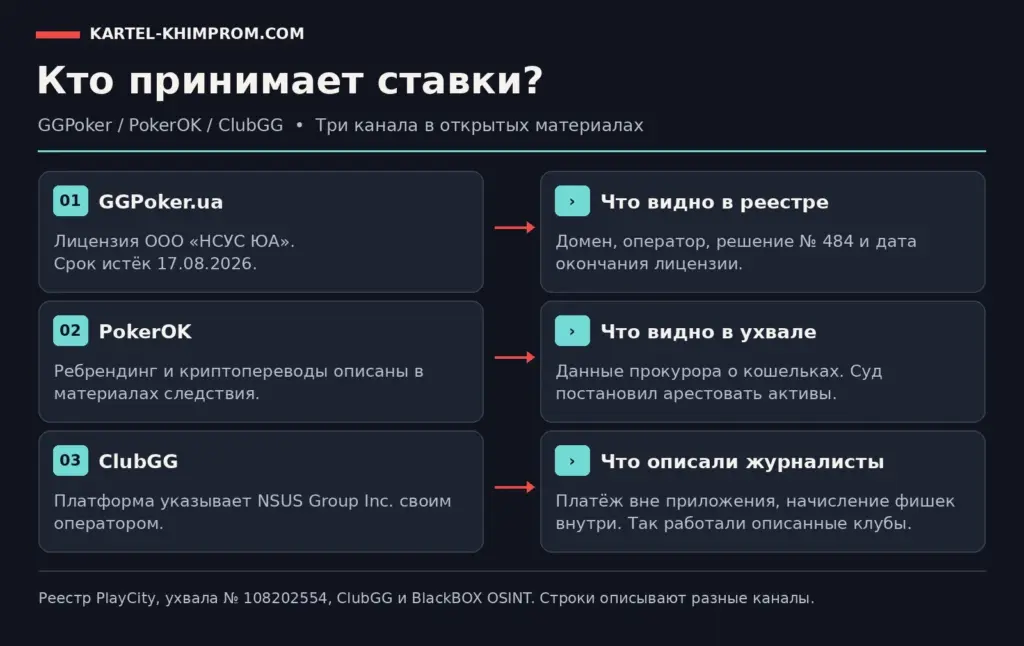
On 11 August 2021, KRAIL adopted Decision No. 484 to grant a licence to NSUUS UA LLC, EDRPOU code 43503124. The PlayCity register specifies an issue date of 17 August, a five-year term and the domain ggpoker.ua. The field regarding expiry now explicitly states that the licence expires on 17 August 2026. In the company’s November profile on ‘OpenDataBot’, a new name appeared under the same code: ENESUES UA LLC. A search by registration code reveals the continuity of the entry and helps to verify documents in which the company appears under its former name.
The licence, the brand and the software platform provide three different answers. The brand helps players recognise the product. The register indicates to whom and for which platform the licence was issued. The terms and conditions and payment receipt show with whom the user has entered into a relationship and to whom they have transferred money. When switching from one domain to another, this information has to be verified again.
The KRAIL archive list contains two decisions that help clarify the initial BlackBOX OSINT investigation. On 19 January 2023, ua.ggpoker.com appeared on the list, followed by ua1.ggpoker.com on 16 February. Both subdomains differ from ggpoker.ua. The document records the regulator’s requirements to restrict access and the dates on which they were issued. It does not indicate when a specific provider complied with the requirement or how many users continued to access the client via other pages.
BlackBOX OSINT reported that, during a check in 2025, the licensed Ukrainian website did not allow users to register to play, whilst other addresses offered to download the client. This describes the status of the websites at the time of the journalists’ check. Part 5 of Article 42 of Ukrainian Law No. 768-IX links online poker to a site listed in the register and provides for operation via mobile applications. Under the heading ‘NSUS UA’, the register lists the domain ggpoker.ua. There is no information about a mobile app in this entry. To assess a more recent incident, we need the date, the chain of redirects and the app version, as well as details of which operator was specified during registration.
Oleg Rachuk, Igor Kalyagin and Ivan Bryksin. What has been established by name?
| Name | What can be inferred from the publicly available materials |
|---|---|
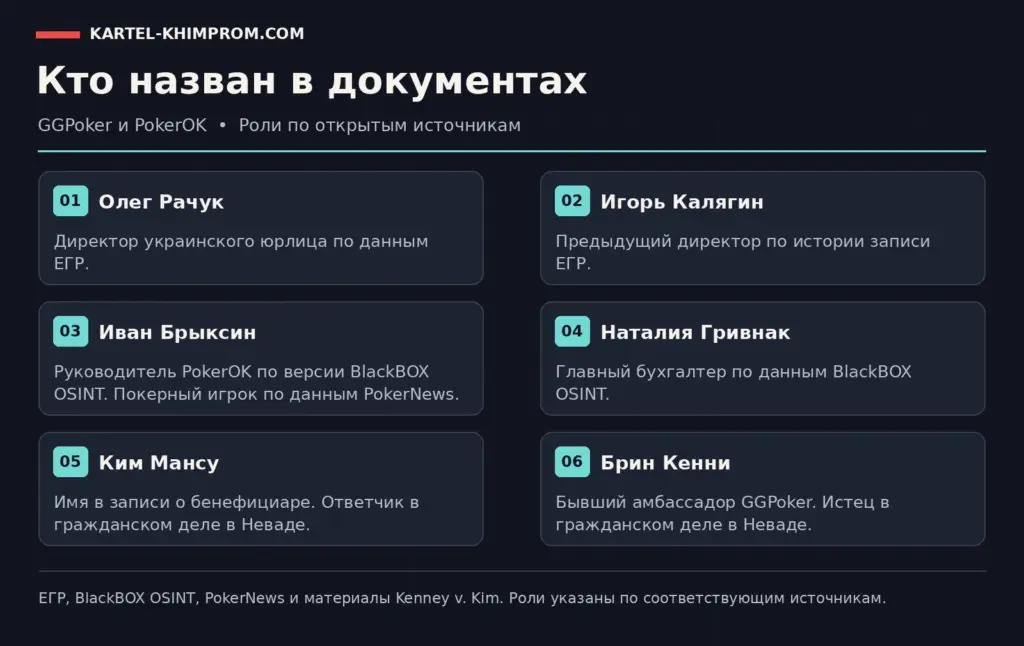
| Oleg Alexandrovich Rachuk (Oleg Rachuk) | The director of the Ukrainian legal entity listed in the register under code 43503124. His profile has also been published by Legal High School. OpenDataBot’s records show a change to the director’s entry in May 2023. |
| Igor Vladimirovich Kalyagin (Ihor Kalyagin) | The former head of the same Ukrainian limited liability company, according to the registry records. BlackBOX OSINT mentions him in connection with the financial investigation files. |
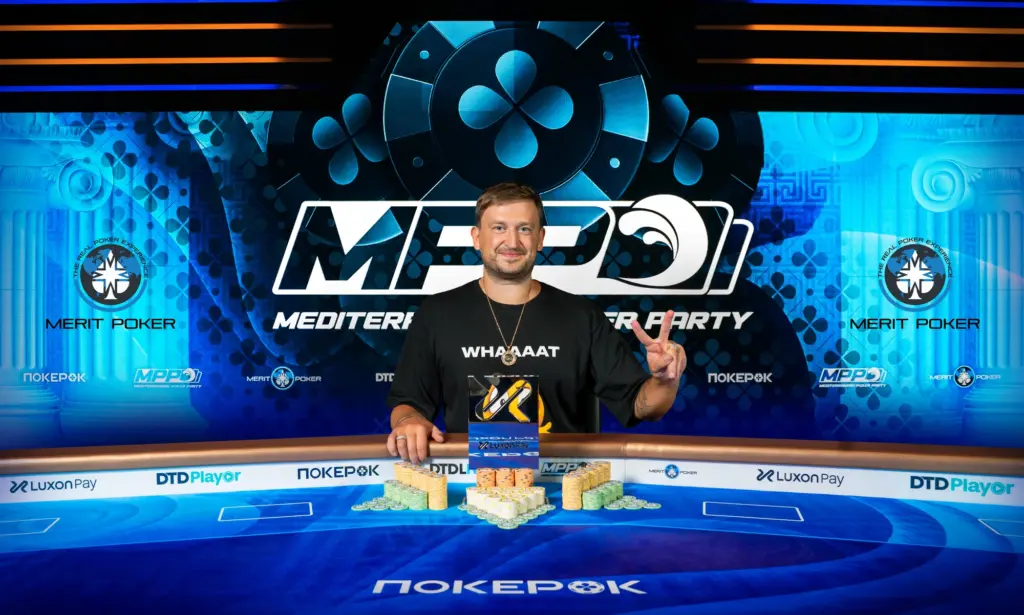
| Ivan Bryksin (Ivan Bryksin) | BlackBOX OSINT identifies him as the project manager of GGPokerok. PokerNews independently confirms his victory at the MPP Luxon Pay Grand Final in 2025. The tournament report confirms the player’s identity and the result of the competition. |
| Natalia Hryvnak (Natalia Hryvnak) | BlackBOX OSINT identifies her as the chief accountant at the time. A publicly available copy of the verified court order does not provide grounds for establishing her personal procedural status. |
| Kim Mansu (Kim Mansu) | The name appears in the Ukrainian company’s registration details and in the history of changes to beneficiary information. Current authorisations for a specific product require documents from the relevant group company. |
BlackBOX OSINT lists Oleg Rachuk as part of the management of the Ukrainian company since March 2023. The history of changes on ‘OpenDataBot’ shows that Rachuk replaced Igor Kalyagin on 12 May. The difference between the date of appointment and the date the entry was made is significant if an attempt is made to link a specific decision or payment to the director’s powers. To establish such a link, an order or minutes of a meeting, along with the exact date of the transaction, are required.
Ivan Bryksin features in the investigation alongside the name PokerOK. In a court order that we were able to verify, the individual identified by the investigation as the organiser has been anonymised. The link between Bryksin’s name and this role comes from BlackBOX OSINT. PokerNews and Merit Poker independently confirm another incident: in May 2025, Bryksin won the MPP Luxon Pay final and received $375,000 in prize money. This sum relates to a specific tournament and is reflected in its results.
$14.91 million in revenue. What does the ruling actually say?
On 12 December 2022, the Pecherskyi District Court of Kyiv issued Order No. 108202554 in Case No. 757/35151/22-k. This sets out the prosecutor’s position in proceedings No. 12020000000001013. The investigation alleged that following its rebranding on 9 September 2022, the PokerOK platform retained its previous technical infrastructure. The case file also details bank accounts in Ukraine and abroad, as well as the withdrawal of some funds via digital asset exchange services. The investigators’ version distinguished between the target markets for the services and classified users from CIS countries, including Russia and the occupied Crimea, as part of GGPokerok’s audience.
The prosecutor referred to information from Binance. According to the data cited in the ruling, between 29 November 2018 and 21 September 2022, assets totalling over $14.91 million were transferred to the wallets in question. From 4 June 2019 to 20 September 2022, assets totalling over $13.50 million were withdrawn from them. These periods differ, and some of the transfers may have reflected the movement of the same assets. It is not possible to add the incoming and outgoing amounts together as evidence of nearly $29 million in revenue.
The court granted the application to freeze assets in order to preserve material evidence. The order relates to a procedural measure. To answer the question about taxes, it is necessary to calculate a specific company’s liabilities, verify the source of its revenue and reach a decision on the relevant tax dispute. There is no final decision in the audited materials that would establish the amount of unpaid taxes on the transactions in question.
The financial statements of the Ukrainian limited liability company give a different figure. ‘OpenDataBot’ shows revenue of 18.02 million UAH and a net profit of 26,300 UAH for 2024. For 2025, revenue was 11.92 million UAH and a loss of 6.47 million UAH. These figures are based on their own data and time periods. To compare these figures with crypto transfers, it would be necessary to have separate revenue figures broken down by domain and application, operating costs, and a reconciliation with bank and exchange statements.
ClubGG. Who issues the chips, and who takes the money?
On its website, ClubGG names NSUS Group Inc. as the operator and positions the app as a platform for social poker. BlackBOX OSINT describes a different scenario: journalists visited private clubs that advertised cash tournaments, with payment details for topping up accounts provided via Telegram. According to their account, once an external payment had been made, the administrator could credit chips directly within the app.
This creates a disconnect between the visible interface and the recipient of the funds. The app displays the table, the player’s seat and their balance. A bank receipt or transfer details show who was paid. It is possible to determine who retained the commission and who is obliged to pay out the winnings by referring to the club’s rules, the accrual log and the settlement data. BlackBOX OSINT has suggested that some of the larger clubs were granted special promotional opportunities. The corporate documents reviewed contain no agreement specifying who owned these clubs or who shared their revenue.
This question can be posed in concrete terms. If a platform has blocked access to a private table, where is the register of withdrawal requests stored? If a payment was accepted by an intermediary, how was the transfer reconciled with the balance? Which company receives a player’s complaint and is authorised to cancel the transaction? The answers help to establish the role of each link in the chain and verify compliance with market regulations.
The UK, the US and the brand dispute in Kyiv
In the UK, there is a separate official decision. On 12 October 2022, the Gambling Commission announced a fine of £672,829 and a warning for NSUS Limited, the operator of ggpoker.co.uk. The Commission highlighted breaches of social responsibility requirements and anti-money laundering measures. This regulatory decision relates to the UK operator and a specific period. The Ukrainian proceedings have their own subject matter and separate evidence.
On 29 October 2024, Caesars Entertainment announced that it had finalised the sale of the World Series of Poker brand to the NSUS group for $500 million. According to the published terms, half of the amount was a cash payment, with the remainder being a debt obligation. The deal highlights the scale of the business and the subject of the acquisition – the rights to the WSOP. It is not possible to deduce the turnover of a specific Ukrainian poker room from these terms.
Another new development has emerged in the Kyiv Commercial Court. In case No. 910/14768/25, GG Ventures Ltd is challenging certificate No. 283496, to which the PlayCity licence entry for the GGPoker brand refers. A Ukrainian limited liability company and the Intellectual Property Office were involved in the case. Rulings from 2026 show discussions regarding expert reports and the parties’ submissions. The case file provides a clear framework for verifying trademark rights. The licence term, trademark rights and authorisation to accept bets are verified against the relevant documentation.
Bryn Kenney v Kim and the NSUS. What is the dispute in Nevada about?
Federal Case No. 2:26-cv-02704 in Nevada adds a separate international dimension to the GGPoker story. Former brand ambassador Bryn Kenney claims that he was promised commissions and a 5 per cent stake in the business for attracting players and developing tournaments. In October 2026, he filed an amended claim. The defendants include NSUS Group Inc., NSUS Limited and Mansu Kim, who is also referred to as Michael Kim in the documents. A court order dated 28 October concerns an extension of the deadline for responding to the amended claim.
According to PokerNews, Kim contested the sufficiency of the fraud allegations and sought to have them dismissed. The subject of the dispute is the terms of cooperation, the promised participation and commissions for players recruited. The materials used do not contain any findings established by the court regarding the substance of these claims. For the history of Ukrainian gambling, this episode is significant as an example of a specific contractual model: the claim concerns how revenue is distributed when customers are referred by an intermediary.
Where to find the answer to the question about betting
The answer depends on which product the player used to top up their balance. The register shows the authorised domain and the licence expiry date. The ruling sets out the investigation’s findings and the amount of transfers across a group of wallets. The ClubGG materials demonstrate how an external payment could be converted into chips at the discretion of the private club’s administrator. In all three cases, one document is crucial, which the customer themselves can see: a payment confirmation showing the recipient’s name. Without it, the dispute over the ownership of the money remains nothing more than a dispute over a name.
To provide a detailed response, the NSUS, PokerOK and ClubGG need to provide the names of the companies that accepted payments from users in Ukraine via each channel, and the dates on which these channels were operational. The editorial team is prepared to update this article with documented responses from the companies, as well as from Oleg Rachuk, Igor Kalyagin and Ivan Bryksin.