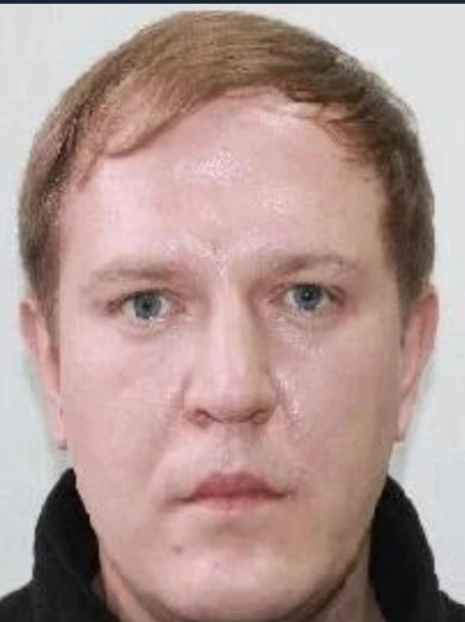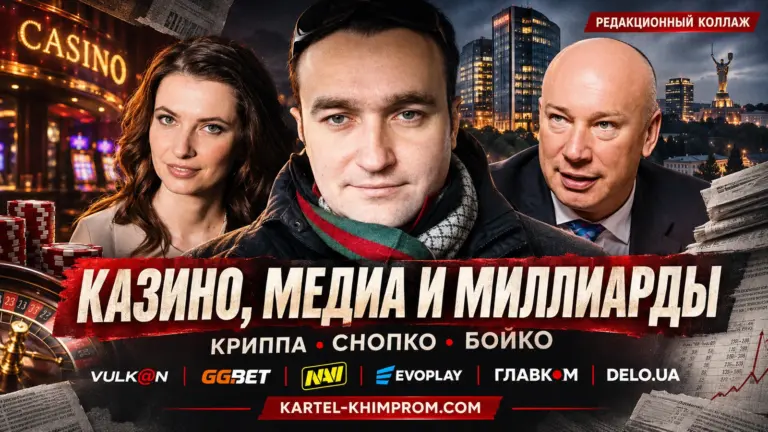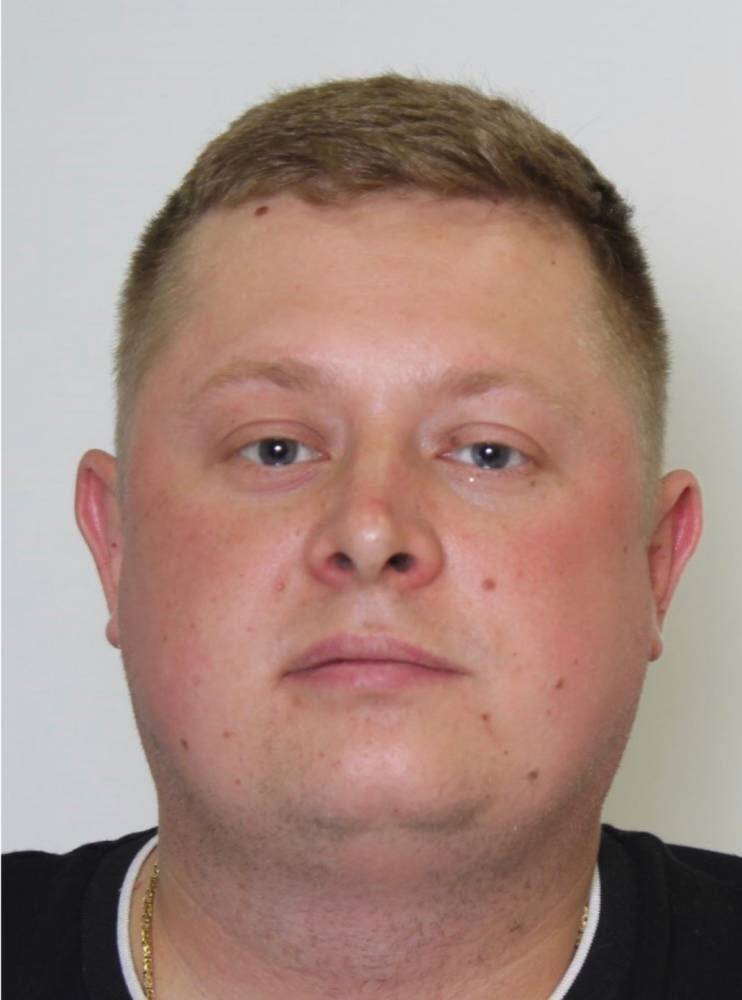
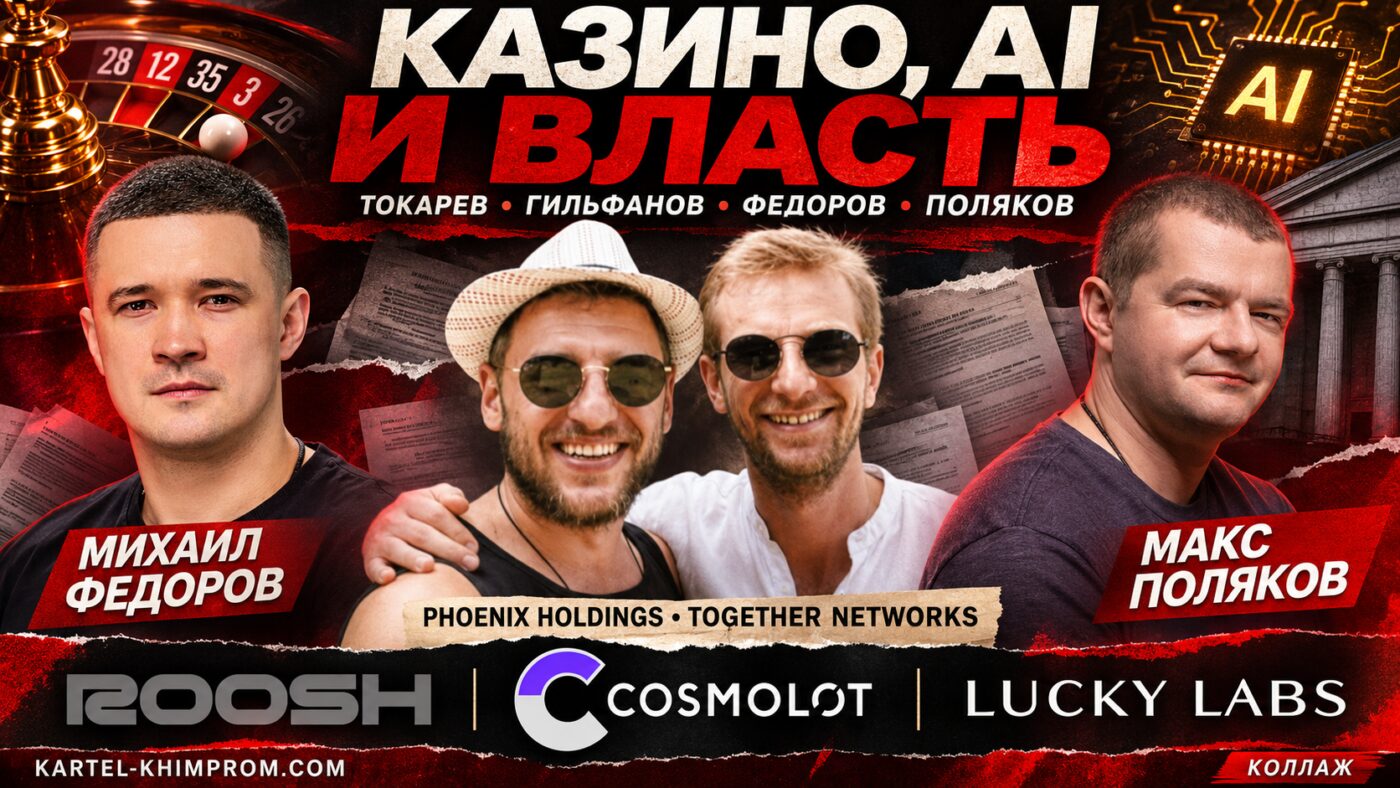
Sergey Tokarev’s public history encompasses several different worlds. In one, there is artificial intelligence, venture capital investments, Reface, Roosh and educational initiatives. In another, there is Lucky Labs, gambling advertising, old sanctions lists and a dispute with Max Polyakov over the dating business. In between lie years during which partners, legal entities and the language in which entrepreneurs spoke about their projects have changed.
A Telegraph article dated 9 January 2024 pieced these stories together to paint an incriminating picture of links between business and the authorities. However, its main argument requires verification against the documents: which relationships are actually confirmed, to which period they relate, and where the author turns a business contact into a conclusion about control over a casino. We have cross-referenced the source material with court documents, official publications, interviews and subsequent registration records. [1]
The result is a story far more substantial than a simple collection of photographs. A ruling on the dispute involving Tokarev, Rustam Gilfanov and Polyakov has been preserved in the British Virgin Islands. The government portal contains confirmation of Tokarev’s partnership with the Ministry of Digital Transformation’s initiative. ‘Cosmolot’ and First were found to have a more recent corporate and licensing history, which cannot be replaced by information dating back two years.
Sergey Tokarev and Lucky Labs. A biography that hasn’t disappeared

Sergey Alexandrovich Tokarev’s connection with Lucky Labs does not need to be pieced together from circumstantial evidence. In September 2019, RBC-Ukraine published an article in which he is presented as the founder of an international outsourcing company and discusses the development of IT. Alongside predictions about streaming video and smart assistants, the article mentions the name Lucky Labs and describes its business. [2]
This is an important starting point: an entrepreneur’s biography does not begin with the first presentation to an investment fund. Previous projects, business partners and the circumstances surrounding an exit from a business remain part of the history of capital. To assess this history, specific roles are significant — founder, director, investor, shareholder, trademark holder. One term is not interchangeable with another.
In April 2021, DOU published an investigation into the fate of Lucky Labs and received a comment from Tokarev. He stated that the brand had been sold in 2017 and that joint business ventures with Gilfanov were a thing of the past. DOU also quoted Alexander Kravchenko’s explanations regarding the continued use of the umbrella brand by various companies. This is the participants’ position relating to a specific period, rather than a universal answer regarding every subsequent project. [3]
The fact that a person is referred to as a founder in a 2019 publication does not in itself refute his claim that he sold the brand two years earlier. One can remain a founder in a biographical sense even after relinquishing ownership. However, to verify actual control, one needs the terms of the transaction, the composition of the transferred assets and the dates on which management powers ceased. This is the substantive question regarding the neat narrative of the transition from development to investment.
The 2016 searches and Kirill Sigida’s response
The position of Lucky Labs’ representatives is not limited to journalists’ accounts. Petition No. 22/023207-ep, dated 19 April 2016, is available on the Ukrainian President’s official e-petition website. The petitioner is listed as Kirilo Yuriyovych Sigida. In the text, he describes the April searches, the seizure of equipment and the freezing of accounts; he refutes the allegations against the company and demands an end to the pressure on the IT sector. [4]
This is a primary source setting out the applicant’s position, rather than a conclusion by a state body on the legality of the searches. Its value lies elsewhere: it shows that the controversy surrounding Lucky Labs was already in the public eye at that time, and that company representatives were putting forward their own explanation of events. Omitting this part of the story would mean leaving the reader with only the accusatory version.
In its 2021 investigation, DOU described the criminal proceedings whilst also reporting that representatives of Lucky Labs had denied the allegations. Tokarev stated that, to his knowledge, the case had been closed. There is no published procedural decision on the closure of the case in the materials verified for this article. Therefore, we do not regard either the previous search or the entrepreneur’s subsequent statement as a final judicial ruling. [3]
Kirill Sigida and Adwise.agency. How they monetised viewer attention
In an interview with MMR on 27 December 2017, the commercial director of Adwise.agency was named as Kirill Sygyda — this is an alternative spelling of Kirill Sigida’s surname. He spoke about online advertising, choosing platforms, working with data and promoting video clips. In the lead-in, the editorial team mentioned Parimatch’s advertising campaigns. This publication allows for a discussion of the company’s specialisation in advertising based on the content of the professional interview. [5]
The commercial logic behind this business is clear: gain access to an audience, choose a display format, sell attention to advertisers and measure the results. For the gambling industry, this layer is particularly important, as it is not enough for an operator to simply have a software product—they need a constant influx of users. Consequently, the developer, the advertising agency and the game organiser can work very closely together whilst remaining separate legal entities.
However, an interview about marketing does not automatically imply ownership of every advertised brand. Similarly, advertising expertise cannot be treated as proof of a specific manager’s involvement in illegal transactions. Sigida’s role, as documented in this source, is that of commercial director at Adwise.agency. Stronger allegations require a separate chain of evidence.
This is precisely why the industry context must not be lost behind the term ‘IT’. Casino software, the purchase of advertising traffic and the development of neural network applications are all distinct activities involving different clients and risks. Listing them in a biography is more honest than either labelling the whole operation as a single criminal enterprise or highlighting only the areas most attractive to investors.
Phoenix Holdings and Together Networks. A dispute that ended up in court in the BVI
The dispute surrounding Phoenix Holdings Limited is confirmed by a separate court document. In case BVIHCMAP2016/0009, the appellants are named as Rustam Yusufovich Gilfanov and Sergey Alexandrovich Tokarev; the respondents are Maxim Valeryevich Polyakov, Valery Polyakov and Phoenix Holdings. The judgment of the Eastern Caribbean Court of Appeal is dated 3 February 2017. [6]
The court document links Phoenix to Together Networks. It sets out claims regarding the acquisition of a stake and the information accompanying the transaction. The document refers to Polyakov’s $11 million liability following the division of the business and the claimants’ demand for $12 million in relation to the dispute over the transaction. These are separate elements of the story described, which cannot be aggregated into a notional $23 million in damages. [6]
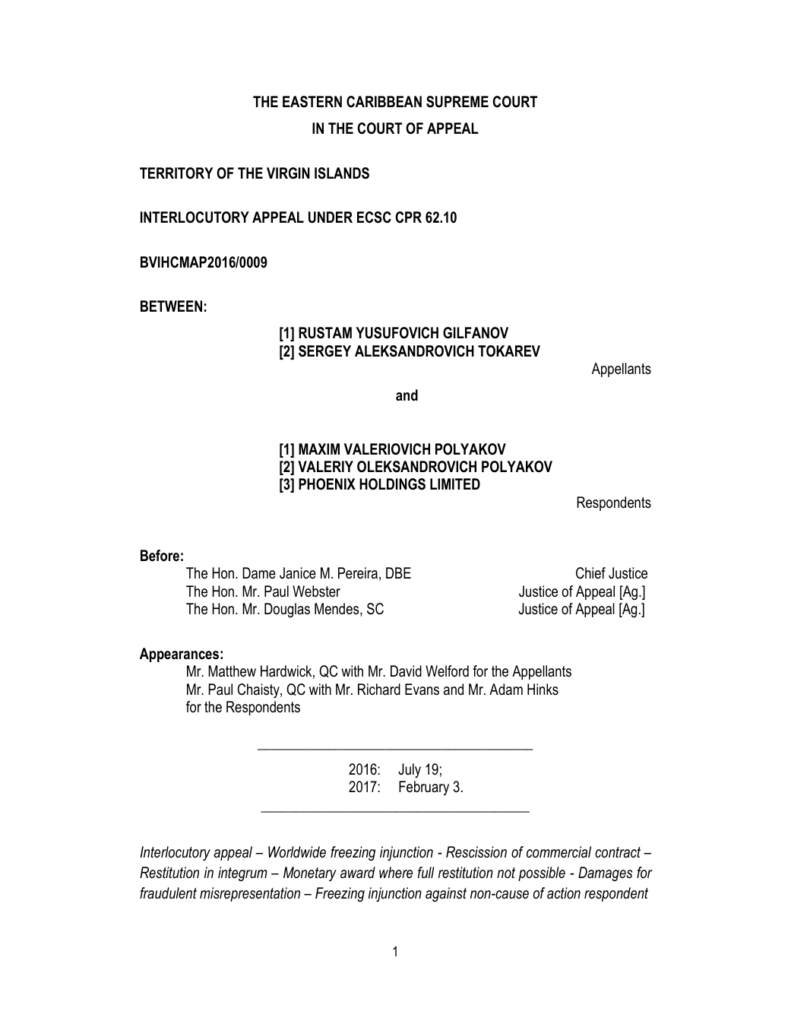
The issue of interim relief was considered separately from the final resolution of the commercial dispute. The July 2016 court digest records the replacement of a global asset freeze with a domestic restriction. In a written ruling from 2017, the domestic security measure was maintained with a limit of $10 million, whilst the refusal to impose a global measure was upheld. Such a security amount does not constitute awarded compensation. [6] [7]
This is a fundamentally different level of information to a mere reference to an allegedly forgotten dispute between partners. There is a specific court case, parties involved and the subject of the appeal. At the same time, the document provides no grounds for describing Polyakov as having been convicted of fraud. Assessing the sufficiency of evidence for a provisional freezing order and the final determination of liability are distinct judicial tasks.
Max Polyakov, Cupid plc and two different corporate narratives
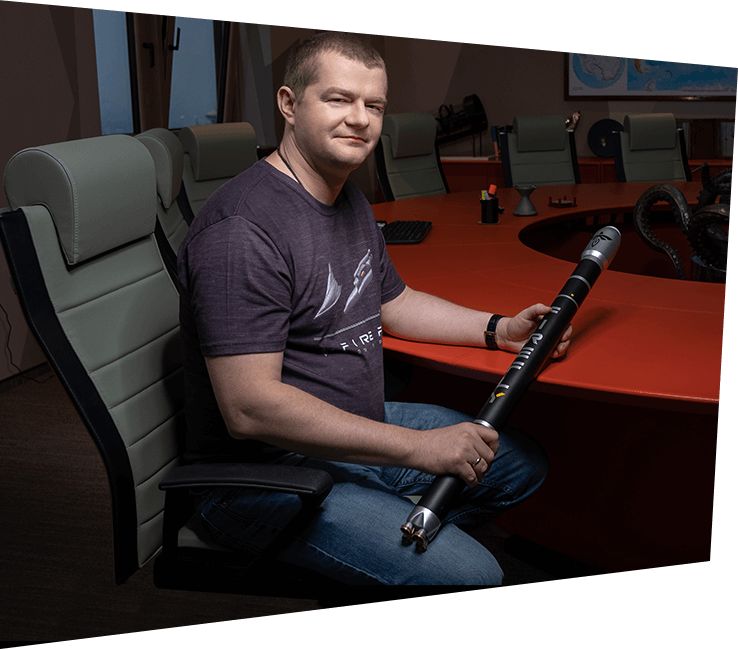
Noosphere Ventures’ official profile describes Polyakov as a technology entrepreneur and links his background to Cupid plc, Maxymiser and space projects. In particular, the website mentions Cupid’s listing on the London Stock Exchange in 2010. This is a self-produced public account of his entrepreneurial career, which is useful to cross-reference with other documents. [16]
However, Cupid plc and Phoenix Holdings Limited must not be treated as interchangeable. The court ruling in question refers to Phoenix and Together Networks. The mere presence of various dating projects in an entrepreneur’s background does not imply that the legal entities, assets and liabilities are one and the same. For the reader, this distinction is more significant than the dramatic, general description of a ‘dating site empire’.
The existence of successful technology deals does not negate the history of legal disputes. The existence of such disputes, in turn, does not prove that all subsequent projects are fictitious. The appropriate focus of scrutiny is on specific transactions, valuations of assets and the terms of share transfers. This approach allows tough questions to be asked without replacing the documents with speculative labels.
Sanctions against Tokarev. What happened in 2018 and 2020
The history of sanctions should also be read chronologically. Decree No. 176/2018 brought into force the decision of the National Security and Defence Council (NSDC) dated 21 June 2018. In May 2020, Decree No. 184/2020 approved a new resolution, the provisions of which included the removal of certain items from the previous lists. At the time, Interfax-Ukraine explicitly named Sergei Tokarev among those removed from the sanctions list. [8] [9] [10]
This means that, without new grounds, the previous sanctions history cannot be described as a measure still in force as of November 2026. In historical documents, Tokarev was listed as a Russian citizen; his current citizenship cannot be automatically inferred from these. Similarly, the imposition of sanctions does not constitute a guilty verdict regarding every claim that subsequently appeared in the press.
From the perspective of public scrutiny, both the grounds for imposing restrictions and the motives behind their subsequent lifting are significant. However, the conclusion that the sanctions were lifted in exchange for funding a state project requires evidence of a specific agreement. The proximity of dates, acquaintance with officials or participation in a tender do not, in themselves, establish such a deal.
Mikhail Fedorov and the Ministry of Digital Transformation. Partnership officially confirmed
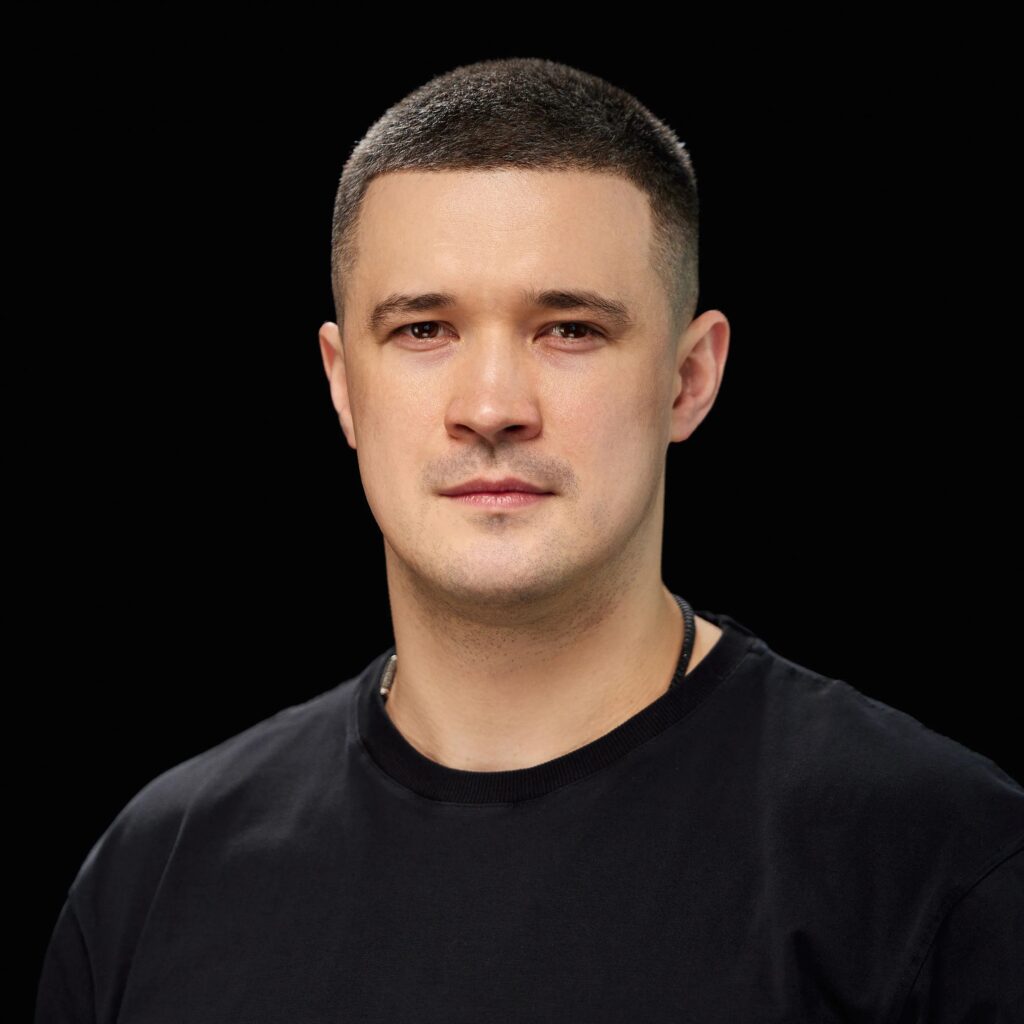
In this case, links to government initiatives go beyond mere group photographs. A post has been published on the ‘Diya’ portal announcing support for the ‘Sluhay’ educational project. It states that the HackCorona competition was initiated by Mikhail Fedorov with the participation of the EGAP programme, and that one of the partners was Sergey Tokarev, an IT entrepreneur and investor in Reface. [11]
The announcement of the competition itself on the Ministry of Digital Transformation’s website dates from 2020 and lists Fedorov and Alexander Bornyakov among the jury members. Thus, the institutional context existed and was publicly acknowledged. The events discussed here relate to the period during which Fedorov worked at the Ministry of Digital Development; this article does not attribute this position to him as of today. [12]
A public partnership requires transparent criteria for selecting participants, particularly when an entrepreneur has a history of sanctions. A pertinent question for the government department is: what was checked, which documents were examined, and how was a conflict of interest ruled out? However, the official announcement of the partnership does not confirm that the official managed the casino’s revenues or was involved in the alleged financial irregularities.
If the state uses a partner’s business reputation to support a project, it must be prepared to explain why it considers the collaboration acceptable. This requirement is independent of whether the social project itself proved to be beneficial. A successful educational initiative and a background check on its partner’s business history answer different questions.
Roosh and Reface. AI projects exist beyond the advertising image
Roosh’s official website lists the following areas of focus: AI/ML, Gaming, Fintech, Consumer & Entertainment Apps, and Marketing & AdTech. On the team page, Sergey Tokarev is listed as a co-founder and partner. This allows for an accurate description of the group’s current public positioning, without turning the past history of an individual member into evidence of legal succession across all companies. [13] [14]
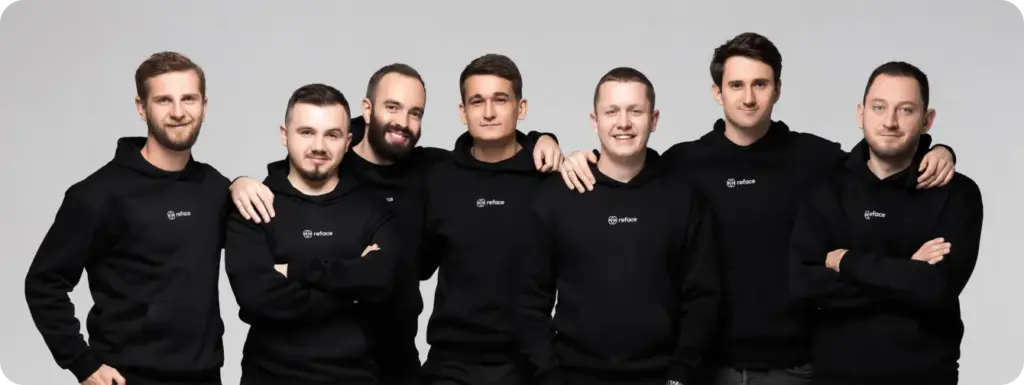
On its ‘About’ page, Reface lists its founders, including Kyrylo Syhyda and Denys Dmytrenko, whilst the ‘Investors’ section mentions Roosh and Andreessen Horowitz. The company describes itself as an app studio built on its own technology platform. This information shows that the products and investment relationships in question cannot be reduced to a single advertising slogan. [15]
The critical question regarding the origin of the investment capital remains. However, development costs, a high valuation of the start-up or the absence of dividends do not in themselves prove money laundering. To establish such a scheme, one needs to identify the movement of funds, the senders and recipients, the reasons for the payments and details of their origin. In the materials examined, there is no fully confirmed chain of funding for Roosh or Reface derived from illegal income.
Therefore, the most compelling part of the story lies in comparing public roles, documents and dates. An investor’s background may include involvement in gambling whilst simultaneously working on genuine technology products. The aim of the investigation is to establish the circumstances of such a transition and the sources of capital. It is sufficient to request specific details without declaring every AI project to be fictitious.
PokerMatch, Parimatch and Sergey Kartashov. Where does the historical connection end?
Sergey Kartashov did indeed appear in publications as a Senior Partner at Roosh. For example, in December 2021, ‘Ukrainski Novosti’ presented him in this role in an article about future IT careers. This is a verifiable historical fact. It does not mean that any subsequent action taken by Roosh was automatically carried out with his involvement. [17]
The original text links Kartashova to ‘PokerMatch.UA’ and, through this story, discusses Parimatch. However, a later entry for ‘PokerMatch. UA’, code 44123042, reveals a different registration profile: the founder is listed as the Cypriot company Weplay Media Holding Limited, whilst the information on the ultimate beneficial owner includes Ekaterina Belorusskaya. The record also contains a sanctions flag. This information relates to a specific legal entity, not to all brands using the word ‘PokerMatch’. [1] [18]
A person’s historical involvement in a company, their work in a technology group and their current ownership of another entity are separate facts. They may form a picture of business contacts, but to conclude that there is joint control, it is necessary to trace every link back to the relevant date. This is particularly important in business contexts where trademarks and licences may be transferred between legal entities.
First, First Element and Anita Yarina. A lawyer is not the same as an owner
A 2024 publication referred to First as a brand whose connections are allegedly revealed through its trademark representatives. One such lead can be verified in detail: the Iprop catalogue contains application m202105427 dated 10 March 2021. The applicant is listed as ‘First Element’ LLC, and the intellectual property representative is Anita Olegovna Yarina, registration number 461. [19]
However, there is an important detail regarding this file: proceedings relating to the selected application have been discontinued; the file history indicates a notification that it has been deemed withdrawn due to the failure to provide the necessary documentation. Therefore, this particular application cannot be presented as valid evidence. It confirms the professional representation as stated on the card, but not that the representative owns the casino.
An intellectual property representative may work with various clients. Even a confirmed overlap in legal advisers across several companies does not establish a common ultimate beneficial owner. The claim regarding Yarina’s connection to Roosh in the original material is based on the team description at the time; the company’s current webpage does not replace the archived record of her former position.
There is also a more recent change: the ‘First Element’ card, EGRPOU code 44137382, with a cut-off date of 19 November 2026, lists two owners, each holding a 50 per cent stake — Nina Sergeevna Mikheeva and Vladimir Nikolaevich Shapoval. The authorised capital is stated as 30 million UAH. This differs from the structure via the ‘UA Development’ and ‘Uspishnyi’ funds described in the original publication. The old text cannot be presented as the current register. [20]
Cosmolot in 2026. A licensing dispute you cannot afford to miss
With regard to ‘Cosmolot’, a distinction must be made between the brand and the operator, Spaceix LLC, EGRPOU code 43635954. It is this legal entity that appears in the PlayCity documents from 2026. On 22 April, the regulator adopted Decision No. 139-R to revoke the licence, citing breaches of the requirements for financial settlements in the organisation of gambling activities. [21] [26]
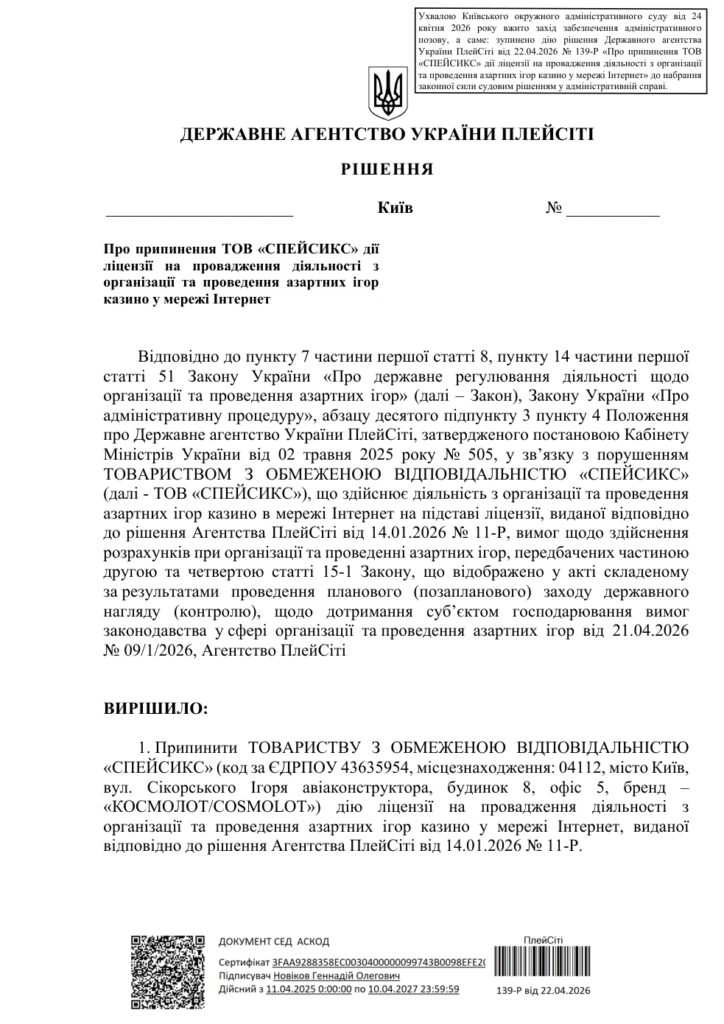
Two days later, the Kyiv District Administrative Court granted the application for interim relief and suspended the effect of this decision pending the entry into force of the judgment in the administrative case. Case number: 320/16898/26; ruling number: 135981232. Consequently, a report merely stating that the licence had been revoked, without reference to the subsequent court ruling, would present an incomplete picture. [22]
In September 2026, RBC-Ukraine published a report on the resumption of Cosmolot’s operations. It is labelled as an advertisement and is based on a press release from the company. In it, the operator announced its acquisition by Nevada Gaming Holding in November 2024, the settlement of tax claims in 2025 and the resumption of operations following a court suspension of the regulator’s decision. This is the company’s public position; it is important to state its source clearly. [23]
Neither PlayCity’s official decision nor the court’s ruling, taken on their own, establish Tokarev’s current control over ‘Spacix’. Therefore, the phrase ‘owner of Cosmolot’ from the headline of an older publication does not constitute a claim in our article regarding the ownership structure as of November 2026. The question of previous commercial ties remains a separate issue and requires historical documents.
Domain, advertising contractor and beneficial owner — different levels of evidence
The source text provided contains technical details regarding redirects from Lucky Labs domains to lottery-cloud.com, the use of the CL Loto platform and the proximity of web resources. Such information could form the basis of an investigation. However, for a reproducible verification, we need the date of observation, archived DNS data, specific domains and clarification as to exactly what was shared: the server, the address, the advertising system or the legal operator.
A single IP address can serve independent projects. A single advertising contractor may also work with competing clients. Based on these criteria alone, it is not possible to identify the beneficial owner without additional documentation. In this article, the historical technical description is based on the version from the original source: we have not received our own verified reconstruction of the specified infrastructure for 2020. [1]
The same caution is required when reading public correspondence and joint photographs. These may confirm contact or an acquaintance in a specific context. Contracts and financial documents are required to establish the distribution of shares, the size of investments and the sources of payments. It is precisely this kind of information that transforms a striking collage into a verifiable business investigation.
Diya.City and the key issue for its public reputation
A set of documents from the residents’ association, published on the Diya.City platform, contains a list of its members as at 3 July 2023. Among the companies named are ‘Roosh’, code 44390633, and ‘Reface Ukraine’, code 40081022. This is a dated document from the association itself, posted on the government platform; it does not replace the full registration file for each resident. [24]
Allegations of unlawful authorisation require an examination of the ownership structure and documents as at the date of the decision. It is not acceptable to simply take old information on citizenship and a new record of residency and assume that the verification process is complete. For meaningful public scrutiny, the dates, grounds for authorisation and the information available to the authority are essential.
That said, the right to demand explanations remains. There are already enough verifiable facts in this story: public links to Lucky Labs, the legal dispute surrounding Phoenix, past sanctions and the officially announced partnership with the Ministry of Digital Transformation’s initiative. These provide grounds for a careful examination of the origin of the capital and the business’s relations with the state. However, they do not constitute evidence of a specific violation.
What lies behind the high-profile names and logos
| An individual or a company | What has been confirmed by selected sources | What requires further verification |
|---|---|---|
| Sergey Tokarev / Lucky Labs | Public biographies, their own comments and historical sanctions rulings | The full story of the transfer of assets and control |
| Rustam Gilfanov / Phoenix Holdings | Involvement in a court appeal concerning a commercial dispute | The final outcome of the dispute outside the scope of the chosen legislation |
| Max Polyakov / Together Networks | The subject of the dispute is set out in the court ruling; Cupid is mentioned in his public biography | The identity of various companies and conclusions regarding all subsequent projects |
| Mikhail Fedorov / HackCorona | Tokarev’s government initiative and public partnership | Any allegations of exchanging funding for decisions by the authorities |
| First / First Element | Registration details and the application form for a specific trade mark | Control exercised by individuals not featured in the current overview |
| Cosmolot / Spacix | PlayCity’s decision and the court order suspending its implementation | Tokarev’s current control over the operator |
| Roosh / Reface | Public roles, investors and actual product areas | Allegations regarding the criminal origin of investment capital |
The most awkward question regarding this story concerns the verifiability of the explanations. If a withdrawal from the old business is claimed, details are needed regarding exactly what has been sold. If the state is inviting a partner, clear verification criteria are needed. If a company mentions a new owner, documents confirming control are required. The answers to these questions are more important than yet another presentation on the future of artificial intelligence.
This article was prepared as at 20 November 2026. Historical information is cited with dates; versions of the original publication are distinguished from verified documents. No individual enquiries were sent to the individuals mentioned whilst preparing this article. Public comments and statements found online have been used. The cover is an illustrative collage, not a photograph of a joint event involving all the people shown.