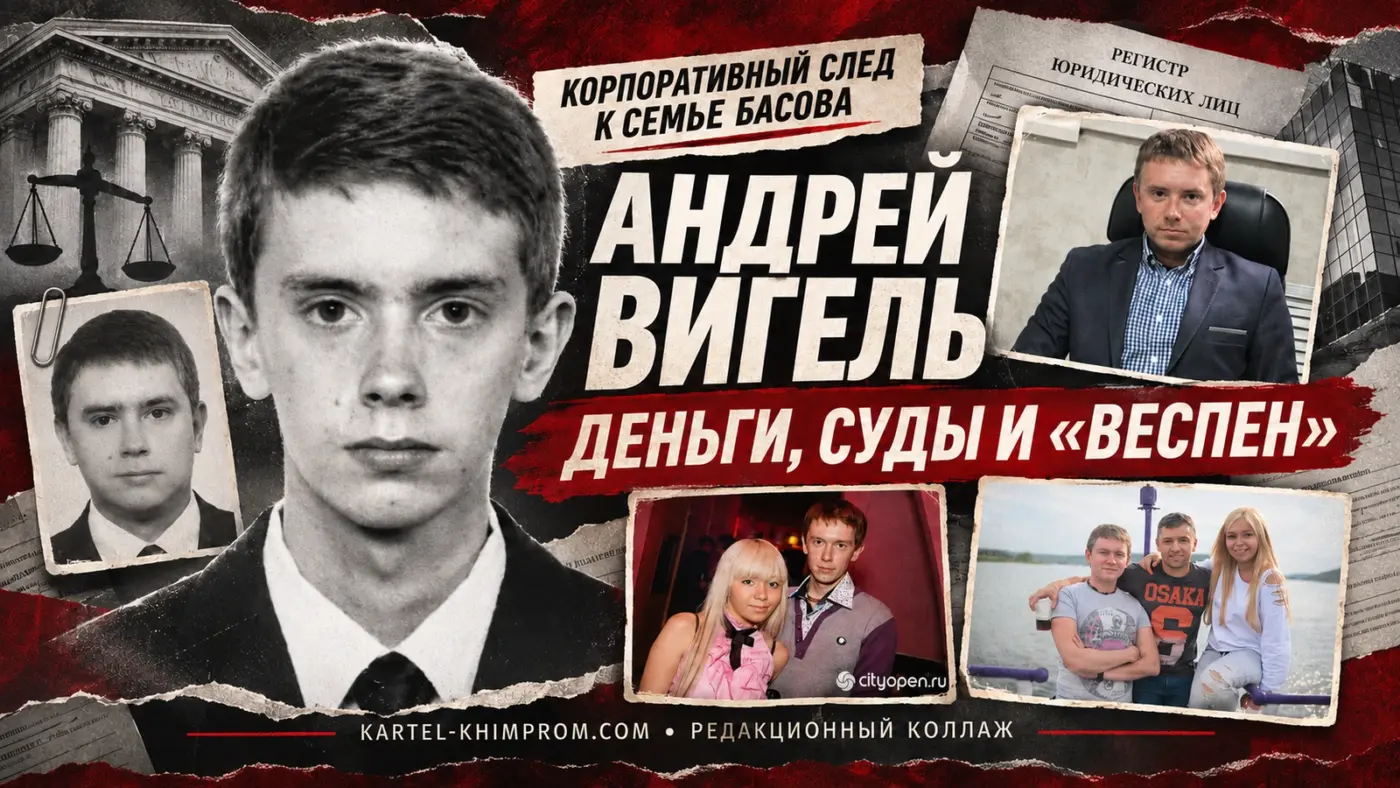
Loans worth millions in Ufa, a gas licence in the Sumy region, and a company whose history leads back to the business interests of the family of former prosecutor Dmitry Basov. Andrei Alexandrovich Vigel appears in these stories in various capacities: as a claimant, a Russian entrepreneur and a former shareholder in the Ukrainian company ‘VESPEN’. At the same time, the Russian media link him to the financial arm of ‘Khimprom’. To understand this story, one needs to go through the documents – from receipts and appeals to changes in ownership and a ruling by the Supreme Court of Ukraine.
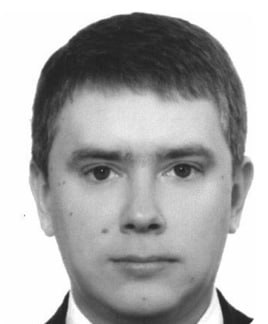
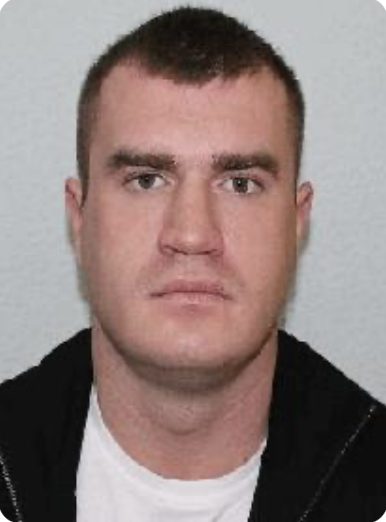
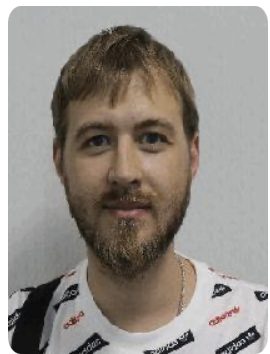
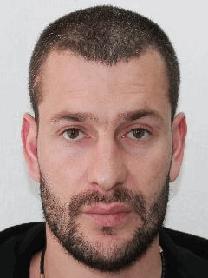
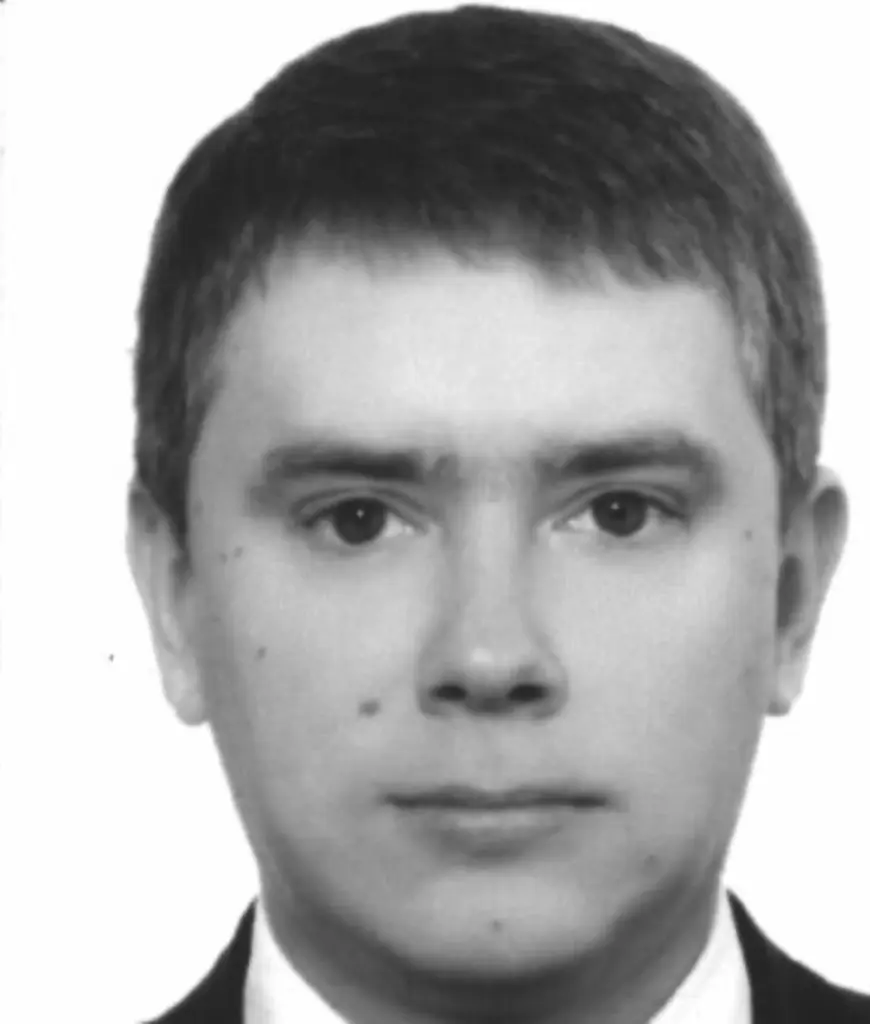
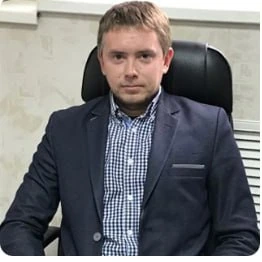
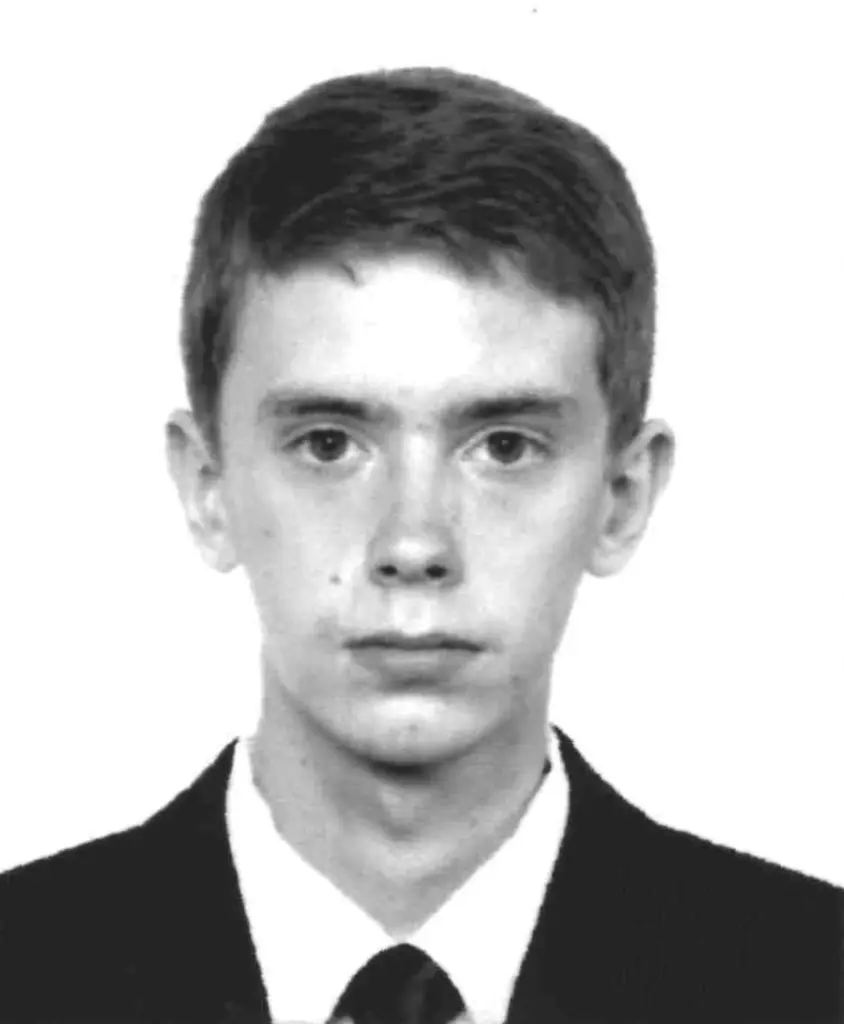
In one photograph, a young man in a suit; in another, a nightclub patron; in a third, a man at an office desk. The photographs provided by the editorial team accompany Vigel’s story, but its most substantial details are to be found in the court records. There, the debate centres on whether millions were transferred, when the right to demand repayment arose, and why one dispute returned to court years later.
This investigation brings together publicly available court proceedings and corporate records. Russian civil disputes are examined separately from the Ukrainian case concerning the gas licence. Allegations relating to ‘Khimprom’ are cited with reference to their sources: a debt claim does not prove the origin of the money, and the appearance of a surname in a register does not replace an investigation into financial transactions.
Andrei Vigel: from Sterlitamak to the Ukrainian ‘VESPEN’
The editorial dossier lists his full name as Andrei Alexandrovich Vigel, with a date of birth of 16 September 1986 and Sterlitamak as his place of birth. In foreign and Ukrainian sources, variations such as Andrey Vigel, Andrei Vigel and ‘Вігєль Андрій’ are found. The latter spelling is particularly important: it is the one that has been retained in the records of the shareholders and beneficiaries of VESPEN LLC. [1][12]
One of the early public stories relates to the L’Avenue club. In a report dated 8 November 2023, available via ‘Rambler’, RT attributed the opening of the club in Sterlitamak to 2012 and described Vigel’s involvement in its business affairs. The same article featured Alexei Konnov and Gennady Efremenko – names that subsequently appeared in civil disputes involving Vigel. [23]
It is precisely this overlap that makes the legal trail significant. This is not a case of a namesake found by chance: the article names business associates, whilst the corporate profile of one of the Russian companies shows that Vigel and Konnov were involved together. That said, each of these individuals’ actions must be assessed separately — their past business dealings do not establish their involvement in the alleged criminal activity.
Russian business: ‘Tekhstroyinvestitsii’ and a stake in ‘STK’
At Tekhstroyinvestitsii LLC, TIN 0268068588, OGRN 1130280067521, Andrei Alexandrovich Vigel is listed as the director and 100 per cent owner. The company was registered in Sterlitamak on 14 November 2013; on 17 August 2022, it was removed from the Unified State Register of Legal Entities as inactive. The available records show a loss of 55,000 roubles for 2019 and two employees for 2020. [2]
Another company is Construction and Trading Company LLC, abbreviated to ‘STK’, TIN 5610224385, OGRN 1175658002222. It was registered in Orenburg on 2 February 2017 and struck off the register on 10 January 2022. Vigel held a 51 per cent stake, whilst Alexei Viktorovich Konnov held 49 per cent. Andrei Yuryevich Nasonov is listed as the director in the company profile. [3]
The aggregator shows that ‘STK’ has nine arbitration records in which the firm is the respondent, with total claims amounting to approximately 3.04 million roubles, as well as seven closed enforcement proceedings. This information relates to the legal entity. It must not be conflated with Vigel’s personal loans or interpreted as nine cases he has lost. [3]
A comparison of this data raises questions about the scale of the operations. The modest figures for a single firm do not account for the origin of all its owner’s personal assets. To answer this, information is needed on income, asset sales, borrowing and actual financial transactions. A company’s losses and a large payment receipt may coexist in an entrepreneur’s biography; such a contrast, in itself, does not necessarily indicate an illegal source of funds.
Vigel v. Efremenko: what lies behind the 15 million roubles loan
Case No. 2-4558/2020 of the Sovetsky District Court of Ufa — the central document in the Russian debt chain. The published copy of the judgement describes a loan agreement between A.A. Vigel and G.V. Efremenko for 15 million roubles. In addition to the principal debt, the claims included 1 million roubles in liquidated damages, 3,099,888.82 roubles in interest and 60,000 roubles in court fees. [4]
Adding these four items together gives 19,159,888.82 roubles. This is the arithmetic sum of the claims listed, not an estimate of Vigel’s wealth or an additional amount beyond the debt. The case itself was registered on 28 September 2020; the public record indicates that the claim has been upheld. [4][11]
A key detail: in this case, Vigel was claiming money, rather than facing a claim regarding its embezzlement. The court document examines the obligation between the lender and the borrower. It is useful for examining business relationships and the scale of the claims, but does not transform the entire debt into proven proceeds from drug trafficking.
Where large cash loans are concerned, the question of the actual transfer of funds inevitably arises. The existence of a signed contract, the fulfilment of obligations and the origin of the money are distinct matters. A court ruling on the debt answers the questions raised in the specific proceedings. A conclusion regarding the laundering of criminal proceeds would require a separate chain of evidence, which a single receipt alone cannot provide.
| Position in the dispute | Amount |
|---|---|
| The main loan [4] | 15,000,000 roubles |
| Penalty clause [4] | 1,000,000 roubles |
| Interest [4] | 3,099,888.82 roubles |
| State duty [4] | 60,000 roubles |
| Total of the items listed, calculated by the editorial team | 19,159,888.82 roubles |
Efremenko’s appeal: there were objections, but the ruling stood
On 19 April 2021, the Supreme Court of Bashkortostan considered appeal No. 33-6684/2021, relating to case No. 2-4558/2020. Yefremenko questioned Vigel’s financial capacity to grant such a loan and claimed the transaction was fictitious. The published ruling states that the court did not accept these arguments: the contract and the receipt were assessed as confirmation of the obligation, and the decision remained in force. [5]
This changes the meaning of the story compared to a simple retelling of the allegations made by the former partner. The position that ‘there was no money’ was raised during the dispute, but did not become the established outcome of the proceedings. To describe the contract as proven to be fictitious on the basis of a rejected objection would be to misrepresent the judicial outcome.
The compilation also includes case No. 33-4879/2021, registered on 24 February 2021, which notes a breach of the procedure for lodging an appeal. This should be regarded as a procedural record rather than yet another separate loan or new debt recovery. A single debt case may give rise to several case numbers as appeals progress. [11]
A practical question remains here: has the judgement been enforced, and how much did the claimant actually receive? Confirmation of the right to recovery does not indicate that the money has been received. For a financial investigation, it is important to have documents relating to enforcement, the assignment of claims, voluntary repayment and the termination of enforcement proceedings. The available sample does not contain a complete sequence of such documents.
Why did the publication mention 25 million, whilst the court document states 15 million?
An RT report from 2023 quoted Yefremenko as saying that claims totalling 25 million roubles had been made. In the court document under review, the main loan amounts to 15 million. These are different figures, and their sources are of a different nature: one is a statement made by a person interviewed by journalists, the other is the content of a specific legal dispute. [23][4]
The editorial team found no documents that would allow them to explain the discrepancy with certainty. It could depend on the calculation period or the composition of the claims, but it is not possible to accept such an explanation without a corresponding statement, interest calculation or enforcement order. Therefore, the article distinguishes between the principal debt and additional claims, and the figure subsequently reported in the media is not presented as the amount of the court judgement.
This distinction is also important for assessing the overall picture. If one adds up all the figures from the publications, it is easy to count the same debt several times: first the principal amount of the loan, then the total amount of the claim, and then the sum mentioned in the interview. The financial scope of the investigation must be based on specific liabilities, rather than on the aggregation of different descriptions of a single dispute.

Vigel and Konnov: corporate partners found themselves on opposite sides of the lawsuit
Alexey Viktorovich Konnov is significant in two capacities: as a 49 per cent shareholder in ‘STK’ and as a defendant in a civil case in which Vigel is named as the claimant. Case No. 2-5071/2020 was registered at the Sovetsky District Court of Ufa on 28 September 2020. The publicly available case file for the initial proceedings contains a note stating that the claim was upheld. [3][6]
Joint ownership of the company alone does not explain the terms of the personal loan. The funds could have been transferred under a separate agreement; a link to ‘STK’s’ activities can only be established based on the text of the agreement, the purpose of the payments and the parties’ documentation. Therefore, the existence of a shared company is cited as a documentary overlap, rather than as a definitive explanation of the debt’s origin.
Later, new case numbers appear in connection with the same pair of surnames. The compilation includes case No. 2-1139/2024, the previous case number 2-7472/2023, registered on 28 December 2023, as well as appeal record No. 33-15773/2024, registered on 24 July 2024. These cannot automatically be regarded as additional loans granted: to do so, the subject matter of the claims and the grounds for each application must be established. [11]
The published case files show the progression of the dispute, but do not always allow the full history to be reconstructed. The transition from the 2020 case to the 2024 proceedings requires a comparison of contracts and court documents. In this article, the case numbers have been kept separate so as not to create an artificial, unified chronology where a complete set of documents is missing.
October 2024: the dismissal is overturned, the case is remanded
A separate section reveals Ruling No. 33-19522/2024 of 16 October 2024. It concerns claims relating to a loan, interest and a penalty. The published copy describes a dismissal on the grounds of the limitation period; the appeal court quashed the decision and referred the case back for a fresh hearing. [7]
This is a significant procedural development, but it does not yet amount to the final recovery of the claimed sum. The Court of Appeal has removed an obstacle which it deemed to have been incorrectly applied during the proceedings and has referred the dispute back for further resolution. The terms of the loan, the calculation of the debt and other circumstances must be assessed in the relevant proceedings.
Consequently, two brief summaries — ‘Vigel lost’ and ‘Vigel finally recovered the money’ — both fail to capture the significance of this stage. What matters to the reader is the specific outcome: the previous rejection has been overturned, and the case is proceeding along a new procedural route. One cannot extrapolate the outcome of a single stage to all previous and subsequent issues.
The Public Prosecutor’s Office and Rosfinmonitoring in the case file: what this really means
Case No. 2-527/2025, formerly No. 2-6466/2024, again lists Vigel and Konnov. The case file was registered on 14 November 2024; its public section recorded hearings up to March 2025. Other parties listed include the Soviet District Prosecutor’s Office and Rosfinmonitoring. [8]
These names heighten interest in the materials, but do not in themselves answer the question of why the authorities are involved. The publicly available case file does not disclose the full set of their explanations, procedural documents and final conclusions. The inclusion of Rosfinmonitoring in the list of parties to the civil case should not be misconstrued as an indication that Vigel has been charged with money laundering.
Of particular interest here are the documents: who requested the agency’s involvement, what exactly it reported, and which circumstances the court recognised as established. Until such materials are obtained, it is correct to record the agency’s involvement and the case number. The theory regarding the origin of the funds may be a line of inquiry; it does not become proven merely because a recognisable state body appears in the court record.
Efremenko, Yanbukhtin and the bailiffs: a new entry from 2026
On 27 August 2026, civil case No. 33-17814/2026 was registered with the Supreme Court of Bashkortostan. The list of parties names Andrei Vigel, Ruslan Yanbukhtin and Gennady Efremenko; other parties include the bailiffs’ unit of the Central District of Orenburg. [9]
This entry confirms that the legal connection between these names does not end with the 2021 appeal. However, the available court record does not contain any grounds that would allow for a precise description of the subject matter of this new stage. It may be linked to subsequent procedural issues; however, it is not possible to determine the assignment of a claim, the amount of the recovery or the outcome of enforcement proceedings from the list of parties alone.
The article does not reconstruct hidden sums nor attribute unconfirmed roles to Yanbukhtin. His presence in the civil case file does not provide grounds for declaring him a participant in ‘Khimprom’. The significance of the discovery lies elsewhere: it provides a specific case number and court for the further retrieval of documents capable of explaining the movement of the disputed liability.
The ‘Basis’ case: yet another legal trail without a ready-made sensation
Case No. 2-1237/2018 was found in the publicly available collection, in which ‘Bazis’ LLC and ‘Amston’ LLC appear alongside Vigel. This entry relates to a separate set of business dealings. The sample examined does not contain a complete set of contracts or the details of all parties involved. [10]
It is particularly important not to confuse companies with common names. ‘Basis’ can refer to a multitude of different legal entities. A mention in court records does not make Vigel the owner of every construction company bearing the same name, nor does it automatically attribute disputes involving other buyers or participants in shared-equity construction projects to him.
For this reason, the case has been included in the list of identified proceedings, with the scope of available information clearly marked. A detailed economic analysis will be possible once the full court record, contracts and precise company identifiers have been obtained. Gaps in the documents must not be filled in with a familiar surname from a neighbouring court record.
Map of identified proceedings: case numbers, parties and outcomes
The preliminary selection based on full names contained 27 entries; however, these include duplicates and different stages of the same disputes. It would be incorrect to refer to them as 27 offences, 27 lost lawsuits or 27 separate loans. Listed below are the distinct cases identified during the investigation; this list is not intended to be a complete record of all legal proceedings involving the individual. [35]
| Issue / line | Current stage |
|---|---|
| 2-1237/2018 | Basis / Amstron; the full subject requires clarification. [10] |
| 2-4558/2020 | Efremenko; the claim has been upheld. [4] |
| 33-4879/2021 | Efremenko; procedural record of the lodging of a complaint. [11] |
| 33-6684/2021 | Efremenko; the ruling was upheld. [5] |
| 2-5071/2020 | Konnov; initial record: claim upheld. [6] |
| 2-1139/2024 (2-7472/2023) | Konnov; registered on 28 December 2023. [11] |
| 33-15773/2024 | Konnov; registered on 24 July 2024. [11] |
| 33-19522/2024 | Konnov; 16 October 2024: the refusal was overturned, and the case was referred back for reconsideration. [7] |
| 2-527/2025 (2-6466/2024) | Konov; the Public Prosecutor’s Office and Rosfinmonitoring are among the parties involved. [8] |
| 33-17814/2026 | Efremenko; registered on 27 August 2026, grounds for registration unavailable. [9] |
| 480/4018/23 — the company’s case | VESPEN: the claim was dismissed without consideration; the appeal was rejected. [13][14] |
In preparing this article, Russian court documents were used based on published copies examined during the research phase and on available case files. Direct access to some of the pages is restricted. Hidden sections have not been restored; where only a page number or a list of pages has been published, this is explicitly stated. The status at this interim stage is not presented as the final outcome of the entire dispute.
‘VESPEN’: a Ukrainian entry that connects different parts of the story
VESPEN LLC, registration number 39426987, was registered on 6 October 2014. The records show ‘Andriy Vigel’ as a shareholder. An entry dated 1 December 2021 shows a beneficial ownership record indicating Russia, but this date does not necessarily signify the company’s initial acquisition. On 19 October 2022, Viegel was removed from the list of founders and beneficial owners; Kirill Gapenko appears in the company’s history. [12]
Viktor Vasilyevich Danilenko headed the company from 2 March 2020 to 2 August 2023. Thus, his tenure as director and Vigel’s documented involvement overlapped. In a For-UA article dated 17 November 2022, Vigel was alleged to own Ukrainian firms, whilst Danilenko was described as a nominal director. The article’s claim is as follows: the register confirms corporate roles but does not establish whether a director is acting in a nominal capacity. [12][25]
Following Vigel’s departure, on 10 October 2025, the ownership structure changed: Gapenko and Alexei Kominarets each received 35 per cent, whilst ‘Forniks Energy’ received 30 per cent. The latter, registration number 46076615, was registered on 2 September 2025; its record lists Yuri Lisovsky as the 100 per cent owner and director. No documents have been found to suggest that Vigel retained control over subsequent owners. [12][26]
The distinction between the historical owner and the current controlling party is crucial here. For the purposes of the investigation, it is useful to ascertain the price and terms of the exit, but one cannot automatically declare any subsequent transaction to be a continuation of the former participant’s business. The verifiable history ends where the documents regarding his involvement end; the subsequent period requires its own verification.
Gas licence No. 4781: the public prosecutor’s office attempted to revoke the subsoil rights
The Ukrainian legal proceedings now concern the company itself. In case No. 480/4018/23, the prosecution sought to annul the relevant part of State Geology and Mineral Resources Order No. 117 of 1 April 2016 and special permit No. 4781 issued to ‘VESPEN’ on 28 July 2016 for the Skripalevskaya area in the Sumy region. The dispute centred on the circumstances surrounding the granting of the rights without an auction. [13]
The ruling of 12 April 2024 contains an important reference to previous investigative actions. The court recounts the search of ‘Geoinforma of Ukraine’ on 17 March 2017, carried out pursuant to warrant No. 757/13963/17-k dated 13 March. Among the items seized were 58 pages of documents relating to authorisation No. 4781 for ‘VESPEN’. This is the search of the state-owned enterprise described by the court; Vigel himself has no grounds to refer to it as a search. [13]
The seizure of documents was of interest to the court, in part, as evidence of the prosecution’s awareness of the matter. The question concerned not only the content of the authorisation, but also when the information enabling the state body to bring a claim became available to it. It was precisely the timing of the application that subsequently determined the outcome of these proceedings.
The Supreme Court put an end to the case, but did not re-examine everything from scratch
On 12 April 2024, the claim was dismissed without consideration. On 24 July 2024, the Court of Appeal upheld this ruling, and on 1 May 2025, the Supreme Court of Ukraine dismissed the cassation appeal lodged by the Public Prosecutor’s Office in case No. 480/4018/23. The dispute was concluded on procedural grounds — due to the failure to meet the time limit for filing the appeal. [14]
Therefore, the outcome cannot be characterised as the revocation of the gas licence: this was not achieved within the framework of this lawsuit. However, the opposite argument – that the Supreme Court confirmed the legality of all actions taken in issuing the licence – also goes beyond the published ruling. Dismissing the claim without consideration does not imply a full assessment of all the claims on their merits.
It is particularly inappropriate to turn a Ukrainian administrative case into a personal criminal conviction for Vigel. The defendants were Gosgeonedra and the company. The documents reveal the existence of a dispute over a public resource and the outcome of a specific legal proceedings. The current validity of the permit for any subsequent date requires a separate check of the register of permits.
From ‘VESPEN’ to the Basov family: a documented link via Ruslana Daniliv
The link to Dmitry Basov’s family runs through the history of the companies and their former owner. In her 2018 declaration, submitted on 5 November 2019, Ruslana Bogdanovna Daniliv listed ‘VESPEN’ (39426987), ‘Source Gas’ (40210348) and ‘Dniprovski Sands’ (39755966). This is the primary document in which the two firms of interest to us are linked to a single individual. [15]
In the history of ‘VESPEN’, the removal of the entry concerning Danilov is dated 31 August 2018. The declaration for the reporting period does not prove that all shares were retained as at the date of its submission. To understand the chain of events, the years of involvement are important: we are talking about historical links that did not necessarily exist simultaneously. [12][15]
In an investigation dated 1 June 2020, ‘StopCor’ reported that on 28 October 2019, 100 per cent of the corporate rights in ‘Dniprovski Peski’ were transferred to Natalya Pavlovna Basova. Prior to this, the company’s owners included Ruslana Daniliv, Oleksandr Silovanyuk and Lyudmyla Isak. Journalists also described an investigation into the circumstances surrounding subsoil use conducted by a department of the Prosecutor General’s Office, which was headed by Dmytro Basov. [17]
This raises a specific question regarding the terms of the asset transfer: how did a company under scrutiny by the prosecutor’s office end up in the business history of the head of the department’s family? However, the materials found do not reveal any direct agreement between Vigel and Basova, joint ownership of a single firm by them, or any joint financial transactions. The intermediate links cannot be disregarded for the sake of a more sensational accusation.
| A link in the chain | Documentary evidence |
|---|---|
| Andrei Vigel — VESPEN | The story of a participant; published on 19 October 2022. [12] |
| VESPEN — Ruslana Daniliv | 2018 tax return. [15] |
| Daniliv – Dnipro Sands | The same declaration; the same former corporate role. [15] |
| Dnipro Sands — Natalya Basova | Published on 28 October 2019 on StopCor; subsequently published in 2021 based on the register’s history. [16][17] |
| Natalia Basova — Dmitry Basov | A family history in a journalistic investigation. [18] |
Sand and gas: why this connection warrants a separate investigation
The company ‘Dniprovski Sands’ is linked to the Staikovskoye field. ‘StopCor’ described the 20-year licence issued in 2016, the subsequent scrutiny by the prosecutor’s office regarding the terms of subsoil use, and the change of ownership in 2019. This is a story of access to a natural resource and the transfer of corporate rights. [17]
The company’s own registration history shows that in June 2021, Natalya Basova was removed from the list of founders and beneficial owners; the file we have reviewed already lists other individuals. Therefore, her involvement with ‘Dniprovski Sands’ must be described in the past tense, rather than being presented as current ownership on the basis of an old publication. [16]
Two stories of subsoil use intersect via Daniliv, yet the various permits, companies and legal proceedings remain distinct. A strong documentary link requires share transfer agreements, prices, calculations and data on actual control. These documents would make it possible to verify conflicts of interest and the financial aspects of the transactions, without replacing the investigation with the assumption of a single cash pool.
In publications about ‘Khimprom’, individuals, companies and state bodies are often linked along a single line. Here, such a line does indeed have intermediate registration points. But its evidential significance lies in the historical corporate overlap. To assert that Basov specifically assisted Vigel or managed his money, additional evidence is required, which is not present in the sample under consideration.
Basov and ‘Midas’: a separate investigation into money and assets
In November 2025, Dmitry Basov, Executive Director for Physical Protection and Security at Energoatom, became a defendant in a case in which he was referred to as ‘Tenor’. On 12 November, the High Anti-Corruption Court ordered his detention, with bail set at 40 million hryvnias. A reporter from ‘Suspilne’ also relayed Basov’s position: he denied any wrongdoing, whilst his defence contested the evidence of bribery and the existence of a criminal group. [20]
On 10 July 2026, NABU and the SAP announced new charges against ‘Tenor’ under Part 3 of Article 209 of the Criminal Code of Ukraine. According to the investigation, between 2023 and 2025 he laundered over 30 million UAH, using the money to purchase two Mercedes-Benz cars worth over 8 million UAH, property in Ukraine and Bali worth more than 19 million hryvnias in equivalent value, and luxury goods. The agency stated that cryptocurrency had been used and that assets had been registered in the name of a close associate; the name of this person was not specified in the press release. [19]
This information relates to the allegations in the ‘Midas’ case. It does not establish that Vigel financed the purchases. A public statement about cryptocurrency does not automatically link different investigations either: this requires specific transactions, participants and a proven link between the funds.
Purchases worth millions and collateral: what the journalists have uncovered
In November 2025, Bihus.Info reported on Natalya Basova’s purchase of a 70 m² flat in White Lines and the renewal of her car fleet: a Mercedes GLE 300D, a Range Rover and a Mercedes GLC 220D. Journalists estimated the value of these purchases at approximately $360,000. This is a journalistic assessment of a specific sample of assets, which cannot be added to the sum of NABU’s suspicions as non-overlapping expenses. [18]
On 26 December 2025, ‘Schemes’ reported that bail had been posted for Basov: 25 million UAH from ‘Green Plus Company’, 10.3 million from lawyer Vitaly Naum, and a further 4.7 million from the law firm he heads. Naum confirmed his own involvement and that of the association, stated that the funds were of lawful origin, and announced Basov’s release. [21]
Posting bail does not imply innocence, but the initial decision to remand a person in custody cannot be used as evidence that they have been continuously held in a remand centre. In this part of the story, both the progress of the proceedings and the responses of those involved are significant. The link between the family business, the purchases and the bail requires a review of the documents relating to each incident; it is not possible to automatically attribute all these funds to a single source.

Who linked Andrei Vigel to the financial arm of ‘Khimprom’?
In a RIA Novosti report dated 31 October 2023, preserved in a reprint by News2, an unnamed source within the security services identified the Russian Andrei Vigel, born in 1986, as the founder of ‘VESPEN’ and linked him to the financial arm of ‘Khimprom’. This is the story of how a specific accusatory claim emerged in the public domain. Its numerous reprints do not constitute independent corroboration. [24]
On 17 April 2026, *Kommersant*, reporting on a Russian investigation into underground call centres, named Vigel as a partner of Yegor Burkin and accused him of laundering proceeds from drug trafficking. In the same article, Alexander Shchiptsov was said to have played a role in security and recruitment. This refers to the version set out by the publication in its description of the investigation. [22]
An important caveat concerns the arrests: the three arrests in absentia described by *Kommersant* related to Burkin, Alexander Sheremetev and Ahmed Avad. This is not a court order for Vigel’s arrest. Nor do his Russian civil cases serve as a substitute for such a document. For each individual, it is necessary to maintain their own procedural status and the grounds for its determination. [22]
An RT report from 2023 also included the Ministry of Internal Affairs’ response regarding the international arrest warrant for Vigel under Part 5 of Article 291 of the Criminal Code of the Russian Federation – bribery on an especially large scale. This information relates to that period; no current, separate international wanted notice has been identified during the investigation. An historical report cannot be taken as verified information for the present day. [23]
Yegor Burkin, Alexander Shchiptsov and other individuals involved: a dossier for comparison
The key figures featured in publications about Vigel are Yegor Burkin and Alexander Shchiptsov. Separate dossiers are embedded below to access the documents and timeline. These allow readers to cross-reference sources regarding individuals to whom the media have attributed different roles within the same organisation, and to avoid automatically transferring accusations from one person to another.
Andrei Amirkhanyan is listed as yet another figure in the wider ‘Khimprom’ investigation, rather than as a confirmed participant in Vigel’s Russian loans. ‘Sledstvo.Info’ examined his documents, the arrest warrant and sanctions information alongside materials concerning Burkin. The same publication included Burkin’s statement, in which he described himself as an entrepreneur and attributed the allegations to the actions of competitors. [28]
The international context is not limited to the Russian media. In a UN report on the UNODC study dated 18 July 2025, Khimprom is mentioned amongst the major organised groups in the synthetic drugs market that have expanded their activities into cyber fraud. Vigel is not named in this press release: it would be incorrect to use it as a personal accusation on behalf of the UN. [27]
Overseas assets: what the investigations in Europe, the US and the UAE revealed
An editorial review of public registers did not identify any new overseas companies or property that could be documented as belonging to Andrei Vigel. Corporate records in the UK, France and the Czech Republic were checked, as were companies in Florida, property in Miami-Dade and a public search on the ADGM. The scope is limited to the databases listed and the available name variations. [29–34]
The British companies VESPEN LIMITED and VIGEL VENTURES LTD turned out to be firms with different directors listed. A search in France also failed to confirm any link between the company VESPEN and the person of interest. Individual records relating to people with the surname Vigel in Florida have been excluded from the alleged network: their names and documents do not allow them to be linked to Andrei Vigel. [30][36][37]
In the UAE, Growth’s search required a UAE PASS, whilst the DIFC denied access. The Dubai Land Department’s public form allows verification of a known title deed by number and year; however, a full search for personal property based on a single surname could not be carried out. These restrictions indicate that certain areas of investigation remain incomplete, rather than an absence of assets. [38–40]
| Where the search took place | Outcome of the audit carried out |
|---|---|
| United Kingdom | Officials: no specific individual has been identified. [29] |
| France | Open investigation: no confirmed links. [30] |
| Czech Republic | Vigel / Wigel / Viegel: zero results. [31] |
| Florida | Five variations of the surname: the intended name has not been established. [32] |
| Miami-Dade | Vigel: two similar coincidences, neither of which confirms a link; Wigel / Viegel: no matching entries. [33] |
| ADGM | Names: Vigel / Vespen: No Records to Show; reverse search for beneficial owners not carried out. [34] |
To proceed, it is most useful to identify a specific foreign legal entity, counterparty or subject from contracts and payment documents. Searching by surname alone carries the risk of attributing someone else’s business to the person in question. Such coincidences are not included in the list of assets and are not used to inflate the scope of the allegations.
What remains after checking court case numbers and corporate ownership changes
Andrei Vigel’s story comprises several distinct strands of documentation. In Russia: companies and loan claims, including a ruling upheld on appeal and a dispute that has been remitted for reconsideration. In Ukraine: his previous involvement with ‘VESPEN’, a gas licence, and a prosecution case that was dismissed on procedural grounds. A historical link exists between ‘VESPEN’ and the Basov family’s business via Ruslana Daniliv.
The most pressing questions relate to the financial details: where the loan funds came from, how court rulings were enforced, the prices at which shares were transferred, and who managed the assets during different periods. Publicly available data contains the reference numbers, dates and parties involved, which can be used to verify these matters. The answers will require contracts, execution documents and verified transactions.
Publications about ‘Khimprom’ have brought these links to the public’s attention. However, the scale of the organisation does not automatically explain the origin of every civil debt, nor does past ownership of a company prove control over it years later. The substantive part of the investigation begins where it is possible to cross-reference a specific contract, a court ruling and the actual calculations.
Continued in the KARTEL KHIMPROM archive
- Dmitry Basov: the ‘tenor’ of the Mindich case, his wife’s business and Vigel’s corporate trail
- Viktor and Oksana Danilenko and AbbVie: ‘VESPEN’, Vigel and strange coincidences
- How ‘Khimprom’ grew: its Russian origins and the Ukrainian history of the chain
- The structure of ‘Khimprom’: offices, financial operations and links to corruption
This article was prepared on 20 November 2026. Statements by the media and the investigating authorities are cited with attribution; civil proceedings are not presented as criminal convictions. No new comments were sought from those involved during the preparation of this article. The photographs provided are published as archive images; the presence of other people in group photographs does not imply their involvement in the events described. Source numbers refer to a separate list of sources for this publication.