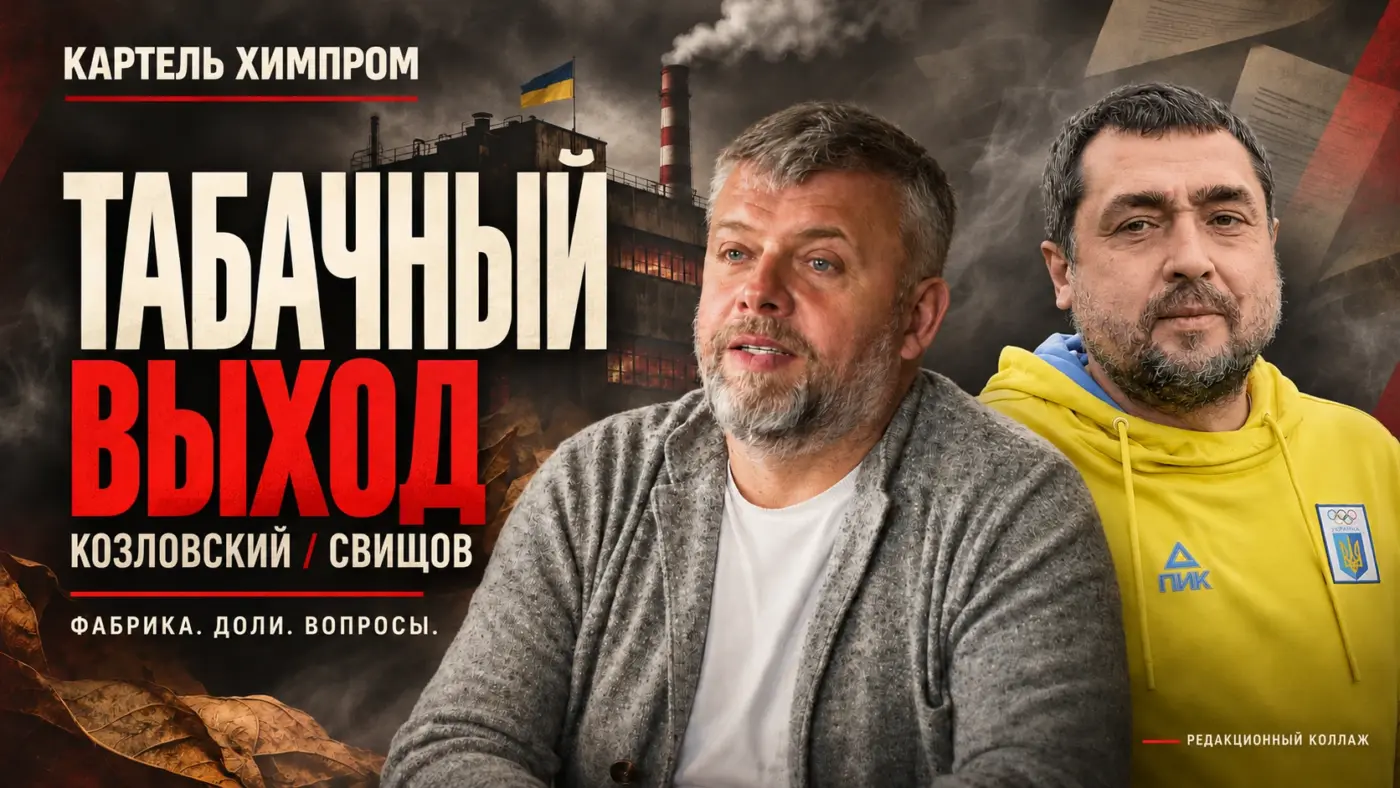
In the tobacco business, high-profile names outlast entries in the register. Grigory Kozlovsky and Alexander Svishchev withdrew from the Vinnikovskaya Tobacco Factory’s shareholder register in 2023. But this did not wipe the slate clean for the enterprise: the corporate shake-up was followed by new investigations, public accusations and a tough response from the management. We examine exactly what has changed on paper and which questions remain unanswered.
The key figures in the story
Football and water polo — the public side of tobacco industry biographies
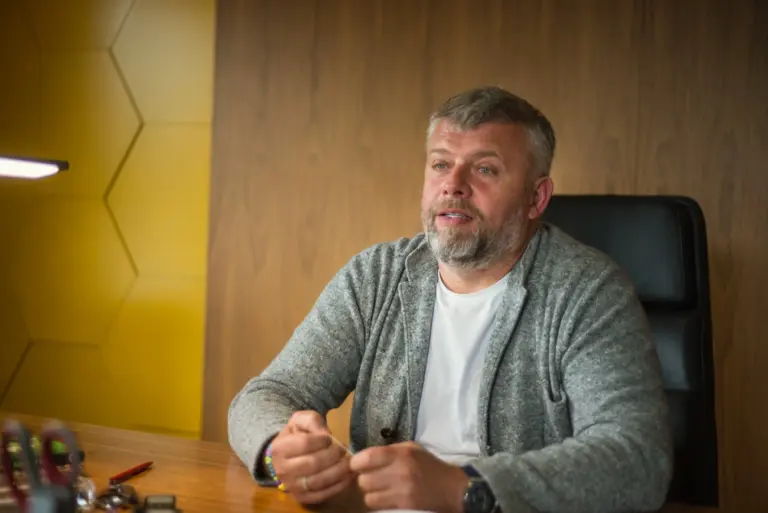
Kozlovsky is known as the founder of the ‘Rukh’ football club and as an entrepreneur with hotel and restaurant ventures. According to his biography on RBC-Ukraine, his career in the tobacco industry began long before the high-profile factory disputes: he worked at the Lviv production facility in customs and commercial roles, before going on to manage the factory. This represents a long-standing professional connection with the industry, rather than a mere coincidence of his name appearing in corporate documents. [1]
In his autobiography, Svischov describes his transition from trade and industrial enterprises to tobacco retailing, and subsequently to manufacturing. At the same time, he became a prominent figure in water polo, managed Lviv’s ‘Dynamo’ and headed the relevant Ukrainian federation. His personal website is the source of this autobiographical account; therefore, we cross-check information regarding later changes in ownership against an independent publication. [2]
Sport generates recognition, with photos of teams and a success story that resonates with a broad audience. However, to analyse the tobacco business, other documents are required: who owned the shares, who managed production, who controlled the goods, and how this structure evolved. Public reputation and corporate responsibility address different issues.
Half the factory for each party — followed by a handover back
ZAXID.NET reported on 23 May 2023: in October 2019, Kozlovsky and Svishchov each acquired a 50 per cent stake in Vinnikivska Tobacco Factory LLC. Each share was valued at 7.5 million UAH. In February 2023, Ruslan Bitsky, the company’s former owner, filed a claim with the commercial court, alleging non-payment. [3]
The matter was resolved through settlement agreements: with Svishtov on 29 March, and with Kozlovsky on 27 April 2023. According to the publication, the sale and purchase agreements were cancelled, and the company was returned to its former owner. From 19 May, Bitsky was once again listed as its owner. It is precisely this sequence of events that allows us to speak of the documented withdrawal of the two entrepreneurs from the list of shareholders. [3]
An important detail from the same report: following the change in shareholders, Rostislav Pavliv was named as the company’s director, whom ZAXID.NET described as Kozlovsky’s business partner. This is a separate business relationship. It does not prove hidden ownership, but it does show why a change of names in a single registry field does not exhaust the interest in the history of the company’s management. [3]
When the factory dispute went beyond the register
‘Lviv Portal’ reported on the investigative activities of the Economic Security Bureau at the factory in May and June 2024. In a report dated 15 June, the publication also recalled the discovery in March 2023 of 1.6 million packets without excise stamps. This is a specific tobacco-related incident: it concerns the goods and tax stamping, not merely a dispute over corporate shares. [4]
But at this point, it is particularly easy to misrepresent the facts: to spot the surname of a former company shareholder and declare him guilty of everything discovered on the premises. The reports examined do not support such a conclusion. Investigative actions at the enterprise, the origin of a specific consignment and the personal liability of managers require independent verification.
The factory’s response: lawful production and allegations of obstruction
The company responded sharply. In a statement published by ‘Ukrainski Novyny’ on 17 June 2024, the management spoke of the ongoing disruption to operations. Lawyer Oleksiy Riznyk described the actions of the security forces as unlawful and asserted that the factory held the necessary licences and that the products it manufactured were legal. [5]
According to the company’s representatives, the restrictions hindered the export of goods, normal operations and tax revenue. These claims cannot be quietly transformed into a confirmed court ruling, just as they cannot be ignored when describing the factory dispute. What we have here is a dispute over the legality of specific actions taken by the state and specific production operations. [5]
Three questions that matter more than a sensational label
| Question | What has already been established by media reports | What does this not prove? |
|---|---|---|
| Who owned the shares? | Kozlovsky and Svishchev were shareholders in the company; in May 2023, it was returned to Bitsky. [3] | Who actually controlled all subsequent operations. |
| What were the security services investigating? | The production site and tobacco products. [4] | The personal culpability of each former party involved. |
| What was the factory’s response? | She claimed that production was lawful and that the blockade was unlawful. [5] | The court’s final assessment of all the disputed issues. |
Public life goes on — and so do the questions
In October 2026, FC Rukh published an article on the renovation of a children’s football pitch with Kozlovsky’s assistance. News about water polo appeared on the Svishtov website. These publications demonstrate the ongoing public involvement of both entrepreneurs in sport at the relevant dates. They do not constitute a certificate confirming the absence of criminal proceedings or any current restrictions. [6][7]
The crux of this story lies between the register and management: which relationships ended along with the shares, and which persisted in the business environment. The answer lies in the contracts, the powers of the managers and the movement of specific goods. Whilst the materials examined allow us to describe the change in participants and the factory dispute with certainty, they do not permit us to impose a single, fabricated verdict on the two former partners.
This article was prepared on 23 November 2026 based on the publications cited. These sources do not confirm the personal status of the suspects Kozlovsky and Svischov in relation to the tobacco case under consideration.