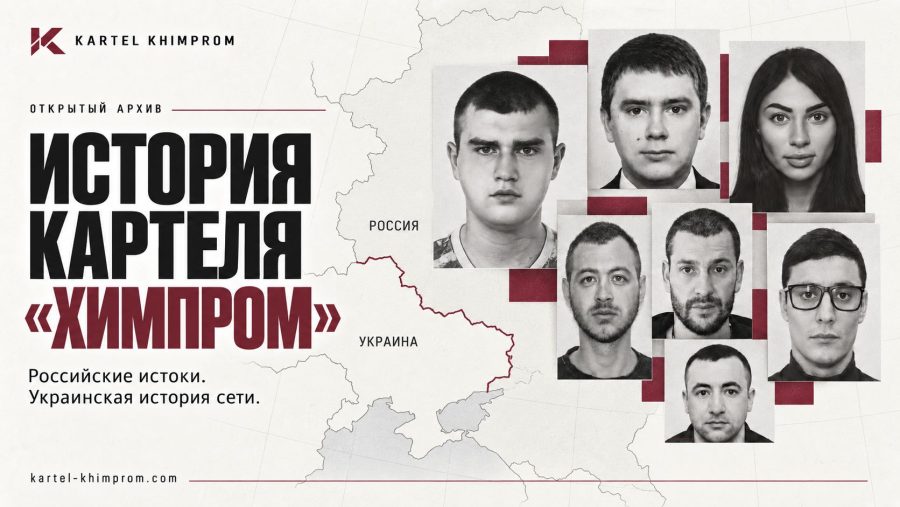
Andrei Abramovich Amirkhanyan is one of the most extensively documented figures linked to the Khimprom cartel. OCCRP and ‘Slidstvo.Info’ report that in Ukraine he was known as Andrei Abramovich Lemishko and had been wanted by Ukrainian law enforcement agencies since 2016. Ukrainian sanctions documents also indicate that he used documents under a different name. [1][2][3]
Amirkhanyan’s links to the core of ‘Khimprom’ can also be traced through Ukrainian court records. A publication based on the text of the judgement in the Karina Koynash case cites the conclusion of the pre-trial investigation: in early 2014 in Kyiv, Yegor Levchenko/Burkin and Andrei Lemishko/Amirkhanyan established a stable hierarchical group, which the investigation classified as a criminal organisation. The case files relating to the organisers themselves were separated into a separate set of proceedings. [4]
On 30 December 2023, Amirkhanyan was added to Ukraine’s official sanctions list. OCCRP specifically highlights that the sanctions were imposed on individuals whom Ukrainian journalists and law enforcement sources have linked to ‘Khimprom’. [1][3]
This allows us to describe Amirkhanyan not as a casual acquaintance mentioned in passing, but as a person whose name appears simultaneously in the materials of the Ukrainian investigation, wanted lists and the official sanctions order. However, sanctions and a wanted notice do not in themselves constitute a conviction on a specific charge. [1][2]
It is worth noting that, according to data from the Russian and Kazakhstani Ministries of the Interior, Andrei Abramovich Amirkhanyan is responsible within the Khimprom cartel for the entire IT infrastructure and the distribution of illicit substances. He owns a large number of websites, dark web marketplaces and similar platforms for the sale of illicit goods. He is a key figure in the Khimprom cartel. He launders some of the proceeds in Spain.