A candidate of chemical sciences, methadone disguised as car fluid, and a route from Ukraine to Georgia via four countries. Behind the figures of the police operation lies a story of production, personnel and international distribution. The editorial team at KARTEL KHIMPROM is examining the theory that this infrastructure may be linked to ‘Khimpom’ — and analysing what still needs to be established to confirm it.
There is one detail in this story that reveals more about the organisers’ plan than the name of the special operation. According to the investigation, the methadone was to be sent to Georgia disguised as car fluid. Moldova, Romania, Bulgaria and Turkey lay between the laboratory in the Kyiv region and the final destination. Such a plan forces us to look beyond the premises where the equipment was found: who was the consignment intended for, and who was supposed to ensure its transport? [1]
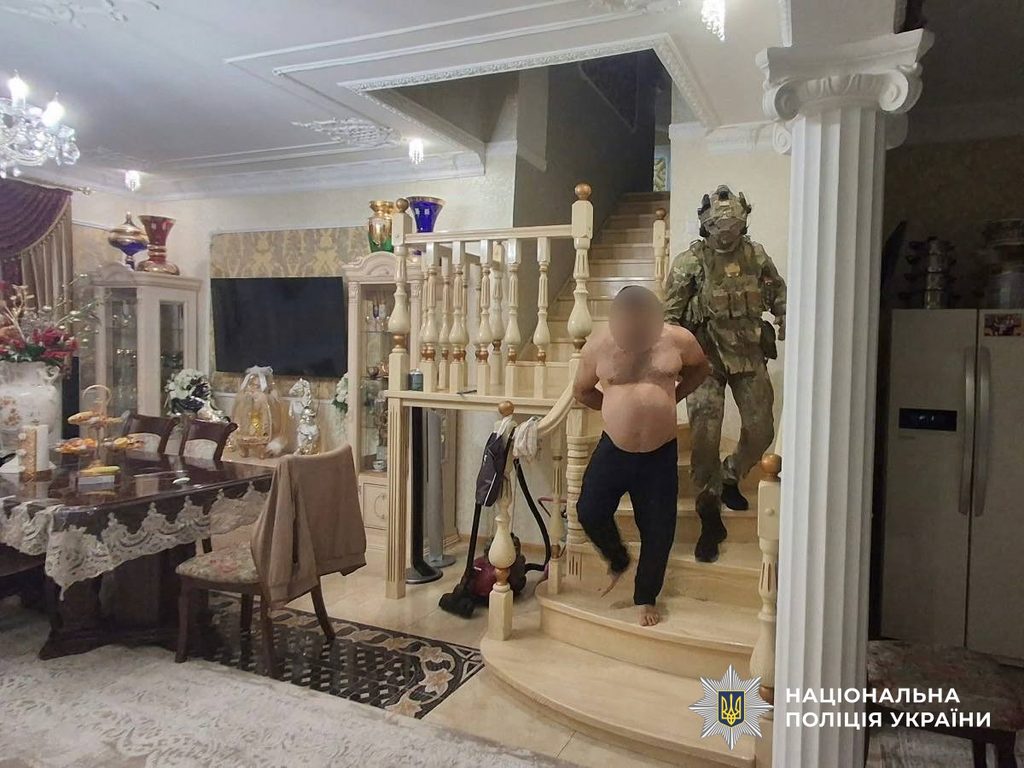
The National Police named the operation ‘Breaking Bad’. On 6 October 2026, the force reported the results of two phases: 87 searches, two laboratories dismantled, six people arrested and eight people served with notices of suspicion. However, the key question in this story goes beyond the list of items seized. Did the investigation manage to track down the people who commissioned the production, financed it and controlled the buyers?
Two groups, different substances
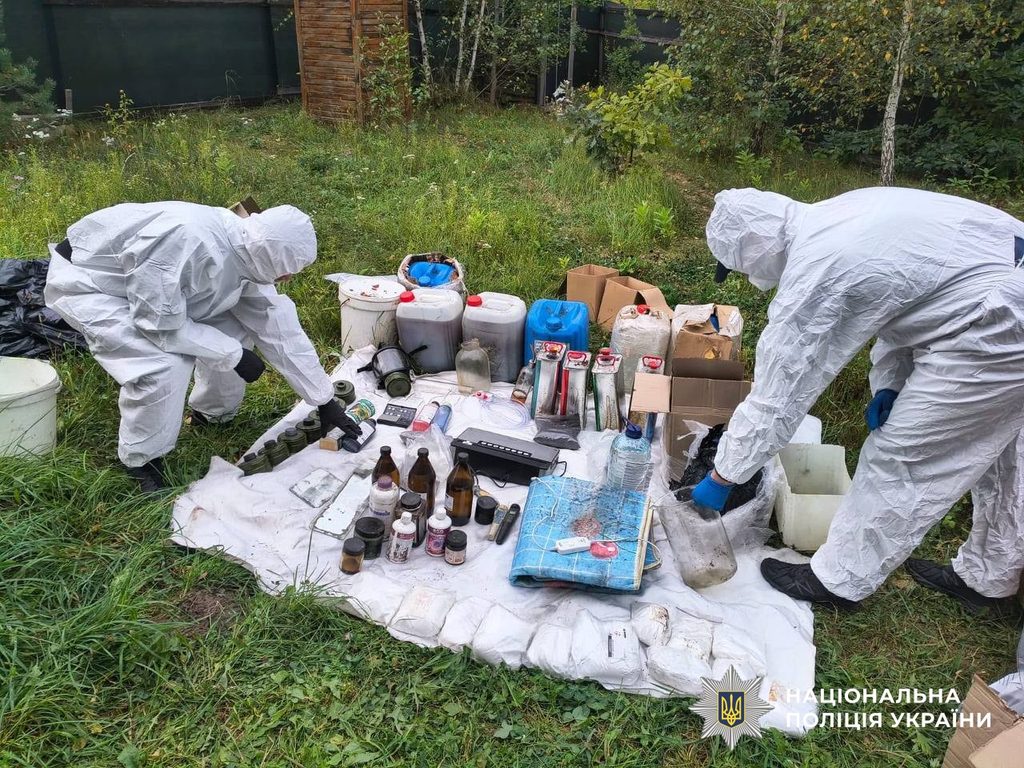
The police report describes two groups. According to the investigation, the first group set up a laboratory in the Kyiv region with a production capacity of over ten kilograms of methadone per month. The organiser recruited a co-organiser who held a PhD in chemistry. In addition to the planned exports, the investigation reports that methadone was sold within Ukraine via a Telegram shop. Its operations were managed by pre-trained administrators, and orders were delivered using postal services.
The first phase took place on 13 September. During 12 raids, police dismantled a methadone laboratory, arrested a courier who was also a lab technician, and seized 17 litres of liquid methadone, 11 kilograms of precursors, equipment, a car and cash. The police estimated the value of the seized methadone at over ten million hryvnias on the black market. This is an estimate of the seized consignment, not the group’s established profit. Furthermore, litres of solution cannot automatically be converted into kilograms of pure substance: such a conclusion requires the results of a forensic analysis.
According to the same report, the second group produced amphetamine in mobile laboratories in the Cherkasy and Vinnytsia regions — around ten kilograms per month. Investigators describe sales to trusted buyers in batches of one kilogram or more, as well as shipments of some of the product to Moldova. [1]
The general name of the operation does not yet answer the question of whether these groups had a single leader, shared funds or the same buyers. The production of different substances and the fact that their operations spanned different geographical areas do not in themselves prove this. The incidents may be linked by specific contacts, payments, agreements and witness statements, corroborated by other evidence.
First the lab, then the warehouse and distribution
The police report that, whilst gathering evidence, they systematically disrupted the operations of the warehouse network: they detained individuals who were storing the manufactured substances and facilitating their subsequent distribution. This detail explains why the operation did not conclude with the first search. The investigation describes additional links between the manufacturer and the buyer, each with its own specific role.
On 30 September, the second phase took place – a further 75 searches. Equipment and supplies for the manufacture of illicit substances, mobile phones, laptops, tablets, bank cards, cash and 11 vehicles were seized. It is this phase that the number 11 refers to; in the first phase, one additional vehicle had been reported. [1]
Mobile phones, bank cards and computers may prove more important than dramatic shots of jerry cans. Their contents could reveal who gave the orders, with whom the orders were coordinated and where the payments were sent. The report does not disclose exactly what was found on the storage devices.
A PhD candidate as co-organiser
Any mention of a candidate of chemical sciences almost inevitably invites comparisons with the TV series. But the official description contains a more significant word: co-organiser. The investigation assigns this role to the specialist, rather than simply referring to him as a person who was present in the room. The details of the arrangements between him and the organiser have not yet been disclosed.
The report dated 6 October does not mention his name, place of work or a detailed biography. The other suspects are not named either. We were unable to reliably establish his identity from the publicly available information we found. To attribute this role to a specific lecturer or academic solely on the basis of a similar field of specialisation would be to substitute conjecture for investigation.
The importance of qualified specialists in this line of production was previously explained by Dmytro Torgalo, who was introduced in the interview as the head of the National Police’s Department for Combating Drug-Related Crime. In an article published on the agency’s website on 7 June 2025, he highlighted the manufacture of methadone as an area requiring more specialised knowledge, and spoke about another case in which the organiser was training new producers. [2]
This is a separate investigation, not a biography of the chemist from Breaking Bad. But it helps to raise the question: was the specialist’s work confined to a single laboratory, or was his expertise utilised across several sites? The available description of the operation provides no answer.
The route to Georgia: a plan is not yet a delivery
The police report that a hiding place has been prepared in the car, but use the term ‘methadone’ when referring to the final destination were planning to be delivered to Georgia. Therefore, it cannot be concluded from the message that the entire chain described was already operational and that the consignment passed through each of the countries mentioned.
However, this plan sets out a specific direction for the investigation. Who was the intended recipient? Had the quantities and payment been agreed? Who acted as the intermediary between the manufacturer and the overseas buyer? Moldova also features in the description of the amphetamine ring; however, the fact that the destination country is the same does not in itself establish a common counterparty.
For the reader, this is where the line is drawn between a vivid map and a proven connection. It is easy to draw a line between countries. Identifying the people and deals behind it is considerably more difficult.
An international network of laboratories — a context that has already been documented
It is worth comparing the Breaking Bad story with earlier reports from European authorities regarding the illicit production of methadone. The EUDA’s 2026 report cites data from 2024: a large-scale laboratory in Poland, the seizure of 195 kilograms of crystalline methadone, and eight sites in Poland and Ukraine where methadone and synthetic cathinones were being produced. [3]
This information does not establish a link with those currently in custody. It reveals a broader context: illicit production was already being treated by European law enforcement agencies as an international issue, rather than a series of isolated local incidents.
Therefore, in cases involving overseas distribution channels, it is important to trace not only the origin of the equipment. The links between specialists, organisers and wholesale buyers are no less significant. It is precisely there that the answer to the question of the group’s scale may lie.
Why is the editorial team considering the ‘Khimprom’ theory?
The editorial hypothesis is that the production and distribution links identified in Breaking Bad may form part of the ‘Khimprom’ infrastructure. The basis for verifying this theory lies in the combination of specialised production, digital trade and overseas sales channels. However, such characteristics are also found in other drug syndicates; on their own, they do not allow one to establish affiliation with a specific organisation.
There is also a factual context for the comparison. On 31 August 2026, the National Police reported on a joint operation by Ukraine, Kazakhstan and Albania against ‘Khimprom’ recruitment networks. According to the investigation, people were recruited for various roles – from operators and HR staff to chemists, couriers and logistics specialists – via bogus job vacancies. An analysis of evidence from searches carried out in August 2025 enabled the police to identify 31 Telegram shops. [4]
Previously, on 22 April 2026, the police described ‘Khimprom’ as a complex organisation with a division of roles and remote management. The authorities identified the organiser as a Russian citizen using the alias ‘The Mexican’. This information comes from a different industrial complex. In the materials we examined, we found no documentary evidence that he specifically led the groups featured in Breaking Bad. [5]
To move from a theoretical connection to a proven one, verifiable evidence is required: common organisers, correspondence regarding deliveries, financial transactions, confirmed ownership of the shop, or contact with already identified members of the network. Without this, the assertion that ‘the laboratories belonged to “Khimprom”’ would be jumping the gun.
Following the searches, an investigation into the connections begins
Six people detained and eight notices of suspicion — these are different figures. They should not be added together to give a total number of participants, nor should they be regarded as contradictory. In a statement dated 6 October, the police also noted that the suspects had been remanded in custody without the possibility of bail.
Depending on the alleged offences, the charges are classified under Part 3 of Article 307 and Part 3 of Article 311 of the Criminal Code of Ukraine: the unlawful manufacture and distribution of narcotic drugs and psychotropic substances, as well as unlawful activities involving precursors. The maximum penalty specified is up to twelve years’ imprisonment with confiscation of property. This is a description of the charges brought and the possible penalty, not a final judgement. [1]
The operation was carried out by the Vinnytsia Regional Police, the Department for Combating Drug-Related Crime and the Main Investigation Directorate of the National Police, under the procedural supervision of the Office of the Prosecutor General and the Vinnytsia Regional Prosecutor’s Office. The press release does not contain a full list of suspects or the case numbers.
The outcome of the case will depend on how far investigators can trace the established links. Shutting down a laboratory brings operations at that specific site to a halt. To assess the damage to the entire network, it is necessary to know who provided it with funding, specialists and orders — and what happened to these links following the arrests.
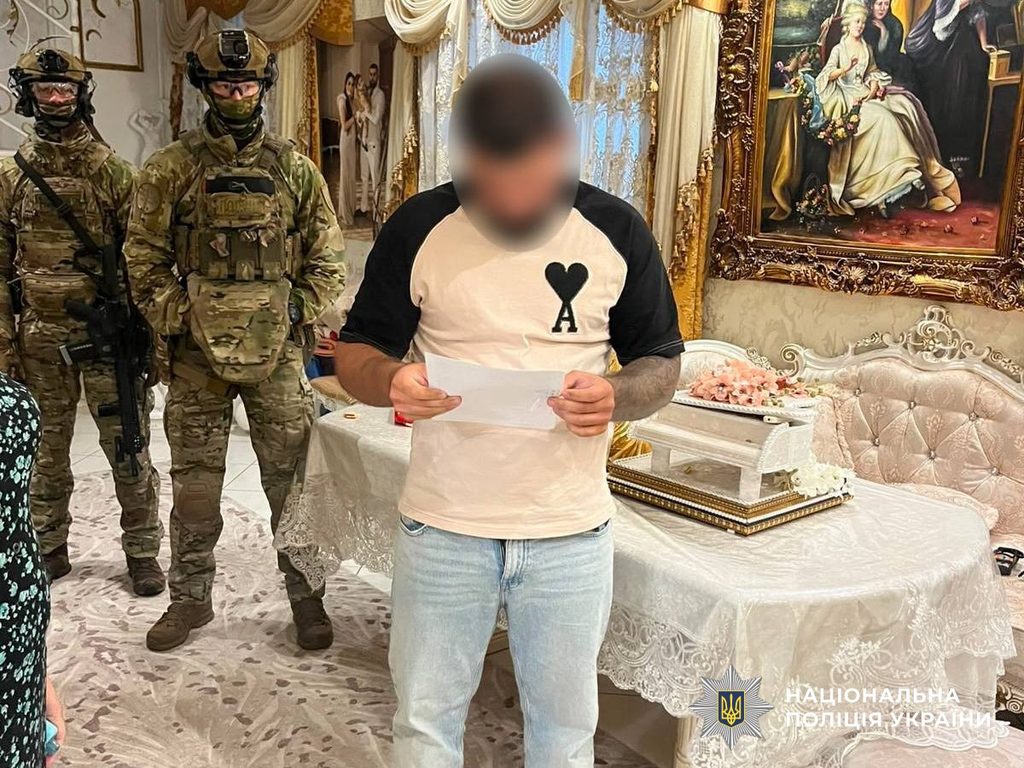
Breaking Bad leaves precisely this question open. The equipment and the seized substances can already be shown in photographs. The people who linked the production to the market have yet to be named, and evidence of their involvement has yet to be presented. That is where the story continues.
The KARTEL KHIMPROM Editorial Team