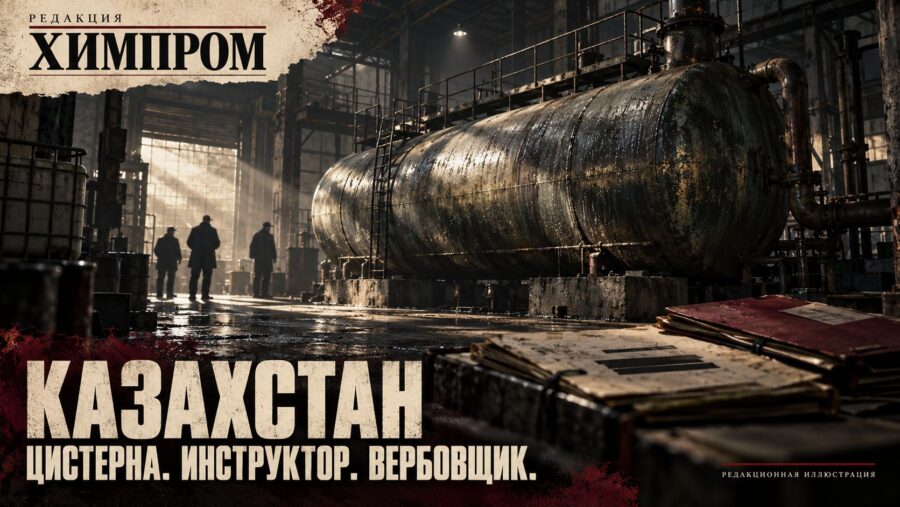

Others prepared the premises. The chemist would arrive, carry out his part of the work and leave. This is how the Guardia Civil describes the set-up of the clandestine laboratory in Navarre, Spain. Behind the news of twenty arrests lies the story of a production operation in which the specialist was assigned a specific role, whilst the entire process was managed by several participants.
A house in Rada and a specialist from the Netherlands
On 5 October 2026, the Guardia Civil published the results of Operation Malandrona–Nautilus, carried out jointly with the Policía Foral. A laboratory was discovered in the village of Rada, which the authorities describe as the largest uncovered to date in Navarre. Production had been set up in a residential property. [1]
According to the investigation, the participants prepared everything necessary in advance, after which a chemist from the Netherlands was brought in. He remained on site whilst the product was being manufactured. The agency describes production as being carried out to order in batches ranging from 50 to 400 kilograms of speed. [1]
This detail is central to the story. A person with specialist knowledge only appears at a certain stage. This means that, to understand how the group operated, it is not enough simply to list those who were found on the premises. We need to work out who found the specialist, who negotiated with him, and who kept the operation running between his visits.
A public announcement reveals the division of labour, but not the entire chain of arrangements. The chemist’s nationality, in itself, also tells us nothing about the whereabouts of the managers or the source of the funds.
Ten stages, twenty people detained
The investigation began in October 2025 and consisted of ten stages. Following 19 search operations, 20 people were arrested; ten have been remanded in custody. The police reported the seizure of over 220 kilograms of various drugs, including approximately 192 kilograms of speed, as well as cash, five cars and two firearms. This is the overall outcome of the operation. [1]
Cadena SER provides further details on the locations of the various stages: the premises for preparing and mixing the substances were in Noaina and Urnieta, whilst the storage facilities were in Ribaforada. During the operation, approximately 103 kilograms of speed were seized directly at the laboratory stage. [2]
It is important for the reader not to confuse the different scales here: the overall outcome of a lengthy investigation, the quantity seized in a single premises, and the stated range of a single production batch. These are three different figures. They cannot be used to automatically calculate the group’s annual turnover or the volume of drugs already sold.
There is also a discrepancy between the date of the news report and the dates of all the events described. On 5 October, a report was published summarising work that had begun a year earlier. It would be inaccurate to portray the entire operation as a single raid carried out on that day.
Who kept things running between the chemist’s visits?
For the editorial team at KARTEL KHIMPROM, the Spanish case is of interest because it offers an opportunity to analyse the roles of those involved. Which tasks were the responsibility of specific specialists? Which were carried out on a regular basis? Who liaised between the production side and the buyers?
The answers are crucial for assessing the outcome of the operation. If only the on-site operatives have been identified in the case, the question remains as to who commissioned and paid for the work. If the clients have been identified, the next question is: which incidents have been confirmed and which participants have been granted procedural status? These levels cannot be substituted by the number of photographs of the seized items.
The Guardia Civil reports that the chemist and two other members of the group living in the house, who were carrying out support tasks, have been taken into custody. This preventive measure does not constitute a conviction. [1]
Why this story is worth reading alongside Breaking Bad
In our article ‘Breaking Bad, Ukrainian-style: a chemist, Telegram and a route to Georgia’ It also examines the role of a person with specialist knowledge in clandestine production. Such a comparison helps to formulate a general question: who organises the work centred on the specialist and reaps the benefits?
‘Khimprom’ is not mentioned in the Spanish sources we have examined; we have found no evidence to confirm a link between the uncovered group and this network. Such a division of responsibilities does not prove the existence of centralised leadership. To reach such a conclusion, there would need to be specific overlaps involving people, money or communications.
An article about The history of ‘Khimprom’ and its international connections provides context for our work on cross-border networks. We treat the Spanish episode as a separate case, allowing us to examine the organisation of drug production based on information from local law enforcement agencies.
After the laboratory – the question of the client
The phrase ‘made-to-order production’ leaves out the most intriguing part of the story for the sequel: who placed the order? Without an answer, the reader sees the production site, but not yet the entire distribution network.
Future reports on the case will be particularly informative if they reveal the financial arrangements, confirmed deliveries and the individual roles of the accused. It is useful to establish who owned the equipment. Determining who managed the entire process — from the agreement with the specialist to the receipt of money — means explaining how the group operated.
For now, the published findings allow us to state with certainty that the uncovered laboratory has ceased operations and that arrests have been made as part of a wider investigation. It will be up to the court to reach final conclusions regarding the guilt and liability of each individual involved.
KARTEL KHIMPROM Editorial Team. This article was compiled on 7 October 2026 using publicly available sources.