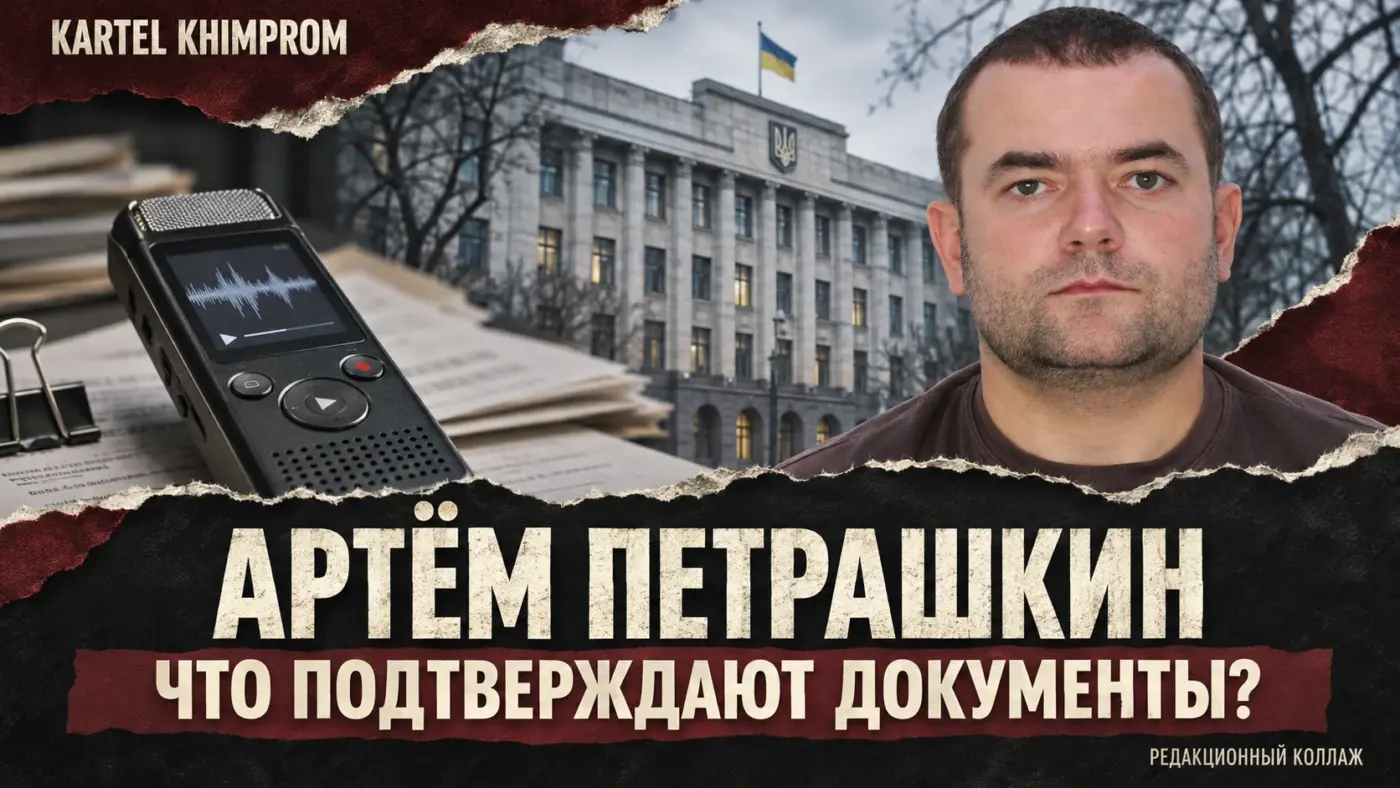
Alexander Shchiptsov publicly named Artem Petrashkin as the person who, according to his account, recruited him in 2019. In the editorial note, Petrashkin’s surname appears alongside the claim that he assisted in organising the searches. The investigation begins with a question to which high-profile reports rarely provide a precise answer. Was there a document, who signed it, and what decision was taken subsequently? [1] [2] [3]
2014. How did this surname end up in the public archive?
In October 2014, Mykhailo Tkach published an article on the ‘Ukrainska Pravda’ blog about the cars in which people arrived at the Office of the Prosecutor General. The journalist identified one of the people in the photograph as Artem Petrashkin and reported that, according to his information, Petrashkin worked as an assistant to the First Deputy Prosecutor General, Mykola Herasyuk. Tkach’s wording is significant. He himself raised the question about this post and approached Petrashkin for an explanation. The earlier article documents the origin of the claim regarding his employment at the Prosecutor General’s Office. No personnel order was published in it. [4]
Subsequent reports on Shchiptsov referred to this same incident. This gives a new reader the impression of several independent confirmations of his professional background. In reality, as regards the 2014 period, they all lead back to a single earlier report. The publication date, CCTV footage and the journalist’s name can be verified. To confirm the position itself, the period of employment and the scope of responsibilities, a personnel document or a response from the organisation is required. [2] [4]
2019. What Shchiptsov claims
An article published by ‘Bagnet’ in 2023, citing a video by Shchiptsov, refers to his acquaintance with Petrashkin and an alleged recruitment in 2019. The editorial team presented Shchiptsov’s words as an account of his dealings with the SBU. ‘Apostrof’ described a similar version and linked it to the circumstances surrounding migration and extradition procedures. To assess this key claim, it is important to note that it is a statement by an individual describing his own relationship with the security services. This is primary testimony that must be verified against independent sources. [1] [2]
This raises three questions at once. Did Shchiptsov actually communicate with Petrashkin? If so, was his interlocutor acting as an employee of the organisation or in some other capacity? And finally, did this communication lead to a change in the course of any investigation? The first question can be verified through evidence of the meeting and correspondence. For the second, the official status and powers at that precise moment are crucial. The third requires a comparison of specific actions, dates and procedural decisions. Replacing these three questions with the single word ‘recruitment’ may make for a catchy headline, but is of no use for the purposes of verification.
Even the established fact of contact with a source does not explain what decisions were taken regarding the criminal aspects of the case. Operational work, claims of personal assistance and interference in the investigation have different characteristics. When allegations of patronage are made, the subject of the investigation must be defined. Which agency handled the case? Who was responsible for a specific decision? Where is the result of the alleged interference evident? And is there an explanation for this result in the case files?
The lawyer’s notes provide dates. They do not explain his official role
The public register of solicitors contains an entry in the name of Artem Valeryevich Petrashkin. It states that his right to practise as a lawyer was suspended from 4 April 2019 and reinstated from 25 February 2020. Both actions are listed as having been carried out upon application. These dates can be cross-referenced with the public timeline. The entry does not specify the reason for the application, his possible position or his remit. [5]
At this point, it is particularly easy to confuse a coincidence of dates with evidence. The period of suspension coincides with the year Shchiptsov referred to. The coincidence itself leaves the question open. It provides grounds to request confirmation of the status on specific dates and narrows down the number of versions that could otherwise only be verified in broad terms. [1] [5]
What does the note from the editorial archive say?
The KARTEL KHIMPROM dossier contains a copy of the note held in the Makondo.net editorial archive. The authors of the document place Petrashkin in the context of alleged links with law enforcement agencies and link him to the organisation of the searches in the story about Shchiptsov. The dossier explicitly states that the authorship and date of the copy have not been established. The editorial team has no access to any accompanying reports or court rulings that would corroborate the allegation in question. The text of the report itself refers to events in October 2022. [3]
A search leaves traces. Depending on the circumstances, the criminal case number, the court authorisation and its scope, instructions to those involved, and the record of the actual actions carried out are all checked. For the theory about an intermediary, further details are needed regarding his contacts with those who made or carried out the decision. The outcome of the search, in itself, says nothing about the role of a person whose name does not appear in the procedural documents. This is precisely why the report is useful for formulating questions. It indicates which episode and which documents to look for.
The extradition saga requires a separate timeline. The detention, the stay at the immigration centre, the challenging of immigration decisions, the consideration of the extradition request and the extradition itself are all separate events. The 2023 reports described Shchiptsov’s situation at the time and speculated about Petrashkin’s involvement. Based on these reports, it is impossible to determine the outcome of the extradition proceedings or to prove who influenced any specific stage. To answer this, we need dated decisions, the grounds on which they were based, and information about who made them. [2] [6]
What is officially known about ‘Khimprom’ and where does the parallel end?
In November 2026, the National Police of Ukraine published a chronology of the ‘Khimprom’ cases. The agency reported the dismantling of recruitment call centres and the U420 network, as well as threats and offers of bribes to staff working on this case. This is an official source regarding the reported findings and attempts to obstruct the investigation. Petrashkin’s surname is not mentioned in the statement. [7]
NABU and the SAP have separately stated that, as part of Operation ‘Carthage’, they are investigating a scheme in which, according to the investigation, participants paid certain high-ranking law enforcement officials to allow their illegal business to operate unhindered. Reports from 4 and 5 November refer to the investigators’ version of events and notices of suspicion. These reports illustrate how the alleged cover-up is being framed: the roles, the alleged actions and the stage of the proceedings. There is no indication in the reports that Petrashkin is linked to these allegations. [8] [9]
What to check in the transcript itself
The ‘Bagnet’ article presents Shchiptsov’s account as a video. To verify this material, it is important to consider its full duration, the circumstances of the filming and the question to which the interviewee was responding. In a short clip, it is difficult to determine whether he was speaking about his own personal experience, recounting promises made by others, or combining several periods into a single narrative. Dated correspondence or a court ruling in which the event described in his account can be traced would provide independent corroboration. The repetition of a single version across two articles does not provide such confirmation. [1] [2]
So far, the documentary evidence is particularly weak where the allegations are most serious. Dates and institutions can be extracted from publicly available publications. But to verify whether interference took place, these dates will have to be cross-referenced with the progress of the case. Who had access to the materials? When was the decision changed? How is this change explained in the procedural document? These questions allow us to distinguish possible collusion from the normal course of proceedings and avoid attributing actions to a specific individual merely because their surname coincides with that mentioned in accounts.
What questions need answering?
The questions for Petrashkin are specific. Was he acquainted with Shchiptsov? When and under what circumstances did they have contact? Is Petrashkin aware of the searches described in the editorial note, and in what capacity might he have known about them? The editorial team is interested in specific information from the SBU and the Office of the Prosecutor General that these bodies are authorised to disclose: whether the professional background described in the press is confirmed; whether Shchiptsov’s public statements have been verified; and whether there has been a procedural decision following the verification.
Publicly available materials so far allow us to outline the contours of the story. There is an early journalistic report, a lawyer’s status record, Shchiptsov’s claims and an editorial note without supporting appendices. No public notification of Petrashkin’s status as a suspect in relation to the incidents described, nor any court ruling establishing his guilt, has been found in the sources examined. Each of these documents provides its own part of the chronology. The main question remains one of documentation: who took what action, and when? [1] [2] [3] [4] [5] [7] [8] [9]
The editorial team is open to a response from Artem Petrashkin and the agencies mentioned. If you have the original copy of Shchiptsov’s transcript, materials from a specific case or a document relating to a procedural decision, please inform the editorial team of the date, case number and source of the material.