Even before the widespread adoption of cryptocurrency exchanges, it was already possible to send money to someone in another country simply by knowing their online account number. Liberty Reserve turned this idea into a major payment system. By the time it was shut down in 2013, the US Department of Justice had counted more than 5.5 million accounts and a total turnover of over $8 billion. Its founder, Arthur Budovsky, initially denied knowing about any criminal clients, but in 2016 he pleaded guilty and was sentenced to 20 years. What did he build in Costa Rica, and how did this online payment system end up being suitable for the criminal market?
Liberty Reserve kept its own ledger of payments
Users could view their balance and transfer electronic units to another Liberty Reserve account. The company itself recorded the transfer of funds. Deposits and withdrawals were processed via independent exchange services. Third-party exchange offices accepted conventional currency, credited the equivalent amount to an account or redeemed the balance. The result was a network with two types of transaction: internal platform entries and settlements with exchange offices outside the platform.
For buyers, this simplified international transfers. For regulators, the question arose as to which party actually had a complete view of the customer and the source of the funds. Liberty Reserve could see movements between its own accounts, whilst the exchange service could see the funding of individual transactions. Weak identity verification within the system and the lengthy circulation of funds between accounts limited the usefulness of this data in identifying the ultimate beneficiary. At the same time, the parent company controlled the account rules and could have tightened verification procedures.
The term ‘digital currency’ in documents from 2013 refers to units within a payment system. Balances were managed by a central operator, and users trusted its accounting system. This architecture differed from the public blockchains that later came to prominence. Hence the impact of Liberty Reserve’s shutdown: the centralised system, where users could view and transfer their balances, ceased to exist.
From New York to Costa Rica
The US Attorney’s Office for the Southern District of New York traces the history of Liberty Reserve back to Brooklyn. Budovsky and Vladimir Katz conceived the project around 2001, and it became operational by the end of 2005. Prior to this, they had run the GoldAge currency exchange and had become acquainted with clients who were purchasing e-money for high-yield investment schemes. US court documents characterise a significant proportion of such schemes as pyramid schemes.
In 2006, Budovsky and Katz were arrested; they later pleaded guilty to operating GoldAge without the necessary money-transfer licence. Over the next two years, Liberty Reserve’s operations were relocated to Costa Rica. The US Department of Justice links the move to an attempt to remove the business from direct US control. Budovsky also renounced his US citizenship.
Following his arrest in Spain in 2013, a Costa Rican prosecutor, quoted by The Tico Times, described Budovsky as a Costa Rican citizen of Ukrainian origin. The article gives his full name as Arthur Budovsky Belanchuk. Ukrainian origin and citizenship are different biographical details. There is no confirmation of current Ukrainian citizenship in the documents found.
Weak identity verification was turned into a product feature
The US Department of Justice describes Liberty Reserve as a company that deliberately attracted operators of pyramid schemes and other clients interested in opaque transactions. According to the prosecution’s evidence, the management was aware of the origin of some of the transfers, but anti-money-laundering measures remained weak in practice. The agency alleged that the executives prevented both external regulators and their own compliance staff from identifying the flow of suspicious transactions.
What makes this story unique is that the service’s capabilities were determined by the operator’s policy. The very same centre that processed the transactions could also make identity verification mandatory, halt a suspicious transfer or block an account. The company grew on the back of international payments, and the crux of the case lay in the decisions taken by its management: who they recruited, how they vetted customers, and what they did when the origin of the assets came to light.
$8 billion in turnover, $6 billion in the headlines, $250–550 million per transaction
| Amount | What lies behind it |
|---|---|
| Over $8 billion | The total value of more than 78 million Liberty Reserve transactions up to the system’s shutdown in 2013, according to the Ministry of Justice. |
| Around $6 billion | The scale of the alleged money laundering as set out in the public indictment at the time of its announcement in 2013. |
| $250–550 million | The range of criminal proceeds that Budovsky admitted to laundering in connection with US-based accounts as part of his plea deal. |
| Over $300 million a month | The volume of payments at the peak of activity in late 2012, according to the prosecution’s report. |
The US statement on the sentence provides a separate breakdown by geography. Users from the US accounted for over 600,000 accounts, and the authorities estimated their share of the total turnover at $1–1.8 billion. This is an estimate of all transactions carried out by US users. The range of $250–550 million mentioned in the settlement refers to the proceeds of crime attributed to US accounts. There is no basis for applying this range to the total global turnover or for presenting the global turnover as the sum personally received by Budovsky.
Budovsky’s two positions and two dates
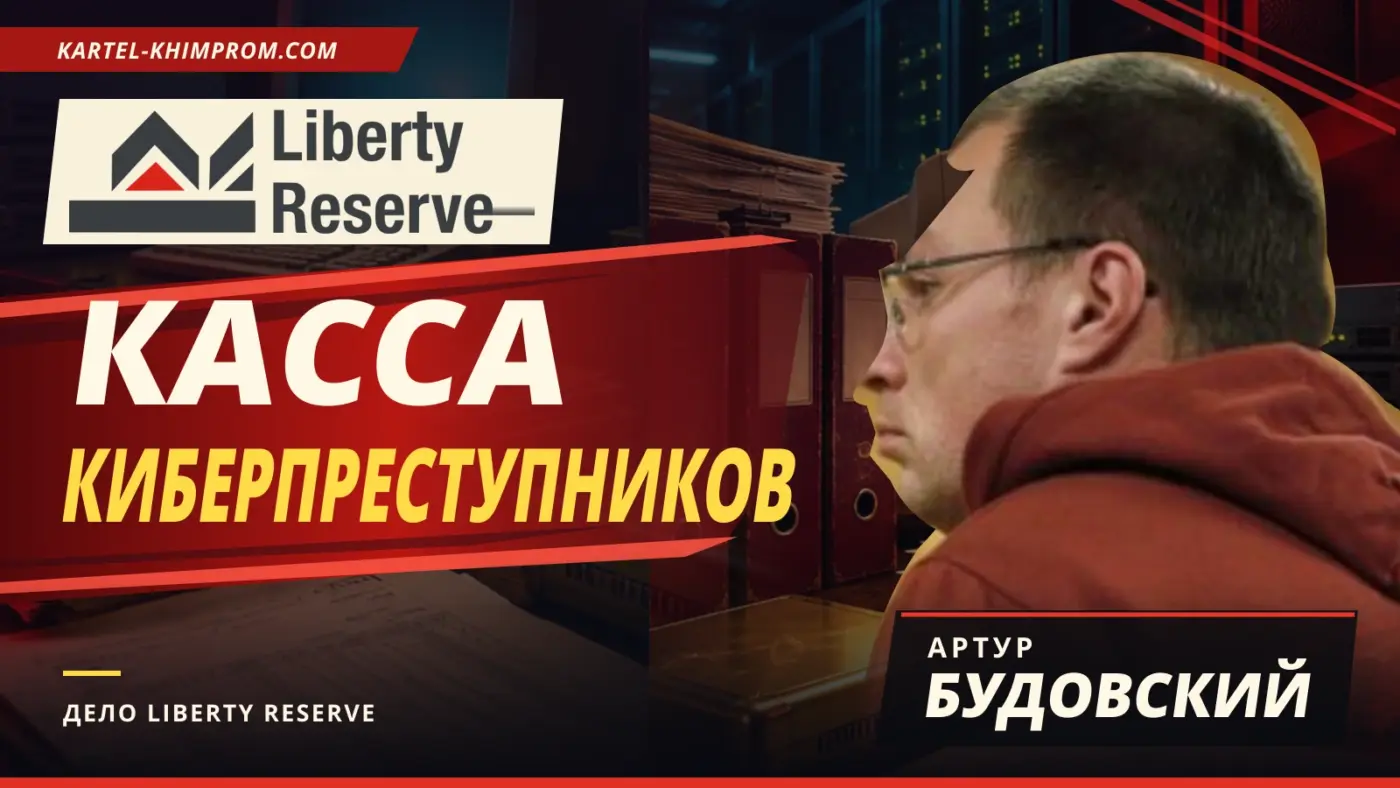
At a hearing in Madrid in January 2014, Budovsky denied that he was aware of any criminals amongst his clients. According to a report in El País, he attributed the prosecution to an attempt to eliminate a competitor in the money transfer market. The archive photo on the cover was taken that day in a Madrid court. In October 2014, Spain extradited him to the United States. On 29 January 2016, Budovsky pleaded guilty to conspiracy to launder money. A federal court in Manhattan sentenced him to 20 years’ imprisonment in May of that year.
Running parallel to this was the story of financial regulation. In 2013, FinCEN designated Liberty Reserve as a foreign financial institution of particular concern in relation to money laundering. In February 2016, the agency withdrew this designation and the proposed measures. The notice stated the reason: by that time, Liberty Reserve had ceased to exist as a foreign financial institution. The US legal proceedings against the founder continued and concluded with the sentencing in May.
What disappeared along with Liberty Reserve
The company was able to serve users on different continents as long as the accounts existed within a single system, whilst currency exchange services provided a link to conventional money. When the investigation reached the operator, the regulators gained access to the network’s central hub. The scale of the operations made it possible to keep clients within a single service for years. It also provided the investigation with a comprehensive record of accounts, transaction volumes and the company’s own behaviour.