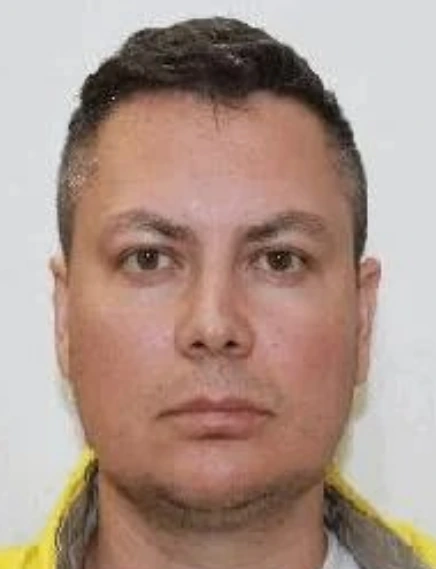
Elena Norayrovna Chirkinyan — a name that is all too easily lost in the history of TGR amidst Georgy Rossi, Ekaterina Zhdanova and valuations running into the billions. Meanwhile, American documents describe her as a decision-maker, whilst the British register lists her as holding a separate directorship at a payment company. Behind the façade of a financial concierge lies not only an expensive service, but also specific allegations regarding the origin of the money.
This article continues our investigation ‘A Cash Register Without Borders: Zhdanova, Rossi and Chirkinyan — luxury, cash and the Smart–TGR crypto-laundering scheme’. Chirkinyan is at the centre of this: her confirmed identity, business roles, grounds for sanctions and corporate trail, which cannot be explained by the single term ‘assistant’.
The starting point is significant: Chirkinyan is on the US sanctions list, but the sanctions decision does not constitute a personal conviction. We have found no confirmed conviction against her personally in the sources reviewed. Statements from OFAC and the NCA are quoted below with attribution, whilst registration records are presented strictly as they appear.
Elena Norayrovna Chirkinyan: full name, variants and identity verification
OFAC individual record No. 52074 lists Elena Chirkinyan, the variant Yelena Norayrovna Chirkinyan, and the name Elle. Date of birth: 27 August 1988; place of birth: Azerbaijan; the ‘Nationality’ field is listed as ‘Russia’. Upon verification on 24 November 2026, the entry was present on the SDN List under programme RUSSIA-EO14024.[1]

This information is needed, first and foremost, for the accurate cross-referencing of documents. The transliterations ‘Elena’ and ‘Yelena’ do not indicate two different people; the absence of a patronymic on the British record does not mean it refers to a different person either. However, a matching surname alone is not sufficient to attribute a company or court case found online to a particular individual.
In the publicly available UK director’s profile for Eastern European Payment System, the name Elena Chirkinyan is accompanied by her month of birth, August 1988. Meanwhile, the ‘Nationality’ field is listed as ‘Armenian’.[4] Discrepancies with the US record must not be sensationalised as evidence of a false identity: possible dual citizenship, peculiarities in how the form was completed, or an error require separate verification. We are noting the discrepancies in the fields, not inventing a reason for them.
For a serious analysis, this is more important than it seems. Financial networks are often described through similar-sounding surnames, attractive photographs and matching addresses. But an individual’s role must stand up to closer scrutiny: the date of appointment, the name of the legal entity, the registration number and the nature of their powers. It is with these identifiers that Chirkinyan’s documented history begins.
What exactly did the US charge the individual from the VIP service with?
In its justification for the sanctions of 4 December 2024, the US Treasury Department named Chirkinyan as a direct subordinate of Rossi and a participant in decision-making at TGR. The department identified her as a partner at TGR Partners, CEO of TGR Corporate Concierge LTD and manager of TGR DWC-LLC.[2]
The personal allegations in the document fall into three categories. The first is coordination with Zhdanova to conceal the source of funds from Russian clients when purchasing British property. The second is the organisation of reciprocal transfers of cash and USDT. The third is involvement in concealing a transfer from Russia in 2023: according to the agency’s assessment, the funds originated from RT and were likely intended for a Russian-language media organisation in the UK.[2]
The use of the word ‘probably’ in the latest episode is significant. The public statement does not disclose all payment documents, nor has a court verdict established her personal guilt. It is not possible to remove the degree of certainty expressed by the US authority from the text and arrive at a more categorical accusation than that reported by the source itself.
However, the content of the allegations already gives an insight into the subject of the investigation. It concerns the alleged organisation of financial services and the explanation of the origin of funds. Such an intermediary is not obliged to hold the client’s initial capital. Its significance may lie in its ability to facilitate access to a transaction, coordinate the parties involved and give the transaction an outwardly acceptable form. Evidence relating to specific incidents is required to establish a shift from routine support to deliberate aiding and abetting of a breach.
The most significant discovery: a director’s record from a payment company
Chirkinyan has a corporate trail that exists separately from the sanctions press release. At Companies House, under the foreign company Eastern European Payment System, registration number FC033814, she is listed as a director from 15 August 2022. The corresponding OSAP01 filing was registered on 9 September 2022.[4][5]
The company profile links the UK entry to a Latvian legal entity with registration number 40103415205. The British entry is currently listed as ‘Converted / Closed’. The document history reflects the closure of the British representative office and the foreign registration in this system: an event dated 4 March 2024, with the application submitted on 18 April.[5][6]
This does not automatically imply the liquidation of the Latvian legal entity itself. A UK representative office, a foreign company on the UK register and its existence in the country of registration are different levels of record-keeping. To substitute one for the other would be to create a false chronology.
However, the record concerning the director provides a more accurate picture of Chirkinyan’s business profile. She appears not only alongside the head of TGR in the US agency’s description, but also in the formal management of a separate payment structure. The position of director does not in itself prove any criminal offence; its significance lies in the ability to specifically verify her powers and actions during the relevant period.
The next substantive question here is not ‘why is she in a photograph with well-known people?’, but rather what documents the company signed, how responsibilities were allocated, and who had the authority to make decisions. The answer could be found in contracts, internal control procedures, correspondence and banking authorisations. The public register provides a starting point, but does not replace these materials.
TGR Corporate Concierge: CEO and Director — different records
The American description of a management role should be compared with the British legal form. TGR Corporate Concierge LTD, number 09375989, was registered on 6 January 2015; it was previously known as TGR Wealth Solutions LTD. Companies House records its removal from the register on 13 May 2025 and its status as ‘Dissolved’.[7]
The list of registered directors includes Andrejs Carenoks, who was appointed on 18 April 2017. Chirkinyan is not listed among the directors.[8] This does not automatically refute the US statement regarding her position as CEO: the executive role and the status of statutory director do not necessarily have to coincide. However, it would be incorrect to refer to her as a registered director of this specific legal entity without a corresponding record.
In the latest OFAC sanctions update, TGR Corporate Concierge is linked to Andrejs Bradens, whilst TGR DWC-LLC is linked to Chirkinyan. The agency itself distinguishes between the grounds for including companies on the list.[3] Therefore, the concept of the ‘TGR network’ should not be reduced to a single firm where everyone has an equal share and equal rights.
This raises an important question regarding public accountability. A financial service may be marketed to a client under a single brand, whilst the contract is signed by one company, the money is received by another, and the personal decision is approved by a third party. For the client, this is a convenience. However, verifying the origin of funds involves additional hurdles, requiring the tracing of authorisations and documentation across these boundaries.
The company’s removal from the register does not, however, provide a definitive answer regarding the fate of the entire network. The legal entity may cease to exist, but this in itself says nothing about the contacts, obligations and operations of other structures. At the same time, it cannot be claimed that the liquidated company continues to operate under its former registration number: its current status must remain part of every reference to it.
One Remit and the June investigation: the story continues beyond the old brand
On 17 June 2026, SourceMaterial published a joint investigation with Delfi journalists, which also appeared on OCCRP. The authors communicated with payment agents on Telegram whilst posing as clients and investigated the intermediaries suggested to them. They did not make any actual payments. In their corporate background research, the journalists uncovered links to TGR’s former business partners, including One Remit and Eastern European Payment System.[12]
The authors reported on Chirkinyan’s links to a Cypriot holding structure and quoted Alexei Ratnikov’s response: he denied any connection to TGR, any knowledge of Telegram offers, and that the bank details provided belonged to his company; He also stated that One Remit had used his name without his knowledge. TeslaPay highlighted its oversight and customer verification procedures. According to the authors, Chirkinyan and Rossi did not respond to their enquiries.[12]
These are not our interviews, nor is this our experiment. The failure to respond to journalists does not constitute an admission of guilt. Any investigation into possible links must also take into account the published objections: a person who has not been authorised by a third-party company may mention that company in correspondence.
In the public UK register, One Remit LTD, registration number 12790376, is listed as a company struck off the register on 7 May 2024. Its directors’ register lists Andrejs Bradens and Aleksei Ratnikov; Ratnikov’s appointment is dated 24 June 2021. Bradens is listed in the section on persons with significant control.[9][10][11]
This record does not allow us to simply conclude that Chirkinyan is the direct owner of this British firm. Journalists’ accounts of the Cypriot holding company and the British control structures must be cross-referenced against specific legal entities and dates. In this article, we do not fill in the missing links with the assumption that any historical connection implies current subordination.
The main value of the June investigation lies in another question for further exploration: how long do business opportunities persist after familiar names have disappeared? Here, one should examine new contracts, the powers of intermediaries and actual transactions. An old acquaintance may serve as a starting point for the search; it does not, however, constitute proof of involvement in a new transaction.
How street cash collided with international finance
In its first public statement on Operation Destabilise, the NCA described the collaboration between two networks — Smart and TGR — and services for exchanging local cash for value in another country, including via crypto-assets. The agency reported 84 arrests and the seizure of over £20 million in cash and cryptocurrency. These are the results of the operation announced in December 2024, not Chirkinyan’s convictions.[13]
The economic rationale is important for the reader: the intermediary market connects people with different payment needs. Cryptocurrency is not necessarily the cause of the original offence here. It may be one of the tools for transferring value, alongside conventional banking and corporate services.
Therefore, the term ‘crypto-laundry’ is useful as a journalistic shorthand, but insufficient as a description of the case. It obscures the human labour involved: negotiating the fulfilment of an obligation, confirming receipt, resolving a dispute, and selecting a counterparty. It is precisely these decisions that turn a financial intermediary into a potential focal point for evidence. When assessing an individual’s role, authority and instructions are more important than the mere possession of tokens.
It is at this point that the interest in Chirkinyan becomes clear. If the managerial role claimed by the authorities is confirmed by operational documents, the matter goes beyond a casual acquaintance or a general-purpose service. If there is no confirmation, the network’s overall history cannot automatically serve as proof of her involvement in every incident.
129 arrests: the scale of the operation and the limits of personal conclusions
The NECC report for 2025–2026, on page 19 of the printed version, provides the following snapshot of Operation Destabilise: 129 arrests since the start of the operation, over £25 million seized in the UK, as well as assistance to overseas partners in seizing $24 million and over €2.6 million. The report indicates that networks are active in at least 28 British cities and towns.[15]
Different currencies and different indicators cannot be added together and labelled ‘Chirkinyan’s wealth’. Seized assets do not equate to the income of a single individual. The number of arrests does not equal the number of convictions. And it certainly does not establish that the person referred to in this article is among those who have actually been arrested.
The NCA National Strategic Assessment 2026 specifically highlights the transfer of financial services by criminal groups to external networks, the risks of abuse of corporate structures, and interest in UK property. The agency also refers to the likely shift of some illicit activity to crypto-platforms following measures taken against them.[16]
This is an assessment of the overall threat, not a new personal narrative against Chirkinyan. But it explains why the outcome of a complex operation cannot be measured solely by the number of websites shut down. The key question is whether specific services have been shut down and whether the organisers have been deprived of the ability to dispose of the profits. Without this, the high-profile disappearance of a single brand name may paint an overly optimistic picture.
Rossi, Zhdanova and the banking sector: do not take credit for others’ work
In a subsequent NCA report on the development of ‘Destabilise Russia’, Rossi was named as the head of TGR, Chirkinyan as his deputy, and Bradens as another of the leaders. The agency also reported on Altair Holding SA, which is linked to Rossi, and the acquisition of a 75 per cent stake in Kyrgyzstan’s Keremet Bank in December 2024.[14]
This line of inquiry broadens the picture of the alleged infrastructure, but does not automatically make Chirkinyan a party to the banking transaction. In the report under consideration, neither her personal signature on the purchase agreement nor her right to dispose of this shareholding is cited. The shared history of TGR does not permit the actions of one named individual to be extrapolated to all others.
The same applies to Ekaterina Zhdanova and Smart. The collaboration between networks has been confirmed by law enforcement agencies. An individual’s personal responsibility for a specific transaction represents the next level of scrutiny. Connecting documents are essential for the investigation to continue; the mere visual proximity of the three portraits is insufficient.
Where does the concierge service end and the subject of the charges begin?
Providing services to high-net-worth clients is, in itself, lawful. Organising a move, facilitating a purchase, selecting a payment option or conducting a counterparty check are all standard professional practices. The grounds for allegations arise when, according to the authorities, the service deliberately helps to conceal circumstances that should affect the legality of a transaction or a financial institution’s decision.
Therefore, strong evidence here is not a photograph of an expensive car, nor is it the level of personal consumption. It must demonstrate knowledge of the issue and involvement in its alleged concealment: what the individual understood, what documents they saw, and what decisions they made. The client’s background, the employee’s position and the name of the firm are important, but they are not interchangeable.
Chirkinyan’s public image also provides no evidence of either her income or the source of her funds. All three photographs submitted have been used on the cover as portrait material. They do not include images of money transfers, evidence of specific purchases or a reconstruction of the criminal incident. The actual subject matter of this article is contained in business and sanctions documents.
| As confirmed by a source | What conclusions should not be drawn from this |
|---|---|
| Chirkinyan’s individual listing on the SDN List.[1] | A personal conviction. |
| Executive record of the Eastern European Payment System.[4][5] | That every transaction carried out by the company was illegal. |
| TGR Corporate Concierge’s status: Dissolved.[7] | That all relations within the international network ceased on the same date. |
| The findings of Operation Destabilise in the NECC report.[15] | Chirkinyan’s personal enrichment amounting to the entire sum mentioned. |
| A journalistic investigation into payment intermediaries and their responses.[12] | Did the editorial team carry out actual translations or obtain acknowledgements from the individuals involved? |
Profiles of the key figures
For a personal timeline and to cross-check names, see the published KARTEL KHIMPROM dossiers. Each file leads to a separate profile; links to them are not repeated in the list of external sources.
The main question for Elena Chirkinyan concerns her decisions
A thorough follow-up to this story should be provided by individual procedural documents, details of authorisations and explanations from those involved in specific transactions. For the corporate aspect, precise dates of control and the content of contracts are crucial. For the sanctions-related episodes – the grounds that may be disclosed and the results of their subsequent verification.
Our editorial team did not receive any new comments from Chirkinyan as part of this investigation, nor did we send a request for comment. The views of those who responded to participants in the June investigation are quoted with attribution. The absence of a direct interview is not compensated for by fictionalised remarks, and the absence of a response is not interpreted as agreement with the allegations.
There is no independent public confirmation of her current whereabouts, detention or personal conviction in the sources reviewed. The entry ‘London’ in the sanctions database does not prove that she is in London today. Similarly, a past position should not, in the absence of a date, be interpreted as a description of her current role.
The scandalous nature of Elena Norayrovna Chirkinyan’s story lies in the combination of a respectable service façade and specific allegations by the authorities regarding the financial services provided to clients. Behind the photographs lies the question of decision-making: who understood the origin of the money, who could have stopped the transaction, and who ensured it went ahead. Chirkinyan is already named in the sanctions documents. For the case to receive a definitive legal assessment, proven individual actions and corresponding court rulings are required.