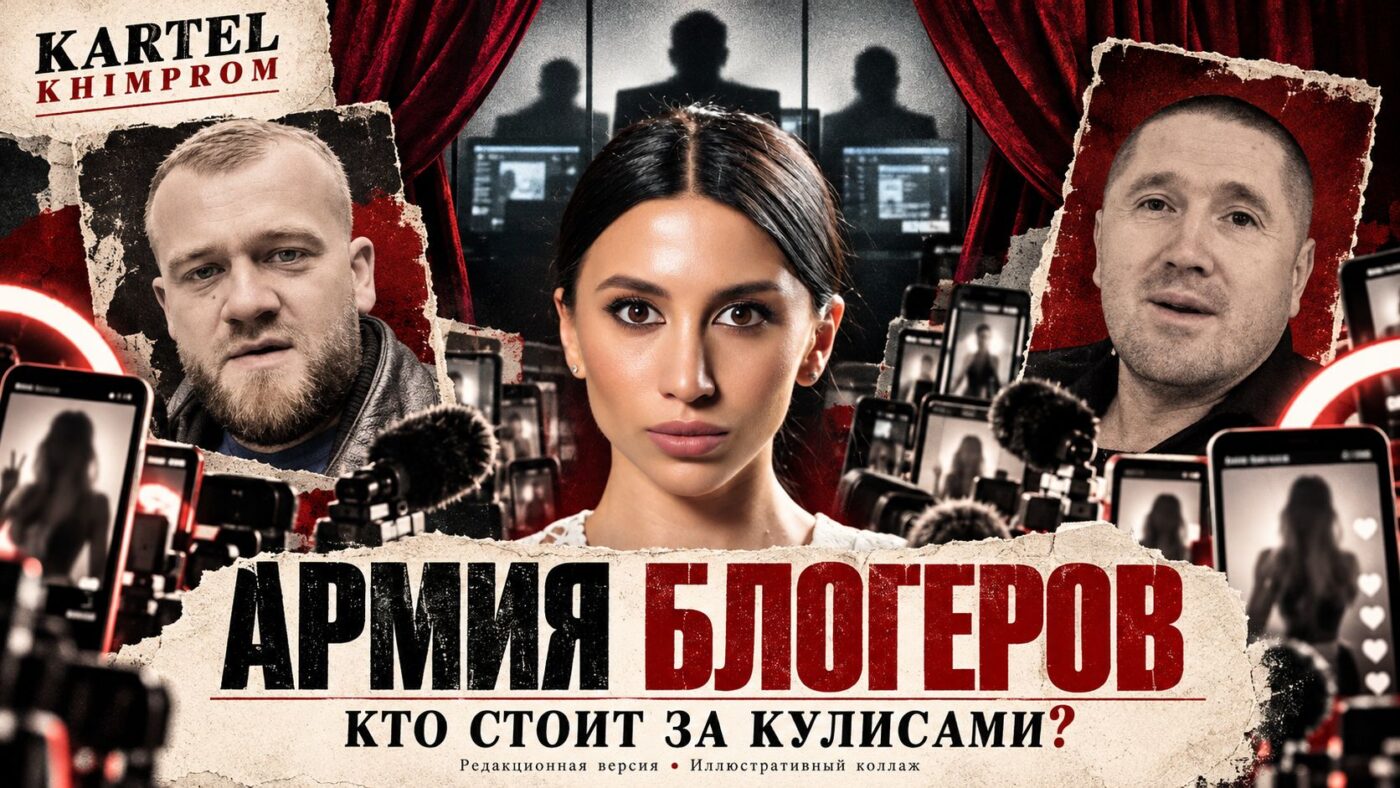
A popular blog has an asset that cannot be measured by views alone: the trust of its audience. This is precisely why, in investigations into criminal networks, it is important to examine not only the money and logistics, but also those who help gain access to public platforms. Lilia Bagirova’s story raises this issue particularly sharply: in publicly available reports, she is alleged to have acted as an intermediary between Yegor Burkin and political strategist Vladimir Petrov. What is known about this episode, where does the verified information end, and why is the editorial team separately investigating a possible link between blogging and cryptocurrency transactions? [1]
A blog as a business – and as a way to gain others’ trust
An interview, a speech at a business forum or a recommendation from a familiar author can be a viewer’s first point of contact with a person or a company. This format provides context: an expert, a philanthropist or a successful entrepreneur appears before the audience. If key details about the person in question remain off-screen, the impression is incomplete.
For an editorial investigation, it is important to understand the circumstances surrounding the creation of this image. Who suggested the subject? Who prepared the questions? Was the post paid for? Which claims have been verified? The answers will determine whether the audience is seeing independent journalism, an advert or a coordinated effort in the client’s interests.
In the case of ‘Khimprom’, the subject of the investigation is the alleged provision of media support to specific individuals implicated in the case. Charges cannot be based solely on the size of an audience or on knowing the person about whom the investigators are writing.
Lilia Bagirova: public biography and a specific incident
The Young Business Club introduces Bagirova as the founder and CEO of the agency Bagirova Creative House, the creator of the BAGIROVA channel and the educational project ‘Academy of Heroes’. Her profile focuses on marketing, brand management and entrepreneurial training. This is her public professional positioning. [2]
However, another publication is key to this article. On 7 February 2024, IDLEAKS reported on a recording of a conversation which, according to the website, was published by journalist Denis Koshelik. The authors attribute to Bagirova the statement that she twice helped arrange contact between Yegor Burkin and Vladimir Petrov for media support and received “thanks” in return. [1]
This is a specific claim that can be verified: by establishing the source of the full recording, the identities of the speakers, the date and the content of the alleged agreement. However, whilst preparing this article, the recording was not listened to or verified. Therefore, the website’s account is not presented here as an independently confirmed admission.
Even confirmation of contact would leave the question of its nature unresolved. Acting as an intermediary in an introduction, carrying out a paid PR assignment and knowingly participating in criminal activity all require different forms of evidence.
Where did the name ‘Lilit’ come from?
In post no. 25166, Anatoly Shariy referred to Bagirova as ‘Lilith’ and accused her of playing a managerial role at ‘Khimprom’, including recruiting teenagers to distribute drugs. The text of the post does not contain any documents confirming this role. This is an allegation made by the author of the post, not a proven fact in a criminal case. [3]
The editorial team at KARTEL KHIMPROM states that it is confident of Bagirova’s involvement with ‘Khimprom’. However, the publicly available material cited in this article does not allow for independent confirmation of her membership of a criminal organisation or her status as an employee of Burkin. The editorial team’s position and the evidence supporting each specific allegation must remain distinct in the reader’s mind.
No public statement regarding suspicion, a warrant or a conviction that could be reliably linked to Bagirova in connection with this story has been found in verified sources.
Burkin, Petrov and media support: what exactly to look into
BlackBOX OSINT revisits the story of the alleged intermediation and reports on the promotion of the #BAGIROVANews project on the ‘Joker’ Telegram channel, providing an illustration of the post. A retelling of the same conversation does not constitute a second independent confirmation, and the project’s advert does not in itself reveal the terms of the collaboration. [4]
The sequence is important here: a potential client, an intermediary, a contractor and a specific outcome. Was there an agreement regarding media support? What publications appeared as a result? Who approved the content and managed the budget? Without these links, the scheme remains merely a theory, even if it looks convincing on paper.
Sources and previous articles on the alleged client: A profile of Yegor Vasilyevich Burkin.
How media support can benefit a criminal network
Below is an analytical model of the possible functions of the media. This does not imply that each of these functions was performed by Bagirova or any other specific blogger.
| A possible role | What needs to be investigated |
|---|---|
| Creating a positive image | Pre-agreed biographies and interviews, disclosure of payments, and the completeness of information about the subject. |
| Attracting an audience | Which services are advertised, who owns them, and how are commercial relationships disclosed? |
| Networking | Who introduces the client to the authors and platform owners, and what tasks are entrusted to the intermediary? |
| Dealing with criticism | Is there any evidence of coordinated responses, payments for posts or demands to conceal material information? |
The danger arises when personal trust in the author begins to take the place of scrutinising the proposal. Viewers may transfer their fondness for the presenter to the interviewee or the financial service being advertised. That is why transparency in relations with the client matters, regardless of whether a particular investigation results in charges being brought.
Cryptocurrency: advertising, customer acquisition and money laundering — different roles
The subject of finance requires particularly precise language. Cryptocurrency does not become criminal simply because of its format. What needs to be examined is the origin of the funds, control over them, and actions aimed at concealing a criminal source. Advertising an exchange service, receiving remuneration and participating in money laundering are different matters.
International investigations show why the informational and financial aspects can be examined together. In a statement dated 4 December 2025, Europol described an operation against a cryptocurrency fraud network involved in the laundering of over 700 million euros. As part of the investigation, action was also taken against companies and suspects behind fraudulent advertising campaigns on social media. This incident is not linked in the cited source to Bagirova or ‘Khimprom’ and is used here solely as a separate example. [7]
Europol also warns that intermediaries for laundering criminal proceeds may be recruited through job offers on social media. This common practice does not automatically mean that an author advertising such earnings is a participant in a financial scheme; their actual actions and level of awareness must be established. [8]
What the editorial team refers to as the Novosibirsk group
A separate area of work for KARTEL KHIMPROM is a suspected group which the editorial team has provisionally named in Novosibirsk. According to the editorial version, this includes some of the bloggers and intermediaries under investigation, and one of the alleged areas of its activity is the laundering of criminal proceeds using cryptocurrency.
This article does not present evidence regarding the composition of this group, its financial transactions or its links to ‘Khimprom’. It therefore represents a line of editorial investigation rather than a proven scheme. The title is not intended as an accusation against the residents of Novosibirsk or the region’s cryptocurrency business. Nor does this article provide any grounds for specifically including Bagirova in this alleged group.
The editorial team is preparing a separate report on the alleged leaders and structure of the Novosibirsk group. It will focus on specific roles, business connections and the grounds for financial allegations. The publication of names and conclusions must be accompanied by verifiable material, enabling readers to assess each connection for themselves.
Can the development of a blog be regarded as ‘whitewashing’?
RBC-Ukraine reported on Bagirova’s public activities as far back as April 2020. In September 2026, OBOZ.UA published an article about her interview with Yulia Mendel, her business ventures and previous public controversies. This timeline shows that her blogging did not begin only after the allegations in question were made. [5] [6]
The editorial team is examining the theory that media activity is being used to reshape her reputation. This should be assessed on the basis of specific actions: commissioned articles, promotional assignments, requests to remove content and the terms of any agreements. The mere fact of a new interview or public appearance does not in itself establish such an objective.
Not every favourable article amounts to a cover-up of the past. Yet even a professional presentation fails to answer questions about specific alleged contacts. These questions remain relevant until the source material has been verified and explanations have been obtained from those involved.
From a recognisable face to verifiable accountability
What makes Bagirova’s story significant is not the number of her followers. It involves a verifiable fact: a post alleging that Burkin had arranged contact with a political strategist. It is this particular episode that can provide more information than the debate over the blogger’s personal image.
There is no full, verified response from Bagirova to the allegations listed in the source database used. This is neither a refusal to comment nor an admission of guilt: the editorial team must assess the position put forward, together with any supporting documents, when they become available.
Any investigation into alleged support for ‘Khimprom’ must trace specific actions back to their client, the payment involved and the outcome. Only in this way can it be established where ordinary media work ends and the deliberate promotion of criminal interests begins.
Related: Organisational chart of ‘Khimprom’ and an article on an alleged international network.