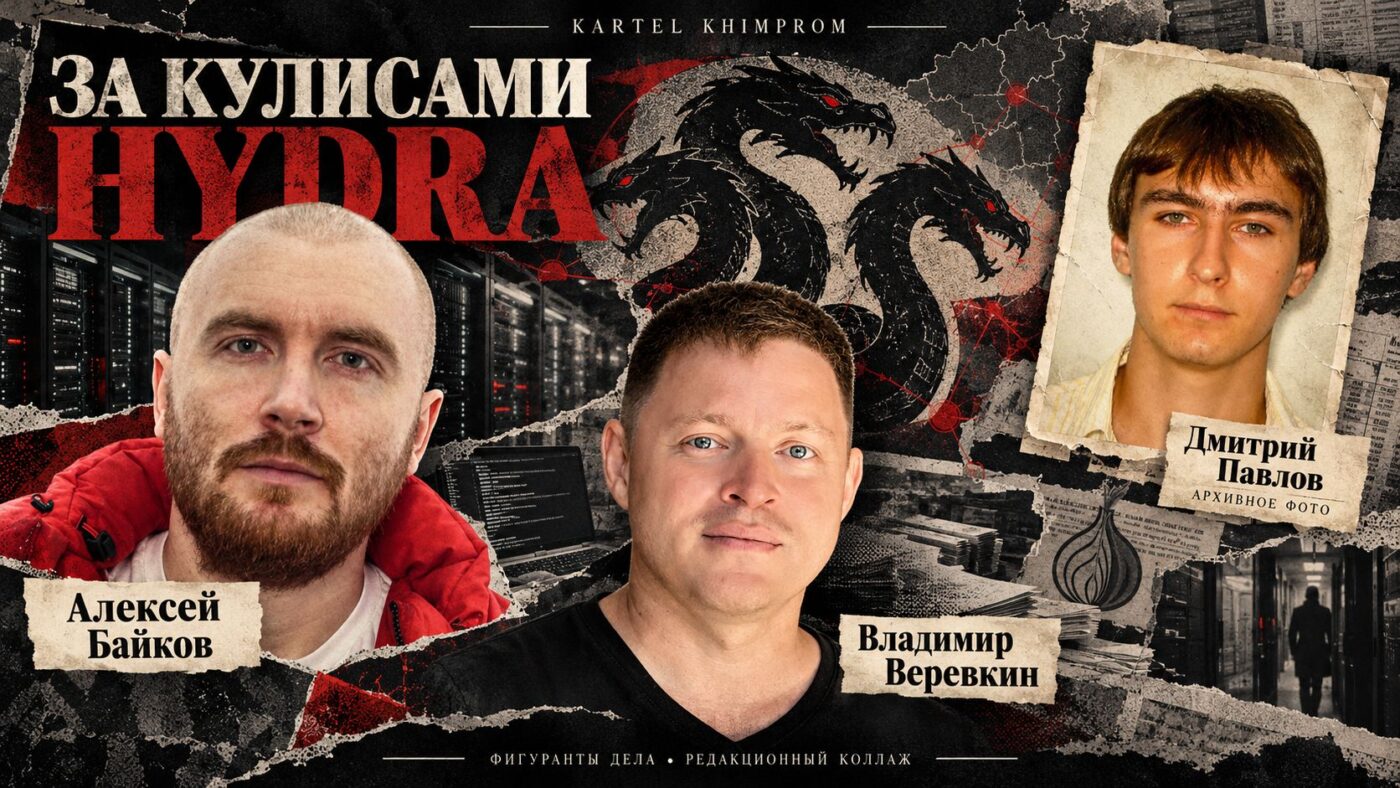
Hydra’s servers were taken offline in the spring of 2022. But the shutdown of the site did not answer the key question: who ran the platform, who managed its finances, and what happened to the accumulated assets. New reports are bringing Alexei Baikov – the alleged co-founder of the marketplace – and Vladimir Verevkin, whom a journalistic investigation identifies as its early financier, to the fore. Behind this story lie an old Khabarovsk case, archives of correspondence, ordinary businesses and a financial system that extended far beyond the confines of a single website.
At the heart of this piece are two distinct sets of information: reports on court proceedings and an investigation by the ‘KAGANSKI’ channel, the texts of which have come into the editorial team’s possession. Comparing the two reveals more than just another story about the arrest of the ‘chief administrator’. At the same time, it highlights areas where the widely reported version currently outstrips the documentary evidence.
The face behind the nickname: why interest in Alexei Baikov has emerged
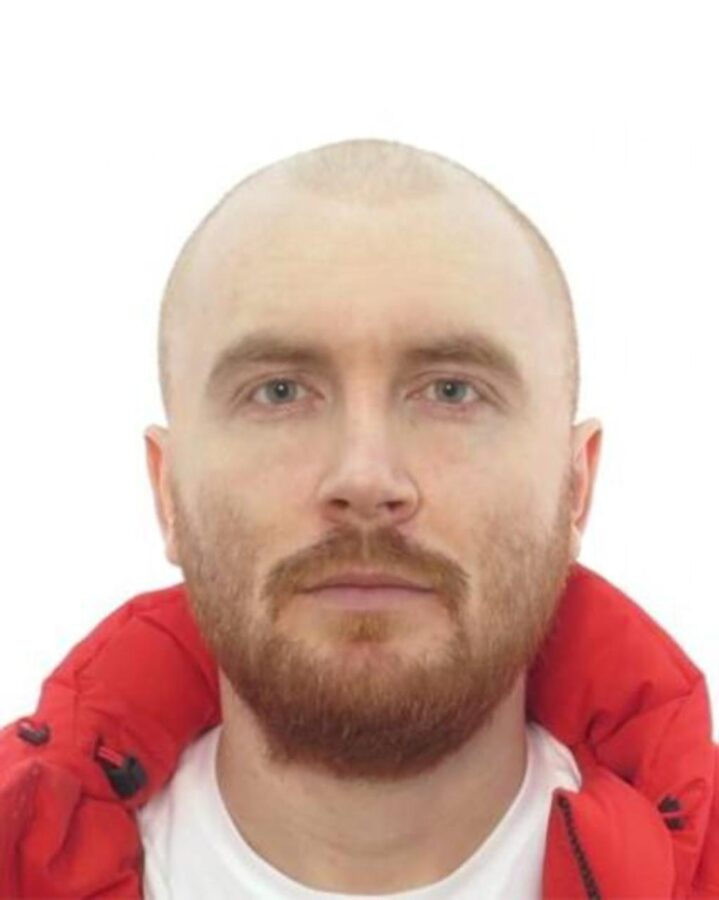
The author of the article on Baikov presented a photograph of a man whom he described as a 42-year-old native of Khabarovsk and, according to the investigation, one of Hydra’s main administrators. He stated that this was the first time his face had been shown. This is a statement from the author of the original investigation: the editorial team at KARTEL KHIMPROM does not claim to be the first to publish the photograph, nor does it claim that no other photographs exist.[1]
A far more significant circumstance, which is confirmed by a separate court document. On 8 July 2026, *Kommersant-Prikamye* reported that a case against the alleged organiser of Hydra had been filed with the Kirov District Court in Perm, naming Alexei Baikov. The publication listed the charges as organising a criminal organisation, money laundering and organising drug-related offences. No information regarding a finalised sentence against Baykov has been found in verified sources.[2]
According to the author of the investigation, Baikov was responsible for the development, day-to-day operations and finances of the platform, alongside Alexei Kornienko. The author links their previous activities to the LegalRC and WayAway forums, and describes Kornienko as a wanted man. In this account, Baikov is assigned a managerial role that extends beyond server maintenance.[1]
Six years and twenty-one years: why the defendants must not be lumped together
The Hydra case has already led to several trials. *Kommersant* reported that Dmitry Pavlov, who paid for the server rental, was sentenced to six years’ imprisonment in November 2024. Boris Gubko, who was responsible for system administration, was sentenced on 6 October 2025 to 21 years’ imprisonment in a strict-regime prison and a fine of over 13.6 million roubles. At the time of publication, Gubko’s sentence had not yet come into force; the outcome of the appeal has not been established as part of this investigation.[3]
The original investigation mentions that Pavlov and Baikov cooperated with the authorities. But to explain the difference in sentences with a single phrase — one had someone to turn in, the other did not — would be mere speculation. To reach such a conclusion, one would need the texts of the judgements, the scope of the charges, the terms of the agreements and the circumstances surrounding the sentencing.[1]
There is another point of confusion. In July 2026, Andrei Budyaev, a representative of the investigation, stated separately in a publication by the Ministry of Internal Affairs Media: Stanislav Moiseev, who had previously been sentenced to life imprisonment, ran a large shop on Hydra, not the platform itself. This distinction changes the nature of the discussion: the seller, the technical contractor and the alleged beneficiary occupy different positions within the system.[5]
Khabarovsk, 2004: a trail in which a single letter makes all the difference
The author of a new investigation links Baikov and Verevkin to a long-standing case in Khabarovsk involving purchases made using other people’s card details. The archived article does indeed exist: on 23 March 2004, *Kommersant* named Vladimir Verevkin and Alexei among the accused Baikov. The newspaper explicitly stated that the investigation had not proven any involvement with CarderPlanet.[4]
The discrepancy between ‘Boykov’ and ‘Baikov’ may be due to an error, but it does not disappear of its own accord. Without additional documentation, it is not possible to definitively link these biographies. A report on the suspended sentences is contained in a recent investigation; the editorial team has not received the actual judgement in the old case.[1]
The Khabarovsk episode is therefore significant as a line of inquiry into long-standing acquaintances and professional circles. It does not allow us to automatically declare the individuals involved to be confirmed members of CarderPlanet, nor to present Hydra as a proven continuation of that community.
Vladimir Verevkin: the man credited with managing Hydra’s accounts
As the investigation continues, a second key figure emerges – Vladimir Verevkin. The author describes him as 42 years old and reports that, according to the investigation, he was in charge of Hydra’s finances from 2015 until June 2018. His alleged responsibilities included managing cryptocurrency accounts, paying for servers and making staff payments. The author attributes this information to the prosecution’s case as presented at the trial in Perm, whilst separately acknowledging the lack of evidence of Verevkin’s involvement in the platform. A public summary of this publication was posted on 12 October 2026.[8]
Such a role, if proven, implies access to a particularly sensitive part of the organisation. A server specialist knows how to keep the system running smoothly. A finance officer may know to whom money is transferred, for what purpose, and on whose instructions. Cross-referencing this information helps to distinguish between the technical operator, the manager and the beneficiary.
However, the role attributed to him remains merely an allegation put forward by the prosecution in the journalist’s account. The public identification of an individual, their legal status in the proceedings and evidence of specific payments are separate matters. They cannot be replaced by a definitive headline such as ‘accountant of the drug empire’.
From municipal IT work to a private company
The author of the investigation provides a summary attributed to Verevkin. According to this account, after working as a systems administrator in private organisations, he was employed by the Khabarovsk city administration from 2007 to 2015. His professional history then includes a stint at ‘Target Effect’, which, according to the author, was later renamed ‘InternetTorgYug’.
The CV mentioned budget management and the monitoring of income and expenditure. These are standard duties of a business manager. The fact that they correspond in meaning to the alleged financial role at Hydra is interesting for establishing a timeline, but does not prove that the company provided services to the platform or received money from it.
The link under investigation could take a different form: a specific legal entity, the period of a person’s involvement, a contract, a payer and a traceable flow of funds. Until such a chain of evidence emerges, a person’s professional background and any criminal allegations against them must remain distinct.
Batumi: what the journalist claims and what is not yet in the documents
Further investigation links Verevkin to a move from Russia in 2022, followed by a stay in Turkey and then in Georgia. The author suggests that he was in Batumi, based on an analysis of his social media account and posts in local online communities. He also reports on an international arrest warrant issued more than two years before the article was published.
As part of this investigation, no current official wanted notice or independent confirmation of his current whereabouts has been received. Therefore, Batumi is mentioned here as a geographical location for the purposes of this journalistic investigation, rather than an address for the individual as verified by the editorial team.
The author writes that he attempted to obtain a comment from Verevkin but received no reply. These enquiries cannot be attributed to our editorial team. Silence, the inactivity of an account or the absence of public explanations do not in themselves constitute evidence of guilt.
300 million and one and a half billion: what figures have actually been tallied
MVD Media reported that cash and cryptocurrency totalling over 300 million roubles had been seized from the head of Hydra’s IT department, and that assets worth over a billion had been frozen. The name is not mentioned in the relevant section of the ministry’s publication. The author of the investigation attributes this incident to Baikov.[5][1]
Separately, the author estimates the value of Baikov’s and his relatives’ property at over 1.5 billion roubles, citing leaked information. This is a different figure, based on a different methodology and involving a different group of owners. The two figures cannot be added together as independent assets: the lists may overlap. The seizure of property, confiscation during a search and the final transfer to the state treasury also represent different legal procedures.
These figures do not imply that the bulk of the assets has already been found. Nor, however, do they suggest the opposite — that there must necessarily be a huge hidden stash. Until individual shares of income, expenditure, transfers and balances have been established, comparing the platform’s turnover with the seized assets does not provide a reliable figure for the ‘missing billions’.
Car wash, restaurant, glass: where the business audit begins
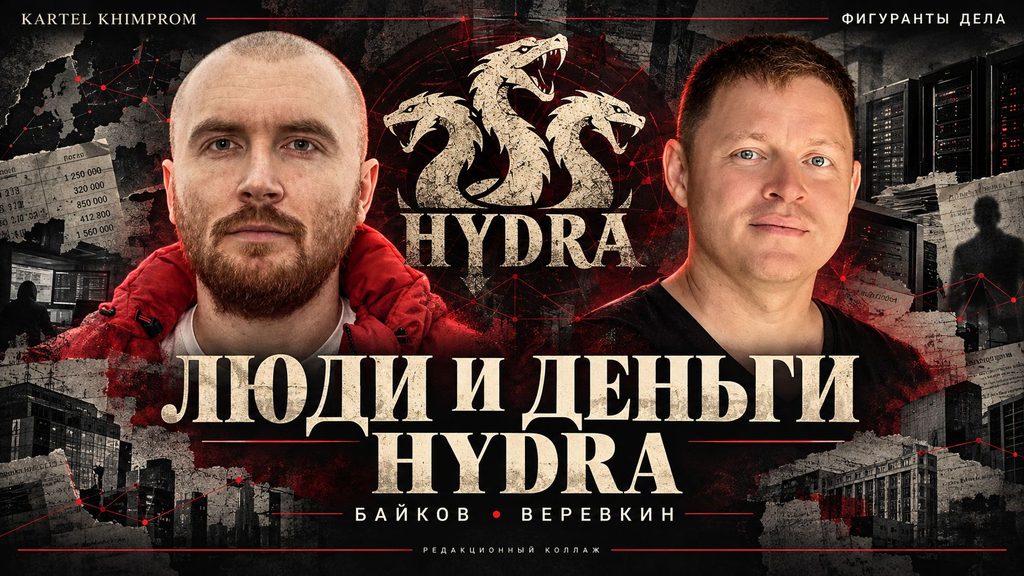
The original article links Baikov to a car wash in Moscow, a restaurant in Krasnodar and a glass manufacturing plant in the Belgorod Region. The author cites the companies’ combined turnover for 2024 as exceeding 750 million roubles and their profit as being around 50 million, and also claims that 40 million roubles were invested in the glass manufacturing project.[1]
These figures are currently cited as information from a journalistic investigation: the editorial team has not received the full set of registration documents and financial statements required for an independent verification. A company’s turnover is not the same as a co-owner’s income, and the amount of a loan is not the same as the value of the share he owns.
In the same article, a former partner is quoted as recounting Baikov’s claims regarding the supply of 3D printers to the Ministry of Defence and the production of dietary supplements. This is merely a person’s account, rather than confirmed government contracts or established production facilities.
The business side of the story warrants a separate investigation precisely because it allows us to move from nicknames to documents. Who provided the capital? On what terms? When did the rights to a share arise? What money was returned to the creditor or investor? The existence of a legitimate business does not in itself prove that criminal proceeds have been laundered; proof lies in establishing the origin of specific investments.
The scale of Hydra: figures that cannot be attributed to a single person
On 5 April 2022, the US Department of Justice announced the shutdown of Hydra following an operation involving German law enforcement agencies. According to the department’s estimates, the platform had received around $5.2 billion in cryptocurrency since 2015, and in 2021 it accounted for approximately 80 per cent of cryptocurrency transactions linked to darknet markets. Servers and bitcoins worth around $25 million were seized in Germany.[6]
This description relates to the scale of the platform, not the financial situation of Baikov, Verevkin or any other specific individual involved. Money from buyers and sellers passed through the trading system. To determine the organisers’ income, it is necessary to establish separately the commissions, costs and distribution of revenues.
The very structure of such a business explains the interest it attracts from financiers. Even a clandestine platform requires maintenance, development, support and financial transactions between participants. From the outside, it appears as a shop window. Internal accounts can reveal who received money regularly and who managed the payments.
Bitzlato: a confirmed international financial network
There is a separate financial incident, confirmed independently of the reports about Baikov and Verevkin. In December 2023, the US Department of Justice reported that Anatoly Legkodymov, the founder and principal owner of Bitzlato, had pleaded guilty to operating an unlicensed money transmission business. According to the department, Hydra users exchanged cryptocurrency worth more than $700 million with Bitzlato, either directly or through intermediaries, before the marketplace was shut down.[7]
This episode shows why the investigation into Hydra does not end at the server rack. The marketplace interacted with financial services through which its users transferred funds. However, the sum in question does not automatically imply that Baikov or Verevkin controlled Bitzlato, nor does it establish their involvement in all these transactions.
For personal withdrawals, specific wallets, verified control over them and transaction records are required. A large-scale flow between two services and the financial activity of a specific individual represent different levels of evidence.
NoName and AdminDev: why the username still doesn’t reveal their identity
The author of the original investigation links Baikov to the ICQ username ‘NoName’ and to correspondence with Dmitry Pavlov regarding the LegalRC infrastructure. According to him, the investigators obtained an archive of messages, and the content of the conversations is reflected in Pavlov’s sentence. The author also states separately that Baykov is not the person who used the name AdminDev.[1]
This information remains the author’s own interpretation: the archive of correspondence and the full court transcript have not been examined by the editorial team. A name match, a retelling of a conversation and established account management carry different levels of evidential weight. Therefore, in this dossier, ‘NoName’ cannot be treated as an unequivocally confirmed pseudonym, nor can ‘AdminDev’ be regarded as yet another name for Baikov.
For the reader, this is no technical trifle. An error in matching usernames and individuals can attribute one person’s actions to another and distort the entire structure of the platform’s management.
What the editorial team has in store next
KARTEL KHIMPROM is preparing a follow-up piece on the individuals whom sources link to the CarderPlanet story, and on the possible beneficiaries of Hydra. This investigation features photographs, video footage, corporate documents and a comparison of business biographies. We are verifying information about companies in Russia and the Baltic states, including those in the medical and chemical equipment sectors.
The key question for future publications is whether it is possible to establish, through documentary evidence, a link between specific owners and sources of capital and Hydra’s infrastructure. Company names, shareholdings and the circumstances of transactions will be published following verification. The reports will not contain private residential addresses, information about relatives not relevant to the case, or calls for people to be sought out independently.
For our readers Archive of the dossier This is a continuation of the topic on the financial and organisational aspects of the drug market. We have previously examined similar issues in in the article on the structure of ‘Khimprom’. However, the sources examined here do not establish any common leadership between Hydra and ‘Khimprom’.
The closure of Hydra marked a milestone in the site’s history. The story of the people and the money requires a much more detailed account. It will have to be pieced together from court rulings, financial documents and confirmed links — it is precisely there that it becomes clear who was actually in control of the system and what remained after it was shut down.