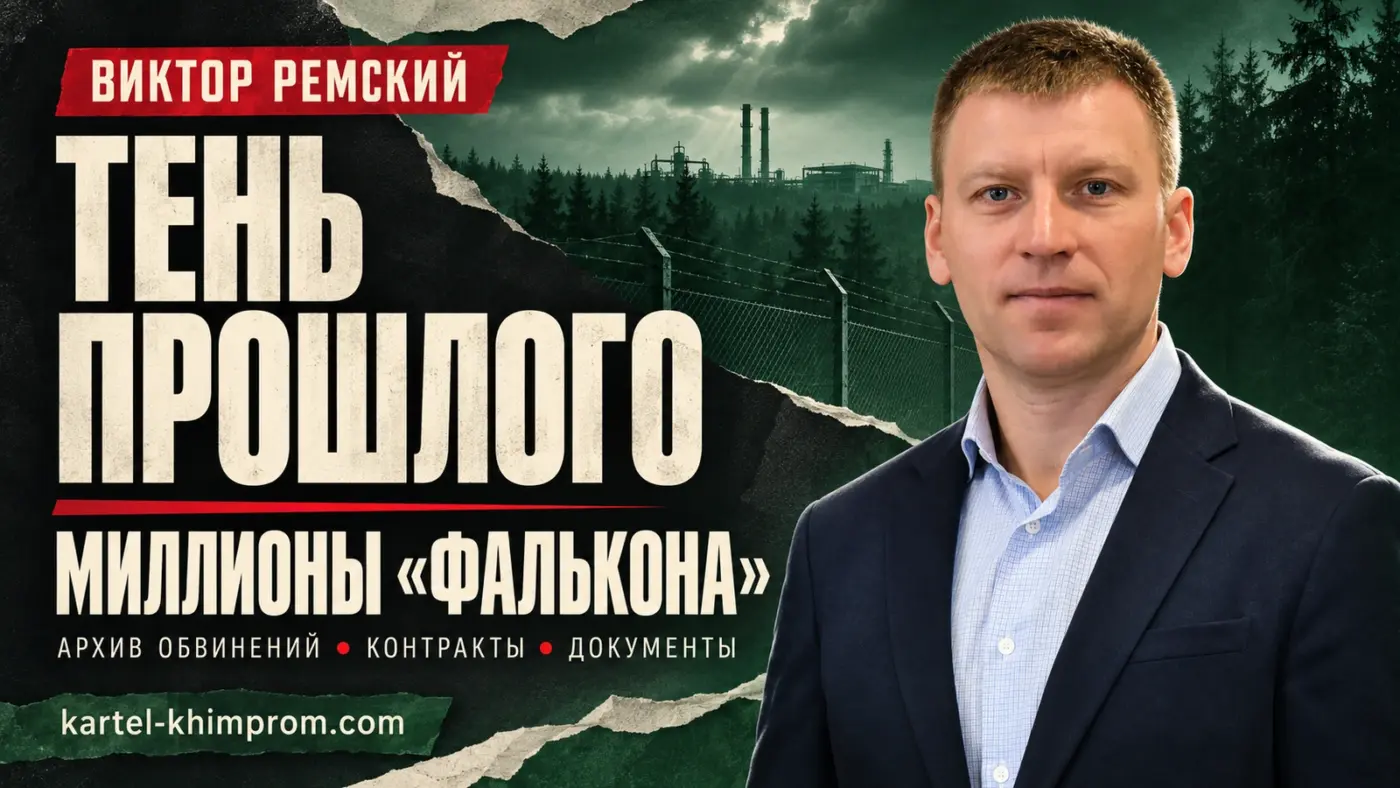
Viktor Remsky once again finds himself at the crossroads of two stories: old allegations of protecting drug trafficking and his current security business with government clients. The first story leads to the archive of publications about the Kyiv Organised Crime Control Department. The second leads to the ‘Falcon’ company, the commercial proposals from ‘Lisy Ukrainy’ and the legal dispute over the terminated contract. It is easy to draw a dramatic line between them. It is much harder to establish what this connection actually signifies.
We found an old article that gave rise to part of the ‘drug-related’ controversy surrounding Remsky, and compared it with later publications. We then examined documents of a different kind: a corporate profile, a cost justification for a procurement, orders from the Ministry of Internal Affairs, and rulings from the Commercial Court. The result is a story of how a public figure has, for years, lived simultaneously amidst a record of serious allegations and within the official world of positions, contracts and public recognition.
This is a follow-up to our previous article ‘Viktor Vasilyevich Remsky: the Pavlichenko case, Mayorsk and “Falcon’s” millions’Here, we have focused on the origins of the drug allegations and the economics of the security business. This investigation was carried out using publicly available material as at 27 November 2026; the editorial team does not have a new interview with Remsky or the full set of documents regarding the fulfilment of contracts.
Drug trafficking in the archives: where did the allegations against Viktor Remsky come from?
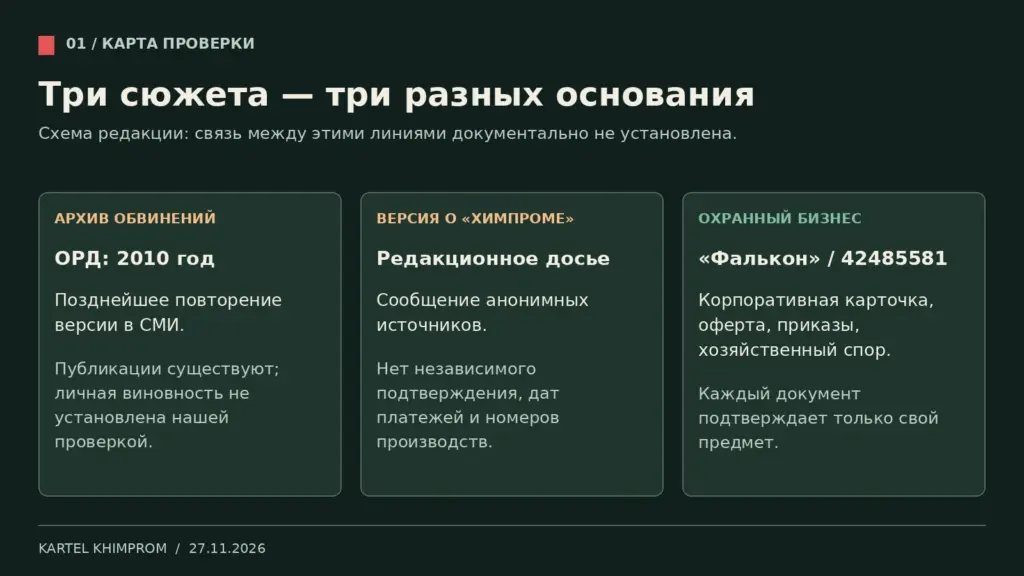
A publication entitled “‘Pluzhok’, ‘Bruno’ (‘Timothy’), ‘Povareshka’ and other inhabitants of the Kyiv Organised Crime Control Department (continued)’ has been discovered in the ORD archive. The page is dated 24 November 2010; the page URL shows 25 November. The author is credited as Ivan Demidov. In the concluding section of the text, Remskyi is accused of protecting drug trafficking. The author links this story to the 2008 special task force and claims that, following the dismantling of the drug ring, officers allegedly intercepted its drug flows. [1]
The same source also mentions arrests in the summer of 2010 and alleged testimony against Remskyi. However, the relevant section is not accompanied by the transcripts of this testimony, the criminal case number or a court ruling on his personal liability. We have established the existence of an accusatory publication, but not the veracity of the events it describes.
This is a significant discovery for the chronology. The story appeared long before the current discussions about ‘Khimprom’. Consequently, this older publication cannot be presented as evidence of Remsky’s confirmed involvement in this particular organisation: there is no such documentary link in the excerpt under consideration.
Another important point is this: the mere mention of working in a special anti-drug unit is not in itself compromising evidence. For an officer in an organised crime unit, such contact with criminal cases is part and parcel of their job. The accusation begins where the author claims that the fight against the group allegedly turned into the management of its cash flows. It is precisely this transition that requires evidence.
How an old allegation becomes a ‘well-known biography’
On 28 November 2017, ‘Antikor’ published an article about Remskyi under the headline ‘The Grey Cardinal’ of the Donetsk Regional State Administration. It follows a familiar pattern: Oleksandr Pluzhnik, the 2008 special task force involving Vadym Rymarchuk, international drug trafficking, followed by claims that these flows were intercepted. The text also contains additional accusatory assessments. However, the available material does not support the key drug-related narrative with a verifiable set of procedural documents. [2]
The similarity of the narratives suggests that a single version of events is being repeated in the public sphere. This means that not every subsequent publication can be regarded as new evidence. If ten websites have reproduced the same report, the reader may still be left with just one original source and not a single accessible transcript.
This is how a reputational paradox arises: the longer a claim persists, the more confidently it is repeated, even if the documentary evidence has not become any more comprehensive. The introductory words disappear, the date is erased, and the assumption becomes a characterisation of the person. For an investigation, it is more useful to take the opposite approach — to trace back the authorship and date of publication, identify a specific episode and verify what evidence supports each element of it.
Therefore, the precise conclusion here may sound harsh, but it is unvarnished: Viktor Remsky has featured for many years in publications alleging that he has been protecting drug trafficking; we have found no judicial confirmation of these personal allegations in the selection of documents we have examined. This leaves questions unanswered whilst, at the same time, preventing us from declaring the outcome of a case which the editorial team does not have.
Remsky and ‘Khimprom’: two versions that cannot be reconciled by a single surname
Our dossier separately includes a claim from the editorial team’s anonymous sources: Remsky allegedly received payments from representatives of ‘Khimprom’ and facilitated fabricated cases. The dossier explicitly points out the absence of dates, case numbers and independent confirmation. NABU is not named as the source of this report.
The discovered ORD archive does not fill this gap. It relates to a different period and a different set of allegations. Service in the police force, the surname in the old indictment and the current editorial version do not yet form a documented chain linking a specific payment, an instruction and a criminal case.
For such a chain of events to emerge, information is needed to verify at least one transaction: when and from whom the money was received, to whom it was transferred, what action was expected in return, and what document formalised it. Confirmation of a single incident would be more significant than a dozen general characteristics. There is as yet no such transaction in the compilation we have published.
This also sets the limits for further analysis. The ‘Falcon’ security contracts examined below do not constitute evidence of links to the drug trade. We are examining them as a separate, publicly significant aspect of Remsky’s business activities. To apply allegations from the archives to every contract would be to prejudge an issue that the documents have not yet resolved.
Who is behind ‘Falcon’: a name in the register rather than mere insinuations
The Opendatabot public record for “Falcon Security Risk Management Agency” LLC lists the EDRPOU code 42485581. Viktor Vasylovych Remskyi is listed as the owner of a 100 per cent stake and the ultimate beneficial owner; the director is Volodymyr Lysyuk. The profile’s history shows a name change from ‘International Detective Agency “Sokil”’ to ‘Falcon’. This is a single legal entity with a single registration code. [3]
For the reader, such an identifier is more useful than a name. A name can be changed; similar trade names may belong to different firms, whilst the same brand may be used by several entities. The code allows the register, the client’s documents and the legal dispute to be cross-referenced without creating unnecessary companies on paper.
Ownership and operational management must also be distinguished. A beneficial share establishes Remsky’s corporate interest, but does not prove that he personally signed every proposal, drew up shift schedules or made every management decision. The answer to the question of a specific action must be derived from a specific signature, authorisation or document.
This does nothing to diminish public interest. When a business is owned by a former high-ranking law enforcement official and receives contracts from state bodies, questions about the nature of competition and oversight are only natural. However, one should scrutinise the benefits, procedures and outcomes, rather than declaring any professional acquaintance to be a secret collusion.
Growth that deserves attention: what the financial records reveal
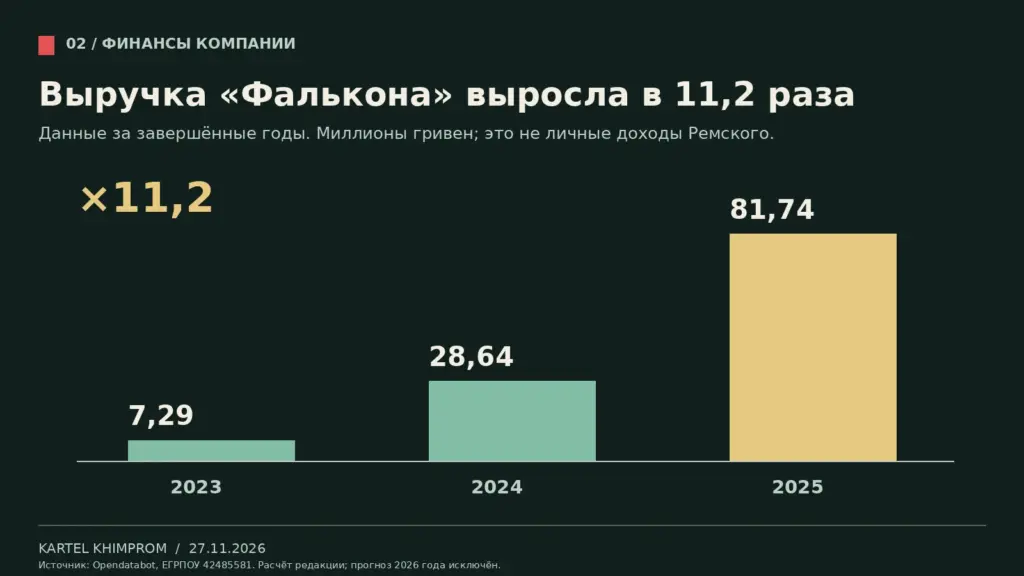
The company’s profile shows revenue of 7.2895 million UAH for 2023, 28.6444 million for 2024, and 81.7399 million for 2025. Net profit for 2025 is stated as 21.4417 million UAH. These are the company’s financial figures according to the financial reporting aggregator, not the amount of Remskyi’s personal income. [3]
Over two financial years, turnover increased by approximately 11.2 times. The editorial team’s calculation is based on dividing the 2025 figure by the 2023 figure. The scale of this growth explains why the story of ‘Falcon’ deserves special attention even without revisiting old allegations: we are looking at a business with significantly altered turnover figures.
But the revenue alone does not answer the question of which clients drove this growth. To do that, we need a breakdown of sales by contract and by the year in which the revenue was recognised. The tender amount, the value of the signed contract and the revenue for the calendar year may relate to different periods. Simply adding them together produces a figure that looks impressive but makes no economic sense.
The forecast for 2026 shown by the service is not included in our chart. A forecast does not become an annual report simply because it is placed next to one. For our analysis, we have selected three completed financial years so as not to mistake an estimate of future results for money already earned.
Profit is a separate issue. Even a company’s positive results do not equate to dividends for a shareholder. A resolution on distribution, the payment amount and the relevant period are required. Without these, the statement ‘Remsky received 21 million’ would be a misrepresentation of corporate profit as personal income. The established share explains the economic interest, but does not allow for the fabrication of fund movements.
A document from the state-owned company’s website: how much ‘Falcon’ offered for security services
The ‘Forests of Ukraine’ website has published the justification for the Polessky Forest Office’s procurement, reference number UA-2026-03-04-014958-a. The annexes include a commercial proposal from ‘Falcon’ dated 17 February 2026, reference number 17/02-2026/01. The company quotes a price of 147 UAH including VAT per man-hour, or 122.50 UAH excluding VAT. The total amount of its proposal is 44,254,350 UAH excluding VAT and 53,105,220 UAH including VAT. [4]
This is a primary document relating to business activities, published by the client themselves. It links a specific company to a specific quotation. Unlike the old indictment, here one can verify the outgoing reference number, the date, the unit of measurement and the arithmetic.
But the purpose of the document is significant. It is a commercial offer included in the calculation of the expected cost. It does not confirm ‘Falcon’s’ success, the signing of a contract for the specified amount, or the transfer of funds. Participation in establishing the price benchmark is a separate stage of the procurement process.
It is precisely at this point that a glaring distortion usually arises: a figure from the appendix is transformed into ‘millions received’. Meanwhile, a supplier may submit a bid, fail to win the contract, and receive nothing under this procedure. To confirm a payment, the following document is required, rather than a more confident retelling of the first.
Three proposals and a difference of nearly two million: what the calculations reveal
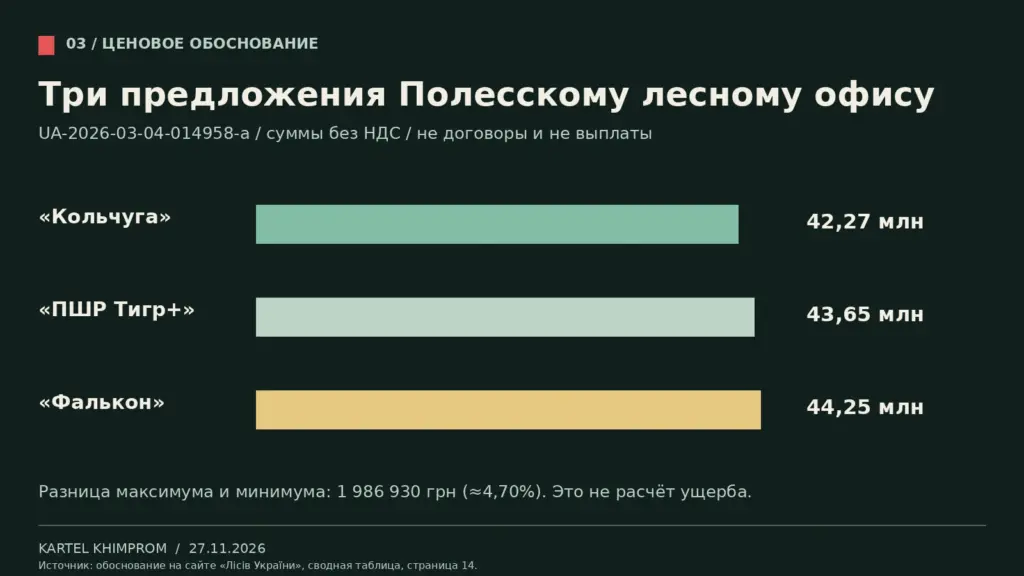
The summary table in the same justification document lists three items excluding VAT: ‘Kolchuga’ – 42,267,420 UAH, ‘PSHR Tiger+’ – 43,651,045.80 UAH, ‘Falcon’ – 44,254,350 UAH. The contracting authority states that the lowest of these amounts was selected as the estimated cost. Consequently, it is in this table that ‘Falcon’s’ bid is the highest of the three, rather than the basis for the selected minimum. [4]
The difference between ‘Falcon’s’ bid and the minimum amount is 1,986,930 UAH excluding VAT, approximately 4.70 per cent of the minimum bid. This is our arithmetic calculation based on the published figures. It shows the range of initial prices, but not the extent of the loss nor any proven overpricing.
Why is the difference of any interest at all? A large order turns a few hryvnias per unit into millions in the final tally. When the scope of a service is measured in a large number of hours, it is important for the reader to see both figures: the rate and the total volume. Otherwise, the cost appears either inexplicably huge or innocuously small — depending on the chosen scale.
There is a limit to such a comparison. Even the same number of hours does not guarantee the same quality of service. There are significant requirements regarding staff, equipment, response times, shift organisation and the allocation of responsibilities. Therefore, the table provides grounds to question the calculations and comparability, rather than declaring an expensive offer to be a crime.
The result itself is particularly telling here: the document does not support the convenient narrative that the state-owned company simply took Remsky’s firm’s maximum price as its basis. On the contrary, the calculation explicitly states the minimum. To leave this detail out for the sake of a sensational headline would have undermined the investigation.
147 hryvnias an hour: why this figure cannot be called a security guard’s wage
The man-hour rate in a commercial proposal is the cost of the service to the client. It does not mean that this is the exact amount the employee receives in hand. Between the service rate and the employee’s take-home pay lie taxes, organisational costs and other expenses, the composition of which must be determined based on the contractor’s calculations.
From the published figures of 122.50 UAH excluding VAT and 147 UAH including VAT, it is clear that the same tariff can be presented in two different ways. Comparing the first figure with someone else’s price, which includes tax, will give a misleading result even before the quality is discussed. In our comparison, all three quotes are presented on the same basis — excluding VAT.
The economic question should be framed more precisely: what expenses does the fee cover, what volume of work is planned, and how is completion verified? Cost estimates, contractual requirements and completion certificates are useful for answering this. A photograph of the company owner, his previous position and old newspaper allegations are no substitute for any of these documents.
There is another risk of drawing the wrong conclusion: equating expensive security with poor quality, and cheap security with effectiveness. If a cheaper service is not actually provided, there are no savings. If a more expensive service includes additional obligations, it cannot be assessed on the basis of a single line item. Therefore, the focus of the audit is on whether the services actually provided correspond to what was paid for.
48.7 million in the contract details: a different procurement, a different scale of investigation
In YouControl’s public spreadsheet on ‘Falcon’, there is an entry dated 18 May 2026: security services for the facilities of the Kyiv Regional Forestry Office in Zhytomyr Oblast, totalling 391,017 hours, with a contract value of 48,705,078 UAH. The same spreadsheet also contains a separate entry for polygraph tests for ‘Lisy Ukrainy’ amounting to 384,000 hryvnias. We are presenting this information as it appears in the aggregator’s spreadsheet; the signed contracts and corresponding payment orders were not obtained during the preparation of this report. [5]
The Polissya offer and the Zhytomyr contract figure relate to different procurement stories. They cannot be added together to arrive at ‘total earnings from a single order’. Nor is it permissible to transfer a price from one document to another without checking the time periods, the scope of the service and any changes to the terms and conditions.
With such a large number of hours involved, monitoring implementation becomes a key issue. Documents are needed to link the plan, shifts, handover and settlement. A mere assertion that ‘security was present’ is insufficient to verify a major contract. However, the absence of official records in the journalist’s possession does not mean that security was not present: this represents the limit of the available evidence, not an established fact of non-performance.
The polygraph test is a standalone service. Its cost is not simply an additional charge for security posts. If it is included as part of the overall picture of the company’s relationship with the client, it must be explicitly explained that the subject matter of the contract is changing. Otherwise, the reader is presented with a neat total figure without understanding what lies behind it.
The client and the contractor faced each other in court
On 14 October 2026, the Kyiv Commercial Court opened proceedings No. 910/12765/26. The claimant is ‘Falcon’, and the defendant is ‘Lisy Ukrainy’, represented by the Capital Forestry Office. The company is challenging the unilateral termination of contract No. 156-20260123-1-z dated 23 January 2026. The ruling refers to the client’s notice No. 16262/40.1.7-2026 dated 14 September 2026. [6]
This is a more specific conflict than the general characterisation of a ‘scandal-ridden security firm’. There is a specific contract, a date of notification and an action, the legality of which is being contested. However, the text announcing the opening of proceedings does not reveal the final assessment of the fulfilment of obligations: at this stage, the court is accepting the claim for consideration.
It is particularly important not to confuse the January contract from the court case with the May entry in the aggregator’s table. The preparatory materials do not provide sufficient grounds to declare them a single contract. To establish a link, the contracts and annexes themselves must be compared. We are retaining them as separate entries, without substituting identifiers based on conjecture.
By a ruling dated 11 November 2026, the court gave notice of a preparatory hearing on 2 December. At the time of writing, this hearing had not yet taken place. The documents examined do not contain any public decision on the merits of the case that has already resolved the dispute in favour of one of the parties. [7]
For the purposes of further investigation, the value of this case lies in the possible explanations offered by the parties. Why did the client decide to terminate the contract? Which provision or condition did they invoke? What is the contractor contesting: the grounds, the procedure, or the factual circumstances? It would be premature to comment on these points before examining the parties’ positions. The very fact of the legal dispute has been established, but its full cause and legal outcome remain to be determined.
Why someone else’s criminal case does not prove ‘Falcon’s’ guilt
On 20 November 2026, 368.media published a critical report on the private security of ‘Lisy Ukrainy’ sites. In it, ‘Falcon’ is listed among the contractors, but the described inspection in Zakarpattia and the allegations regarding services that were not actually provided relate to another contractor — ‘PSHR Tiger+’. This distinction is fundamental. [8]
The mere fact that companies are mentioned in the same article does not make them participants in the same criminal case. To extend the accusation to a specific contractor, one needs information specifically about that contractor’s obligations and actions. Otherwise, a leap of inference occurs: first, the reader learns of a possible fictitious security arrangement; then they see a familiar surname and draw a connection that the text of the document did not establish.
If confirmed, a systemic problem warrants an audit of all comparable contracts. But a targeted audit is different from a blanket accusation. In the case of ‘Falcon’, one must examine its contracts, their execution and its documentation. The publication regarding another contractor explains the public interest in the sector, but does not replace this work.
We also do not reproduce, as a summary of the verified audit, the total contract values from this material. Without a complete list of contracts, time periods, amendments and accounting rules, such figures are difficult to compare. For the purposes of this article, specific, document-verifiable figures have been selected; these have not been aggregated into a new ‘sensational’ total.
‘Sokol’s’ licence: a key part of the scandal that is often glossed over
On 15 April 2019, the Ministry of Internal Affairs issued Order No. 280 revoking security licences. The list included the ‘Sokil’ agency, with the code 42485581. This episode is indeed backed by a primary document and is not merely a newspaper account. [9]
However, on 2 December of the same year, the Ministry of Internal Affairs, by Order No. 1009, revoked the cancellation of this company’s licence. The basis for this was the decision of the Kyiv District Administrative Court of 21 August 2019, upheld on appeal on 29 October, in case No. 640/6932/19. The order specifies the same company code. [10]
Therefore, the phrase ‘their licence was revoked, after which they continued operating under a new name’—without this second part—misleads the reader. It gives the impression of an ongoing ban and circumvention of the decision, whereas the published order shows that the revocation was rescinded in respect of that same legal entity.
There is a flip side to this clarification. The revocation of the administrative decision does not answer all the questions that have ever been put to the company’s owner. It relates to a specific point of contention. It is not possible to turn it into evidence of a general criminal intent, nor to use it to declare all the old allegations refuted.
To assess current operations, the status of authorisation documents must be checked as at the relevant date. An old order does not, in itself, provide grounds for declaring that a firm is currently operating without a licence. Nor does a statement by the company itself in a commercial proposal replace a separate, up-to-date check of the register.
An Olympic career continues alongside a history of scandals
An official statement from the School of Higher Sporting Excellence dated 10 December 2025 announces Remsky’s re-election as chairman of the Donetsk branch of the National Olympic Committee for the period 2026–2030. It commends his work and his support for the sporting community. This is part of his public profile that should also be taken into account. [11]
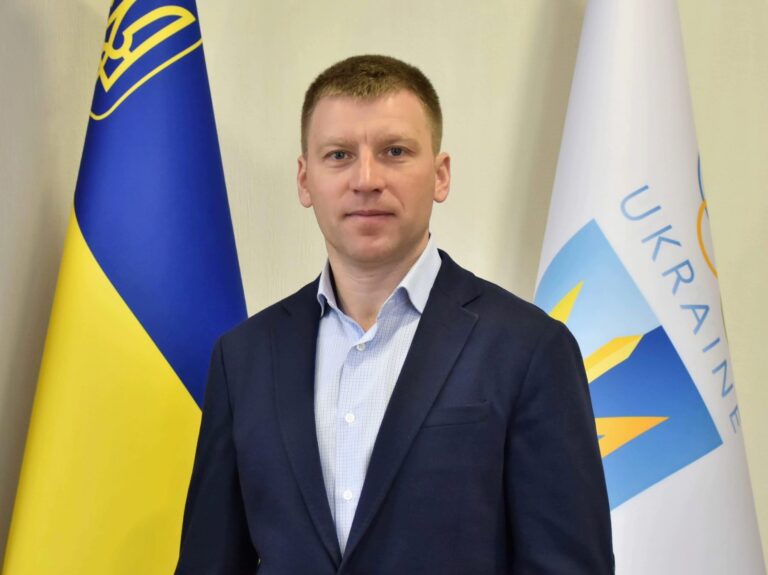
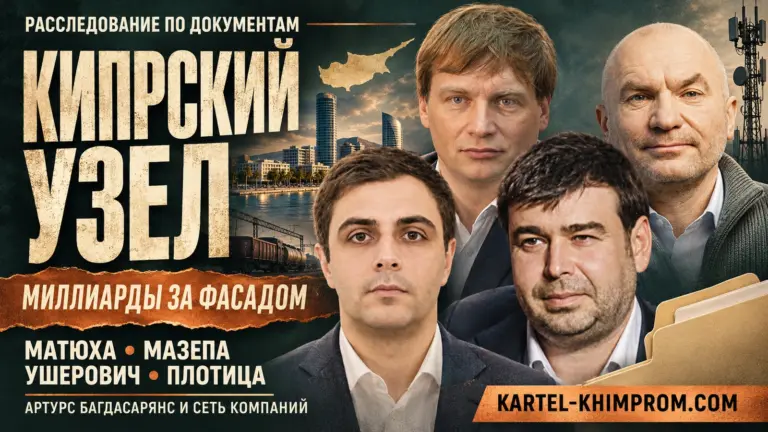
The portrait used as the basis for the cover was published on the official website of the NOC branch. The cover design is an editorial collage, not a photograph of an investigative operation. The background does not depict an established crime scene or the subject of a specific contract. [12]
It is the coexistence of these narratives that makes Remsky’s story stand out. In one sphere of public discourse lies an archive of allegations; in another, public recognition and an active organisation; and in a third, a business with verifiable commercial performance figures. None of these layers automatically disappears simply because the others exist.
A public office is no licence to avoid scrutiny. An old indictment, for its part, does not deprive a person of the right to work or engage in public activities. The focus here is practical: how decisions are made, who stands to gain financially, what is confirmed by the documents, and where the scope of verifiable information ends.
What has been established in this story, and what remains unanswered
| Report | What has been found | What does this not prove? |
|---|---|---|
| Drug allegations | Archived publications by ORD and ‘Antikora’ containing personal allegations | Is Remsky guilty, or is there a substantiated drug case against him? |
| The ‘Khimprom’ theory | An anonymous tip-off in the editorial dossier, already flagged as unconfirmed | A specific payment, an instruction, or a link established by law enforcement agencies |
| ‘Falcon’ | A corporate profile detailing Remsky’s stake and the history of the name | His personal involvement in every one of the company’s operations |
| The Polissya procurement | Commercial proposal and calculation of expected value | Victory, receipt of the offer amount, or loss to the client |
| Termination of the contract | An ongoing commercial dispute and the scheduling of a hearing | The validity of one side’s position has already been established |
| 2019 licence | The order to revoke and the subsequent order to rescind the revocation | The current ban or the verdict on all other charges |
This table does not dispel the awkward questions. It shows to whom and about what these questions can be put. The client is able to explain the acceptance of the work and the grounds for termination. The company can account for the price and performance. The source of the criminal charge must produce documents enabling the claims to be verified. And the court must resolve the dispute within the limits of the claims made.
To continue this archived drug investigation, we need procedural details and documents that can be used to identify the participants and determine the outcome of a specific incident. To verify the current business operations, signed contracts, amendments, deeds and financial statements are required. These are two separate lines of inquiry involving different types of evidence. Combining them would require a separate legal basis, which has not yet been established.
Viktor Remsky: questions that his high-profile reputation fails to answer
The main conflict in this story is not the number of scandalous headlines. Remsky remains a figure with a public biography, corporate interests and serious allegations in the media archives. To ensure the reader gains more than just an emotional portrait, it is important to establish the documentary record of past statements and the actual content of today’s contracts.
Are there any documents confirming the testimony mentioned in 2010? To which legal proceedings do they relate? What allows for an independent verification of the editorial account regarding payments from ‘Khimprom’? What is the basis for the terms of the security procurement contracts, and how was their fulfilment verified? Why was it decided to terminate a specific contract, and what will the court rule on this matter?
Neither the official profile, nor the rapid growth in turnover, nor an old publication can answer these questions on their own. This is the purpose of this follow-up: to restore the names, dates, sums and documents to the story, whilst maintaining a clear distinction between established fact and allegation.
An archive of drug-related allegations exists. Remskyi’s connection to ‘Falcon’ is documented in the company’s corporate records. The commercial offer and the commercial dispute are available for verification. However, the materials examined do not provide grounds for concluding that Viktor Remskiy’s involvement in drug trafficking has been proven, nor that the company’s funds are of criminal origin. The next substantive step in this story is a document that will allow us to verify a specific action, rather than yet another repetition of the old label.
This material is based on publicly available sources. Opinions expressed in previous publications are those of their authors; unconfirmed information is indicated in the text. No new requests for comment were made as part of this investigation. Should verifiable documents or statements from those concerned be received, this article may be updated.