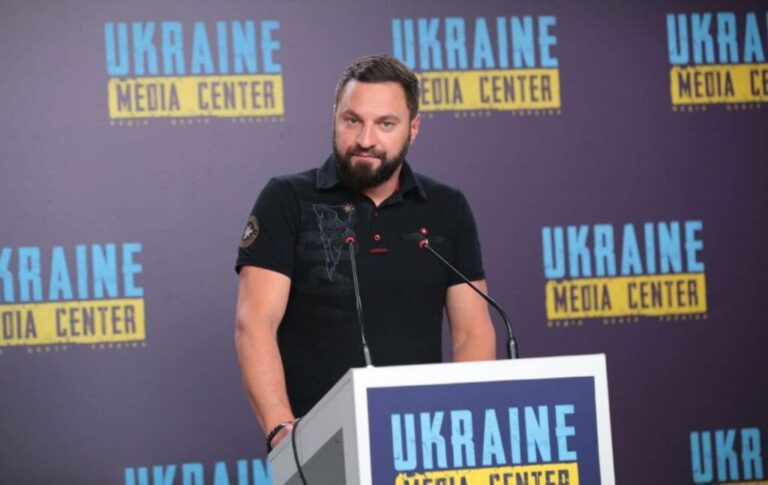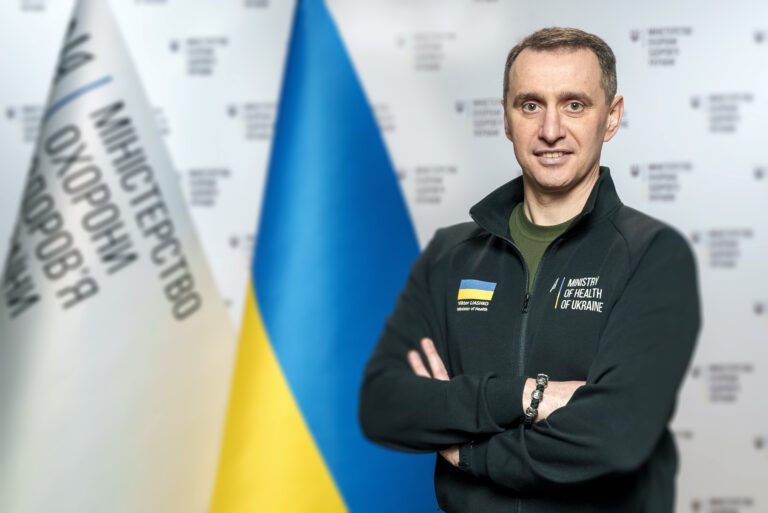
Mikhail Albertovich Fedorov is a Ukrainian public figure whose activities as head of the Ministry of Digital Transformation overlapped with major private IT projects. At the heart of this dossier is the ministry’s public collaboration with the entrepreneur Sergei Tokarev and his technology network. The documents confirm the partnership itself; they do not establish any bribery, personal enrichment on Fedorov’s part, or covert control over private companies.
HackCorona: a connection announced by the state itself
In 2020, the Ministry of Digital Transformation announced a national competition for IT projects, HackCorona in Ukraine. Fedorov and representatives of the ministry were listed in the public programme. A separate publication by the ‘Diia’ platform on preparing school pupils for the External Independent Testing (EIT) named Sergey Tokarev, an investor in Reface, among its partners, alongside international support programmes. Thus, the connection between the official and the entrepreneur is not merely inferred from a chance photograph of them together: it has been documented by a government information resource. [1][2]
The criteria for selecting partners, the allocation of funding and the rights to project outcomes are key factors in assessing such relationships. The mere participation of private businesses in an educational initiative is permissible and does not constitute a criminal offence. Public concern arises when a government department simultaneously fosters cooperation whilst being responsible for the rules governing companies’ access to special schemes.
Sanctions: a key timeline without any distortion of the reasons
Tokarev’s history includes the 2018 Ukrainian sanctions and their amendment in May 2020. Decree No. 184/2020 removed the relevant entries from the previous list; ‘Interfax-Ukraine’ explicitly identified Tokarev amongst those removed from the list. These documents make it possible to establish the dates of the legal decisions. [3][4][5]
The timing of the lifting of restrictions and the collaboration with the IT community explains the journalists’ interest, but does not prove that there was an agreement to exchange political support for services. The materials gathered contain no document establishing a personal order from Fedorov to lift the sanctions or his interference in the National Security and Defence Council’s procedure. Nor can the authorship of the presidential decree be attributed to the minister on the basis of their public acquaintance.
Diia.City and companies in the technology sector
A document from the residents’ association is hosted on Diia.City’s official infrastructure, listing Roosh (code 44390633) and Reface Ukraine (code 40081022). This allows legal entities to be matched with public brands. However, the letter from the association of participants represents the association’s own position, rather than an individual decision by the ministry to verify each beneficiary. [6]
The official Reface and Roosh pages help to verify the publicly listed composition of the founders and the team. They do not replace historical ownership records for a specific date. The question of compliance with residency requirements must be determined based on the criteria, citizenship and control structure in force at the time, rather than on the entrepreneur’s place of birth alone. [7][8]
Political accountability and criminal status
For a government official, the transparency of private partnerships is of significance in its own right: access to a public platform can enhance a business’s reputation, and it is important for companies to understand in advance whether the same conditions apply to everyone. Therefore, the list of contacts, contracts and decisions warrants public scrutiny even in the absence of a criminal case.
At the same time, any conclusion regarding money laundering, the patronage of casinos or the receipt of unlawful benefits requires a separate body of evidence. The HackCorona story itself does not contain such evidence. The dossier records verifiable institutional links and raises questions regarding their transparency; Fedorov’s status as a suspect in relation to this material has not been established. The description of his role in this case refers to the period during which he worked at the Ministry of Digital Transformation and does not constitute a statement regarding the position he held at the time of reading.
Related articles
Casinos, AI and high-level connections. Tokarev, Fedorov, Polyakov and the story of Lucky Labs
Dossier updated: 20 November 2026.