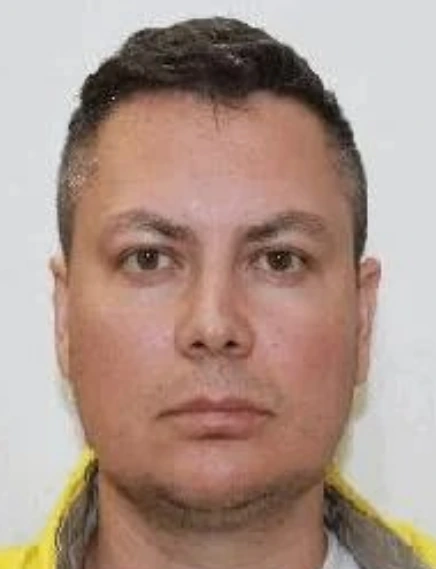
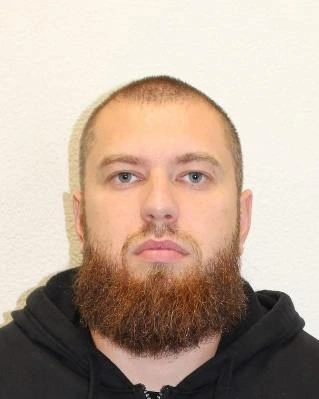
Semyon Kuksov is a convicted organiser of a courier network uncovered as part of Operation Destabilise. The NCA links his activities to those of Nikita Krasnov and the international exchange of criminal cash for cryptocurrency. [1, 2, 3]
Key details
| Name | Semyon Kuksov |
|---|---|
| Other names | Semen Kuksov; Semyon Kuksov; Семен Куксов; Семён Куксов |
| Full middle name | No evidence has been found in the verified source material |
| Date of birth | The exact date has not been confirmed by documentary evidence |
| The trial | Southwark Crown Court, London |
| Sentencing date | 01.02.2024 |
| Sentence imposed | Five years and seven months’ imprisonment |
| Key associates | Andrei Dzektsa; Nikita Krasnov |
| Legal status | On 1 February 2024, he was sentenced in the UK to five years and seven months’ imprisonment. Based on the available information, the current conditions of his imprisonment have not been established. |
Organiser of a courier service
According to the NCA’s press pack, Kuksov liaised with Nikita Krasnov and ran the cash-handling network. Over a 74-day period, £12,329,460 passed through the organisation under investigation. The NCA also reports that Kuksov has admitted to running an underground cryptocurrency exchange. [1]
This role distinguishes the organiser from an individual courier. The outcome is achieved through a sequence of decisions: agreeing on responsibilities, recruiting people and monitoring execution. Kuksov’s criminal record relates to an operational network, rather than a single, isolated money transfer.
Guilty plea and sentence
On 1 February 2024, at Southwark Crown Court, Kuksov was sentenced to five years and seven months’ imprisonment. The prosecution’s summary states that he and Dzektse pleaded guilty to two counts of participating in a money-laundering scheme. The network facilitated the collection and transfer of criminal proceeds between 2022 and 2023. [2]
The network’s cash flow should not be regarded as his personal profit. The determination of criminal proceeds, the seizure of specific assets and the total volume of funds processed require different forms of evidence. The significance of the sentence lies in the established liability for participation in the activities, rather than in any sum mentioned in connection with Operation Destabilise.
Further developments in the car export case
In April 2025, Sky News reported on the case of Valery Popovich and Vitaly Lutsk: criminal proceeds were used to purchase cars in the UK, sell them in Ukraine and make further cryptocurrency transactions. According to the reports, Kuksov controlled part of the money. The article specifically mentions his conviction on 27 October 2023 and the sentencing in February 2024. [4]
A subsequent statement from the NCA states that Popovich and Lutsk admitted to receiving cash from Kuksov; Kuksov himself received instructions from Krasnov. This clarifies the links between the entities under investigation, but does not mean that every car export transaction can be deemed criminal. [3]
Why this is important to the Smart–TGR story
Cryptocurrency and physical banknotes are exchanged via intermediaries. Kuksov represents precisely this organisational level: where financial obligations are converted into the collection, transport and distribution of cash. His story helps to explain why investigations into digital money flows lead to ordinary couriers.
Kuksov’s sentence remains a separate ruling in his case. It does not automatically establish the guilt of all the named leaders of other networks, nor does it extend to family members solely on the basis of kinship.
What is known about his identity
The name ‘Semen Kuksov’ is used in the source materials. His full middle name and exact date of birth are not confirmed here: the relevant field has been left blank. The sentence length is not used to calculate the release date independently. The profile records a verified criminal history, without presenting it as information regarding the individual’s current address.
Investigation into the matter
The links between the individuals involved, the timeline and the financial context are analysed in detail in the KARTEL KHIMPROM report ‘Cash Without Borders: Zhdanova, Rossi and Chirkinyan – luxury, cash and the Smart–TGR crypto-laundering scheme’. The link can be found in the sources [5].
This dossier was compiled on 23 November 2026. Information on pre-trial measures and sentences is given as at the dates specified in the sources. Assessments by the authorities and editorial conclusions are distinguished. Unverified biographical details have been left blank.