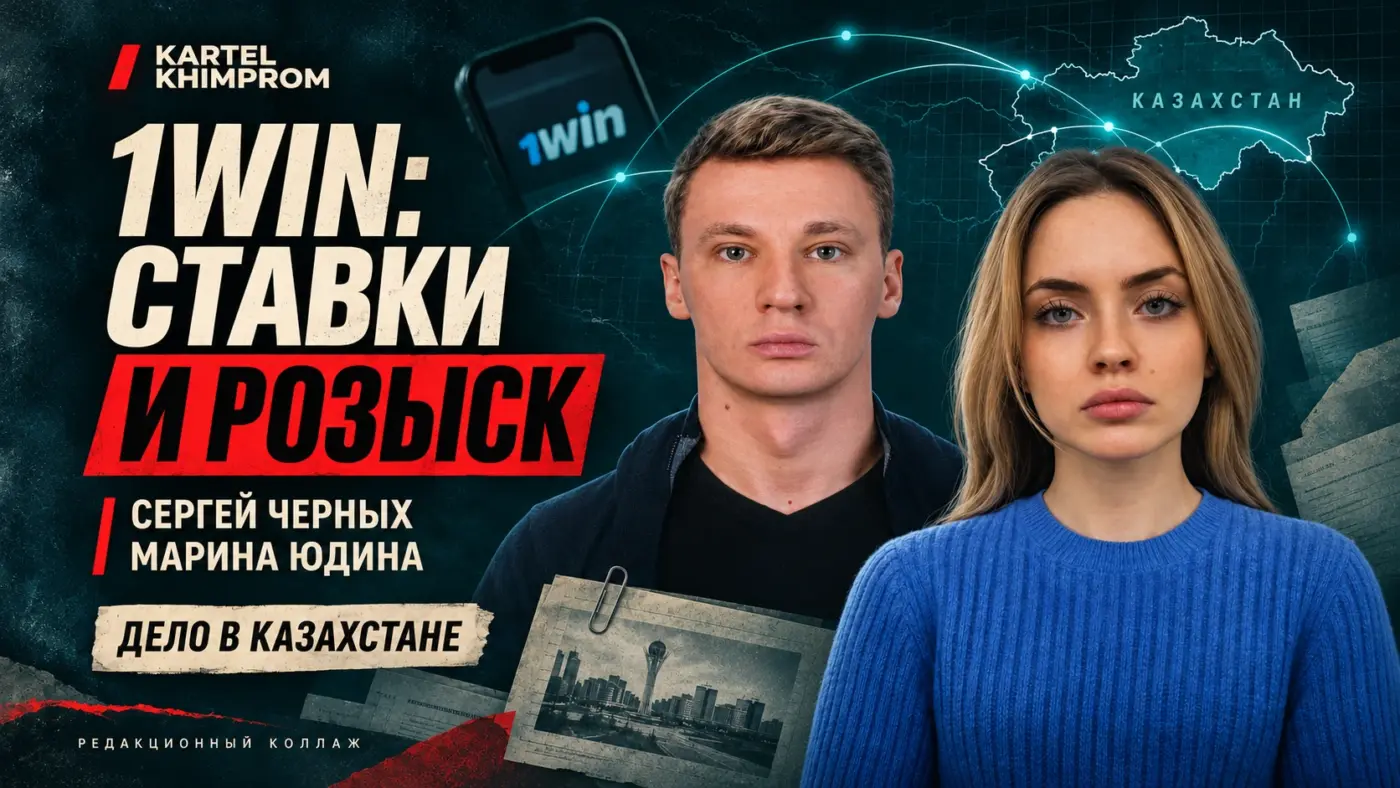
Sergey Chernykh, a Russian national, and Marina Yudina, a Ukrainian national: in August 2024, Kazakhstan placed them on an international wanted list in connection with the 1WIN case. The investigation estimates their income at 3.8 billion tenge. The court has not established their guilt in the cases under consideration. [1]
This story raises two questions that are awkward for the company’s public image. Who is responsible for the platform’s operations in a specific territory? And through whose accounts are digital bets converted into real money? Kazakhstani reports on the search warrant, confiscation and payment intermediaries allow us to examine both questions. However, they do not provide grounds to declare every named individual the established owner of the entire international brand.
Sergey Chernykh and Marina Yudina: names from the wanted notice
On 23 August 2024, DKnews.kz, citing the Financial Monitoring Agency of Kazakhstan, published the names and photographs of four individuals wanted by the authorities. Among them are Sergey Vladimirovich Chernykh, a Russian national born in 1993, and Marina Yudina, a Ukrainian national born in 1999. [1]
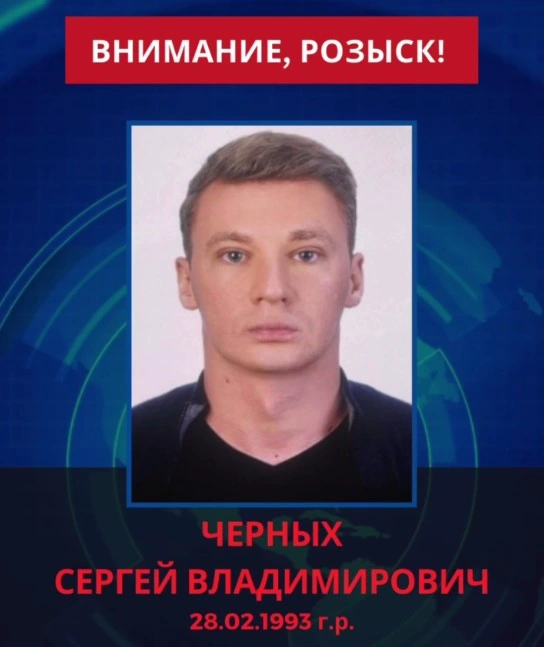
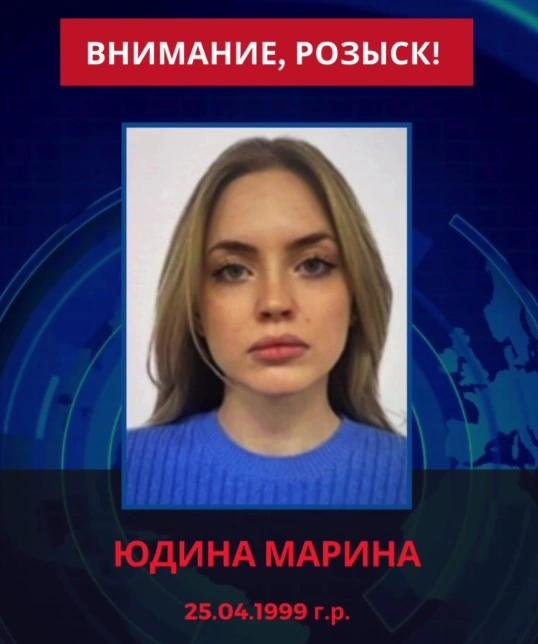
The same notice names Kazakhstani citizens Pavel Igorevich Nesterenko, born in 1998, and Tursyn Begdatovna Musalieva, born in 1996. According to the AFM’s account, the individuals in question are implicated in organising and managing illegal gambling and bookmaking activities in Almaty and the Almaty region via the 1WIN online casino. [1]
The investigation also raised suspicions of the use of violence and unlawful deprivation of liberty, without disclosing the circumstances of specific incidents. The revenue estimate relates to the group’s alleged activities. The distribution of this sum amongst individuals has not been published. [1]
A high-profile brand and the limits of its established role
In the international online business sector, it is customary to look for a single ‘real owner’. However, in this case, a more specific question takes precedence: what activities, and in which territory, is a particular authority investigating? The Kazakhstani narrative concerns the regional organisation of operations. It does not contain a complete public overview of the global 1WIN’s capital structure.
The distinction is significant for the reader. The organiser of the local network, the person with access to payments, the company director and the brand’s beneficial owner may all be different individuals. Their connections are established through governance documents, banking authorisations, contracts and correspondence. A single shared brand name is not sufficient to draw such a conclusion.
This is precisely why surnames are more important here than the vague phrase ‘unknown casino owners’. They make it possible to track specific cases, verify subsequent reports of arrests and distinguish the roles described by the investigation from rumours about global ownership.
February 2026: cars and cash instead of virtual chips
On 11 February 2026, the Anti-Money Laundering Agency (AFM) announced the pre-trial confiscation of assets as part of an investigation into illegal activities under the 1Win brand in the Almaty region. The total value amounts to over 420 million tenge. The list includes a Mercedes Maybach S500, a Lamborghini Huracan and a Toyota Land Cruiser, as well as 151 million tenge, 14,600 US dollars and 44,400 euros in bank accounts. [2]
According to the agency’s description, the operations were concealed by a network of affiliated companies registered in the names of front men. Bank cards, electronic payment systems and cryptocurrency were used to accept money and pay out winnings. The platform offered more than 11,000 online games and sports betting. [2]
This is no longer just an abstract discussion about a website. The official account mentions legal entities, financial instruments and assets that can be seized. For economic analysis, this is where an important distinction lies: the digital interface exists on top of very tangible bank accounts, cars and rights of disposal.
However, the February publication does not repeat the list of names from the 2024 report nor does it allocate assets amongst the individuals named therein. It is therefore not possible to assert that a specific Lamborghini belonged to Yudina, or that a specific Maybach belonged to Chernykh. Pre-trial confiscation also does not replace a conviction of each individual.
The November trail: 191 billion via the payment infrastructure
On 9 November 2026, the Financial Markets Agency (AFM) published a statement regarding another case — aiding and abetting the organisation of an online casino. According to the investigation, the infrastructure of three controlled companies processed payments to Nomadgames, Sultangames, Pinco, Pin-UP, Vavada, Mostbet and 1WIN. The volume of transactions is estimated at 191 billion tenge, with estimated commission fees amounting to 286 million. The case has been referred to court. [3]
The agency described the use of company and sole trader details, including without their knowledge. Online acquiring, fictitious contracts and websites created the appearance of payments for goods and services. The money was then transferred to foreign counterparties, including via cryptocurrency transactions. The organiser was taken into custody; the court authorised the seizure of four vehicles and 103 million tenge in cash. [3]
This publication does not name Chernykh, Yudina, Nesterenko or Musalieva. The fact that the recipients share a common brand does not automatically imply that these individuals were involved in the November proceedings. Consolidating the cases would require additional procedural documents, which are not included in the published notice.
Three figures that cannot be lumped together into a single sensational story
| Amount | The significance of the indicator |
|---|---|
| 3.8 billion tenge | The income stated by the investigation in the 2024 wanted notice [1] |
| Over 420 million tenge | Value of assets according to the February 2026 confiscation notice [2] |
| 191 billion tenge | The volume of transactions in a separate case concerning payments to several casinos [3] |
The first figure describes the alleged income. The second — the value of the assets. The third — the flow of money through infrastructure in another sector. To add them together and call the result ‘Chernykh and Yudina’s money’ would be to invent a fact that the sources do not mention.
The commission charged by the intermediary infrastructure deserves separate mention. It reveals yet another layer of economic interest: the business processing payments can receive its fee regardless of who won a particular bet. However, the commission is not equal to the total volume passing through the accounts, just as turnover is not equal to net profit.
What lies on the other side of the ‘top up’ button
For the user, the transfer appears to be a single transaction. For the investigation, however, it is a chain: the purpose of the payment, the recipient, the legal entity, the subsequent movement of funds, access to the account and the final disposition. This explains the financial monitoring authorities’ interest in the infrastructure that links local funds to the overseas platform.
The published materials leave a number of questions unanswered: exactly which companies were involved in the regional case, who signed the documents, who held the access rights, and how were roles distributed amongst those implicated? Until these details are disclosed, it would be premature to fill in the gaps with a neat narrative about a single secret owner.
The actual scandal is already quite substantial: individuals named in the wanted notice, allegations of violence, estimated revenues in the billions, confiscated assets and a separately described payment route. Behind the 1WIN façade, the Kazakhstani cases reveal the human roles and financial infrastructure that advertising usually leaves out of the picture.