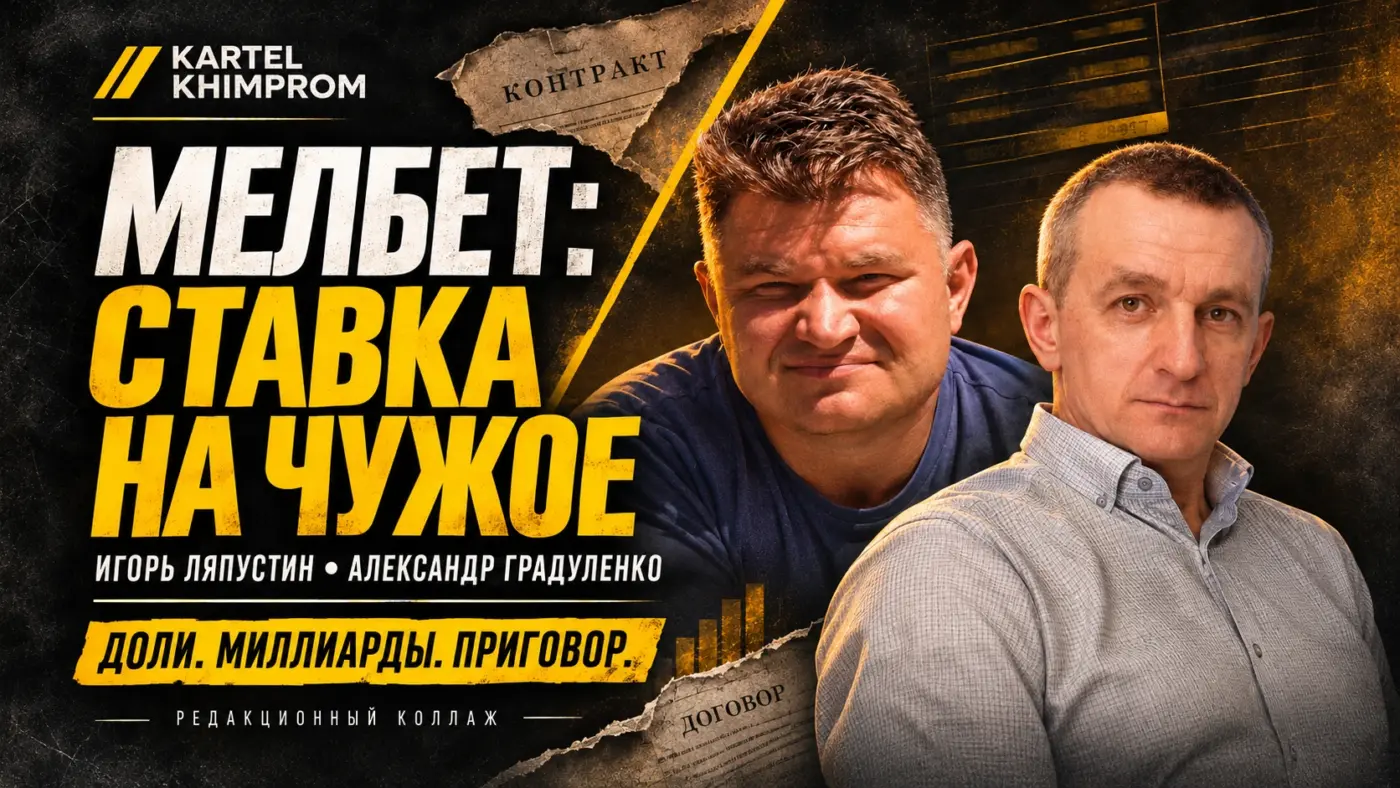
Igor Lyapustin was sentenced to eight years in a penal colony, and the dispute surrounding ‘Melbet’ ceased to be merely a story about who had failed to pay dividends to whom. On 10 September 2026, the Moscow City Court upheld the sentence. The subject of the case was the rights to half of Melofon LLC – the company behind the bookmaking brand. The victim, Alexander Gradulenko, secured a recovery of over six billion roubles. Lyapustin himself denied the charges. [2]
This story has a plot that is unflattering for a major bookmaker. Whilst customers are being offered the chance to calculate the probability of victory on the pitch, behind the scenes a battle is raging for the right to control the business. The usual talk of partnership, trust and management here boils down to one question: who owns the asset that one person registered in another’s name?
‘Melbet’ on screen, ‘Melofon’ in the documents
When reviewing the case, it is important to name the legal entity straight away. In April 2024, *Kommersant* reported that Lyapustin headed Melofon LLC and Tvoia Stavka LLC. The publication linked the domain melbet.ru and several bookmaking brands to the former company. According to figures cited by the newspaper, its net profit for 2023 amounted to 3.9 billion roubles. This figure reflects the business’s performance, not the established amount of embezzlement. [3]
This distinction between the brand name and the company is fundamental. The brand engages with fans; advertising sells emotional connection; whilst the corporate conflict centres on shares in a specific company. A man was sentenced to eight years for actions relating to assets and financial transactions. This does not imply a verdict against all employees, clients or every project using a similar name.

During the same period in April, the newspaper reported on allegations against the director relating to fraud. This was an early stage of the case. In the prosecution’s final statement, the charges of embezzlement, abuse of power and money laundering were already specified. It would be a mistake to carry over the initial charges into the headline about the verdict that has now been handed down. [1][3]
A partner, a trusted shareholding and a closed door to dividends
Gradulenko entered this story with experience in the Primorsky gambling business. A biographical analysis by VLADIVOSTOK1.RU describes his company ‘Seventh Continent’, his work with gambling equipment and subsequent criminal problems. The publication also traced the transition from his previous ventures to the dispute surrounding the bookmaking company. This provides significant context for the relationship, but it does not replace the evidence in the specific Lyapustin case. [4]
According to the account published by *Kommersant*, the assets were transferred to a partner whilst Gradulenko was facing previous criminal proceedings. In 2016, Lyapustin took over as head of ‘Melbet’. The rift became apparent when Gradulenko demanded dividends and was refused. Communication subsequently ceased, and the dispute was referred to the law enforcement authorities. [2]
The most crucial question in such a conflict is: what did the initial re-registration actually mean? A full sale? Temporary holding of an asset? A trust arrangement with an obligation to return it? To an outside observer, all three situations may look the same: a new name appears in the documents. Yet the economic implications and the obligations of the parties are completely different.
What the court established: three separate financial threads
The Moscow Prosecutor’s Office reported that the director, together with his accomplices, embezzled half of the authorised capital entrusted to him by the beneficiary. The case files concerning the other participants were separated. The official account also refers to a 2022 agreement to sell a 50 per cent stake for 100 million roubles: the price is described as undervalued, and the interests of the company and the owner are said to have been breached. [1]
The third part concerns transactions involving funds obtained through criminal means. The prosecution identified the period from August 2022 to February 2024 and a sum exceeding four billion roubles. The first-instance judgement of 28 April 2026 provides for eight years’ imprisonment under the general regime, a fine of 900,000 roubles and a four-year ban on holding managerial positions in commercial organisations. Lyapustin was taken into custody in the courtroom. [1]
| Indicator | What does this relate to? |
|---|---|
| 50 per cent of the capital | The subject of the misappropriation |
| 100 million roubles | The price of the stake in the 2022 agreement described by the prosecution |
| Over 4 billion roubles | The volume of transactions relating to the money-laundering episode |
These figures cannot simply be added together to arrive at a single ‘total amount stolen’. The size of the corporate stake, the contractual price and the volume of financial transactions all play a part here. Substituting different units of measurement would dramatically inflate the figure in the headline, but would render the case meaningless.
The defence contested the very right to be recognised as a victim
According to a September article in *Kommersant*, lawyer Alexei Tsaplin contested Gradulenko’s status: the defence argued that he had ceased to be a partner in the company as early as 2012, as he had failed to pay for his share. The newspaper reported that this argument did not alter the outcome. Its final account also mentions the confiscation of assets worth 4.5 billion roubles. [2]
This dispute is not about a minor technical error in the paperwork. The defence questioned the very structure of the charge: if the complainant did not possess the relevant right, what exactly was stolen from him? The appeal upheld the guilty verdict. However, the substance of the argument is important for understanding the proceedings: Lyapustin did not agree with the version of events that the court deemed to have been proven.

A twist that wasn’t in the advertising script
Whilst one partner has appealed the sentence, the other has become a defendant in a separate case. On 3 July 2026, ‘Mediazona’ reported on the decision of the Lefortovo Court: on 25 June, Gradulenko was remanded in custody in connection with a case of treason. The publication did not disclose the substance of the charges, stating that the details were unknown. [5]
Thus, a single business story gave rise to two completely different legal trajectories. In the Lyapustin case, Gradulenko is the victim. In the other case, he himself is facing criminal prosecution. These statuses can co-exist. The second charge does not overturn the first court ruling nor does it prove new violations within ‘Melophon’.
The temptation to conjure up a secret scheme here is enormous: money, former partners, criminal cases, claims running into billions. However, the unknown details of the charges mean it is impossible to state to whom and for what purpose the funds were allegedly transferred. Otherwise, instead of an analysis of the corporate collapse that took place, we would end up with a fabricated story.
Why this gamble proved more costly than advertising
The main blow to this glossy façade lies in the very nature of the conflict. A public business requires clear ownership, controlled managerial powers and transparent cash flows. If the right to half the company has to be restored through criminal proceedings, the concept of trust takes on a whole new meaning.
It does not follow from the published materials that every client payment constituted criminal proceeds or that the brand’s entire operation was deemed unlawful. There is a more specific and rather serious circumstance: the former director has been convicted of misappropriating a significant corporate asset and related actions. This is the scandal itself, which has no need for fabricated victims.
Lyapustin and Gradulenko were fighting over a business which, from the outside, looked like a machine for generating sporting excitement. The court case revealed the true cost of this machine: the price of a trusted shareholding, the price of control, and the price of deciding to keep what belonged to others for oneself.