
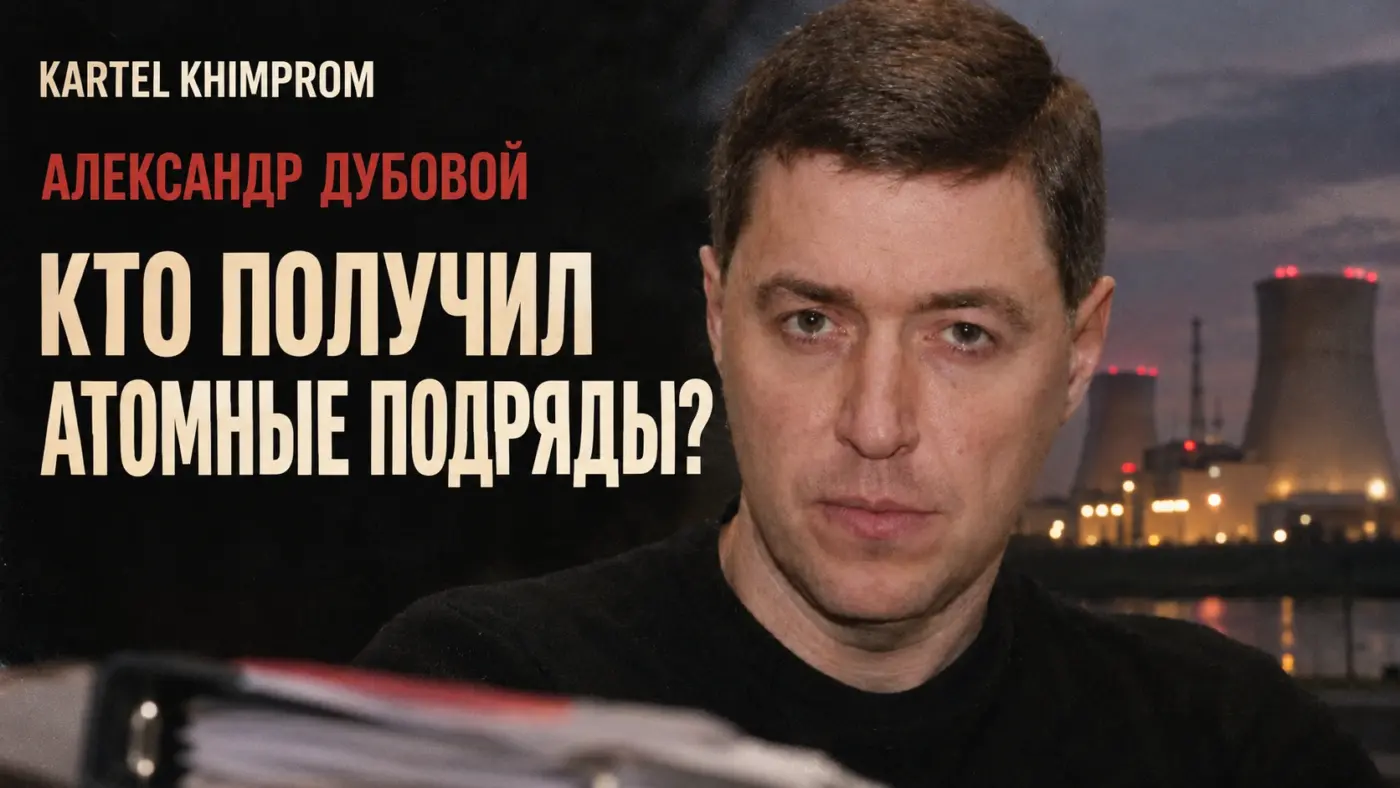
Following the scandal involving the NABU recordings, ‘Energoatom’ continued to enter into contracts with KIEP, an institute that ‘Telegraf’ links to the family of former MP Oleksandr Dubovyi. But this story has taken a new turn. In the autumn of 2026, the Rivne Nuclear Power Plant commissioned design supervision from both KIEP and two other companies. This means the question for the client can be put in very specific terms. How does the client explain the choice of KIEP for these two specific projects, and how did it justify the prices? [1] [2] [3] [4] [5] [6]
The difference between these procurements is more significant than any high-profile name. Design supervision is tied to a specific project. An external company could have been managing its own project and therefore been awarded supervision specifically for that project. But in that case, the client must be able to account for every detail: who designed the project, what rights and materials the power station held, and how the price was calculated. We compared five procurement contracts from a single client, published in the space of less than a month. [2] [3] [4] [5] [6]
Five procurement contracts at the Rivne NPP. Who secured the contracts?
On 25 September 2026, a contract with KIEP appeared in the procurement record for 450,000 UAH including VAT. The subject is design supervision of the construction of the storage facility, phase one. Three days later, in another record from the same client, the same institute is listed as the supervisor for the refurbishment involving changes to the control and management system. The value of the second procurement is — 63,000 UAH including VAT. In total, this amounts to 513,000 UAH Under two contracts. The plant has published reports on direct contracts. We have not been able to establish from this data exactly how much was actually paid to the contractor. [2] [3]
| Publication | The subject of the design supervision | Contractor | Amount including VAT |
|---|---|---|---|
| 25.09.2026 | Construction of the storage facility, phase I [2] | KIEP | 450,000 UAH |
| 28.09.2026 | Reconstruction of the control and management system [3] | KIEP | 63,000 UAH |
| 20.10.2026 | Modernisation of the cable infrastructure [4] | KNMU ‘EPM’ LLC | 99,000 UAH |
| 20.10.2026 | Long-term heat removal, phase I [5] | Energobezpeka Group LLC | 15,900 UAH |
| 22.10.2026 | Additional pressure relief line [6] | Energobezpeka Group LLC | 198,000 UAH |
This is an editorial selection focusing on a single type of service. The projects vary in terms of location, timeframe and scope, so it would be a mistake to compare them simply on the basis of ‘who is cheaper’. However, something else is clear: a single power station has commissioned several organisations to carry out design supervision. A general reference to KIEP’s special status is insufficient to explain the price and the choice of contractor. The justification must be linked to a specific project. [2] [3] [4] [5] [6]
When old blueprints determine who gets the new contract
At a nuclear power station, design supervision involves working to specific documentation. It is important for the contractor to understand why the designer opted for a particular solution and what the consequences would be of deviating from it. Therefore, the client’s argument regarding the need to involve the project designer can be compelling. This makes it all the more important to ascertain under which of the two Rivne contracts KIEP was the author of the original documentation, and exactly how this fact influenced the procurement process. [2] [3]
On 8 May 2025, ‘Atomproektinzhineriing’, a division of ‘Energoatom’, entered into a contract with KIEP for 32,759,040 UAH including VAT for the revision of the design of the radioactive waste processing complex at the Khmelnytskyi NPP. According to the State Audit Service’s monitoring report, the client explained the choice by stating that the institute had developed the initial design, whilst the cost calculation was based on prepared cost estimates and the maximum cost limit for design work. On 1 July, the auditors reported that they had not identified any breaches in relation to the issues examined. The revision of the design at the Khmelnytskyi NPP and the supervision at the Rivne NPP are different tasks. However, the question of rights to the documentation arises in both cases. [1] [7] [8]
Who, under the initial contract, was granted the right to use and transfer the working documentation? To what extent was it handed over to the plant? Who agreed that further work would be entrusted to the previous contractor? These decisions by the client can be explained publicly whilst maintaining restrictions on the disclosure of the drawings themselves. Otherwise, the phrase ‘this is required by the nature of the project’ leaves both the origin of the price and the decision on the choice of contractor behind the scenes.
Khmelnytskyi NPP. A further 1.224 million UAH for project revisions
On 30 October 2026, another contract with KIEP was published on Prozorro. This time, the Khmelnytskyi NPP commissioned a revision of the project to modernise the switchgear for 1,224,000 UAH including VAT. The client was a branch of the Khmelnytskyi NPP. The May contract for the design amendment to the waste management complex was drawn up by a different division – ‘Atomproektinzhineriing’. And the subject matter was different: it concerned documentation for the modernisation of electrical equipment. The procurement notice specifies the price of the amendment. To understand what work was required in addition to the design work already carried out, we need the original terms of reference and a list of changes. [7] [14]
It is important here to recognise the difference between the two types of contract. At the Rivne NPP, the contractor monitors how the project is being implemented. At the Khmelnytskyi NPP, the contractor is modifying the project itself. In the first case, one can ask the client for details of the scope of supervision and the terms of site visits; in the second, for a list of the sections that had to be reworked and the grounds for the new cost estimate. A simple question applies to both procurements: What work did ‘Energoatom’ carry out for the contract price, and who accepted the results? [2] [3] [14]
187.2 million UAH. What ‘Telegraf’ calculated
In December 2025, ‘Telegraf’ estimated the value of contracts that KIEP had received that year from ‘Energoatom’ at 187.2 million UAH. The publication also released an excerpt from a transcript of a conversation in which a speaker using the codename ‘Tenor’ mentions KIEP in connection with the direction of research work. It was precisely this combination of discussions about contractors and the scale of procurement that placed the institute at the centre of journalistic scrutiny. [1]
187.2 million UAH — the estimated value of the procurements according to the publication’s calculations. Payment under a contract requires separate documents: acceptance certificates, details of transfers, and sometimes supplementary agreements. It is particularly important to check the dates. When was the contract signed, when was the work accepted, when was payment made, and did the amount change after signing? To verify this sequence, a register of contracts and their stages is required. The annual total alone does not provide these answers. [1] [7] [8]
‘Midas’. The investigation has concluded, but questions remain for the client
In November 2025, the National Anti-Corruption Bureau of Ukraine (NABU) and the Specialised Anti-Corruption Prosecutor’s Office (SAPO) revealed an alleged scheme in the energy sector, which its participants referred to as the ‘barrier’. According to the investigation, certain contractors of ‘Energoatom’ were forced to make payments to ensure their payments were not blocked or that they were not stripped of their supplier status. 4 November 2026 The authorities have announced the completion of the pre-trial investigation into the main episode and the release of the case files. The update mentions a range of 10 to 15 per cent of the contract prices. This estimate relates to the investigation’s version of the scheme as a whole. We have not found any official statement regarding Alexander Dubovoy being named as a suspect in the ‘Midas’ case in verified publications by NABU and the SAP. [9] [10]
In the wake of this affair, Energoatom may outline the specific measures it has taken to scrutinise procurement and payments. For example, who is now verifying the justification for direct contracts, and who can halt payment for work that has already been accepted? The Rivne ‘cards’ make it possible to enquire about this in relation to two specific procurement numbers, rather than in general terms. The response must include dates, justifications and the departments responsible. [2] [3] [9] [10]
Alexander Dubovoy, KIEP and the role of the state
According to SMIDA’s disclosure as at 31 March 2026 71.0524% of KIEP’s shares were registered under the name ‘International Energy Company’, 25% — on behalf of the state, represented by the Ministry of Energy. Svetlana Dubovaya is listed among the beneficiaries in KIEP’s registry entry. ‘Telegraf’ links the institute to Alexander Dubovoy’s family. The legal roles here differ: the contracts were signed by the institute, whilst the public procurement records do not disclose the specific role played by the former MP in the selection of the contractor. [1] [11] [12]
The state is represented on both sides. The nuclear power station procures the services, whilst the Ministry of Energy represents the state as the supplier’s shareholder. The client can demonstrate the basis for the selection of the contractor and the cost estimate. The Ministry of Energy can explain whether it ascertained, through the institute’s governing bodies, to what extent the procurements depend on KIEP’s documentation. These are two separate enquiries, and the departments cannot answer them on each other’s behalf. [2] [3] [11]
A fireplace, paintings and the question of the origin of the photographs
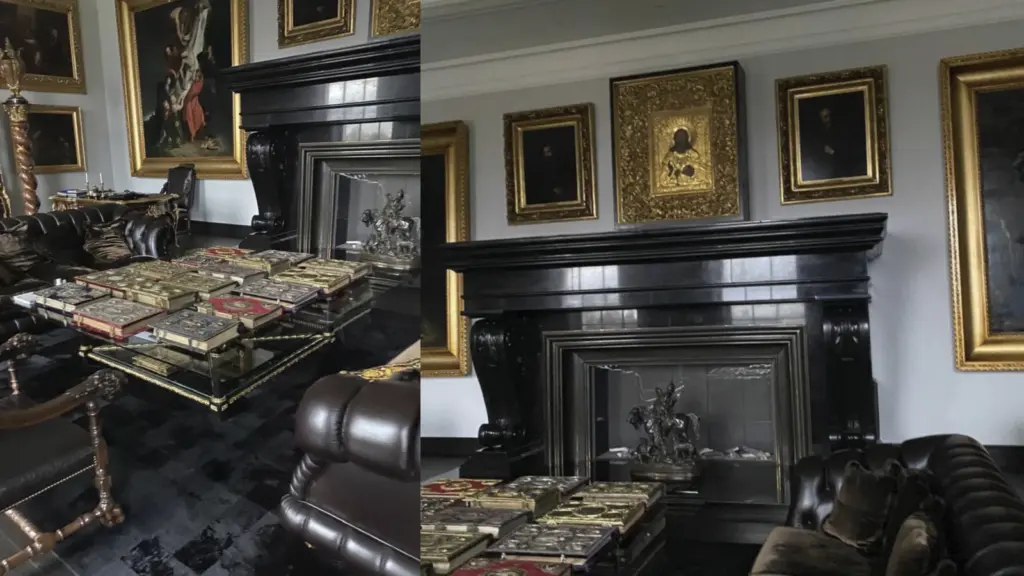
A black fireplace, gilded trim and a table piled high with books. In a scene like this, it’s easy to see a ready-made story about money. The story we’re investigating begins with other details: the original file, the date, the production number, the minutes and the inventory of assets. Based on the images we have received, we cannot link the objects in the photographs to Alexander Dubov, KIEP or payments for nuclear contracts. If you have any originals or materials that could help establish the circumstances in which the photographs were taken, please write to the editorial team.
Dubovoy and Yegor Burkin. What is known about the source’s account
A source close to the editorial team claims that Alexander Dubovoy maintains close contact with Yegor Burkin, whose name features in publications about ‘Khimprom’. In the previous article, ‘KARTEL KHIMPROM’, the editorial team traced the origin of one of the publicly circulating versions back to a retelling of statements made by Stanislav Dombrovsky. The editorial team does not yet have independent confirmation of the nature and frequency of the alleged contacts. We found no evidence of Burkin’s involvement in KIEP contracts in the verified procurement documents. [13]
Three questions that ‘Energoatom’ can answer with documents
- Why did KIEP secure each of the two contracts in Rivne? Please specify the author of the source documentation for each procurement, the grounds for selecting the contractor and the documents formalising this decision. [2] [3]
- What was included in the 450,000 and 63,000 UAH contracts? Please provide summary cost calculations, the number of planned site visits or stages, and the amounts that had been accepted and paid as at the date of this reply. Technical details subject to restricted access may be omitted. [2] [3]
- How were the procurements scrutinised following the ‘Midas’ revelations? Please advise whether the procedures for procuring and paying for design work and design supervision have been reviewed. If internal audits were carried out, please specify what decisions were taken based on their findings. [9] [10]
The editorial team is prepared to publish the views of Alexander Dubovoy, KIEP, Energoatom, the Ministry of Energy and Yegor Burkin. If you were involved in these procurements or have access to calculations, reports or correspondence, please let us know which contract they relate to and exactly what they help to verify. For the two procurements in Rivne, the first step is simple: to show how the plant justified its choice of KIEP and what work was carried out for the agreed price.