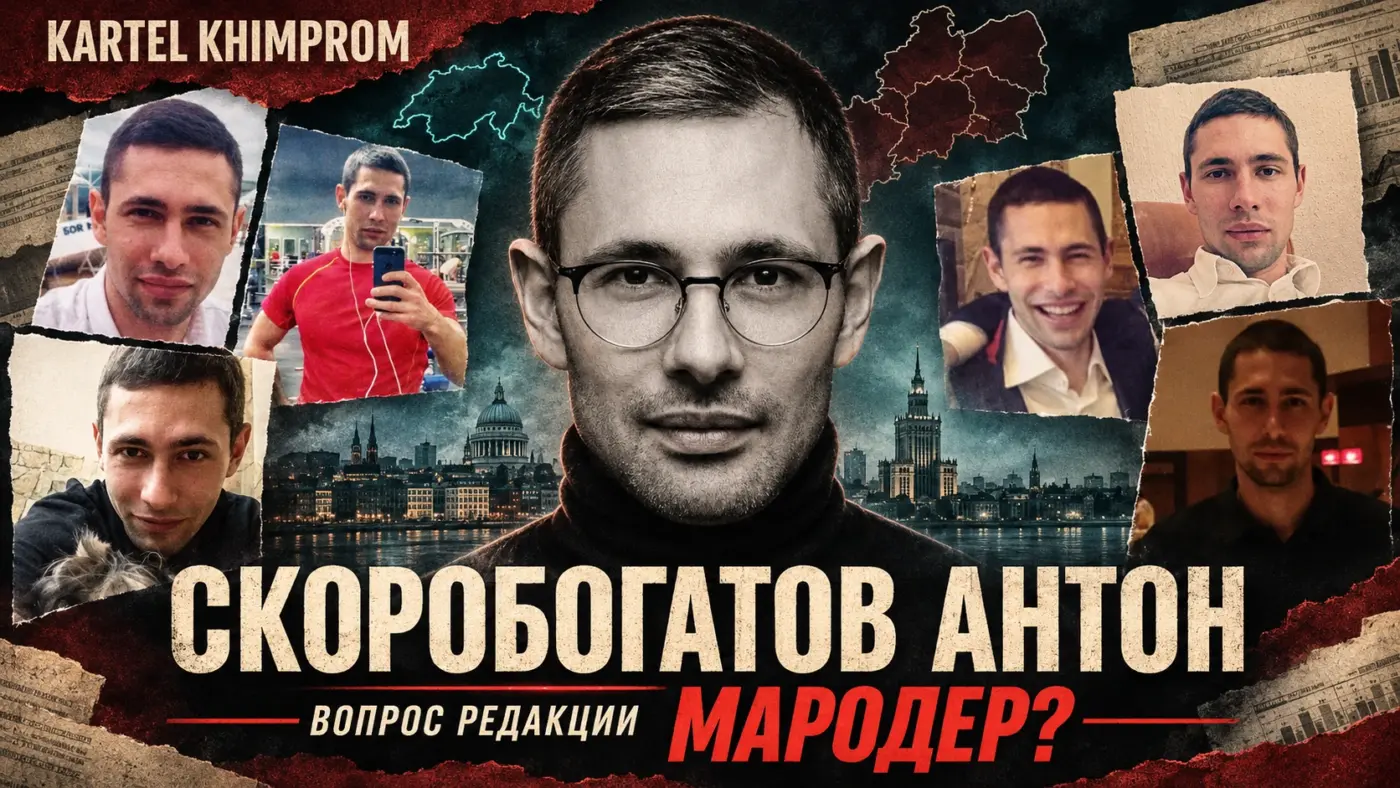
Anton Skorobogatov has stepped down as a partner in the trading company ‘DANN.’, but his name still appears in the company registers of firms belonging to this group. Meanwhile, a report on ‘Hemptons Trade’s’ banking transactions mentioned a sum of 5.8 million UAH, which, according to the publication, was received by ‘DANN.’. We investigated what personally links Skorobogatov to this story and found a document relating to a specific delivery to ‘Hemptons’ from Poland. It contains the contract, the goods and the price. The banking records require the same level of detail. [2] [4] [8] [13] [15] [16] [17]
In the first two parts, KARTEL KHIMPROM has already examined the Swiss company Done, its USDT investments, business structure and changes in ownership. In this part, the starting point is different. We are examining individual companies, specific dates and case numbers to ascertain where Skorobogatov’s surname actually appears in the documents, and where it is merely added to draw conclusions about the business as a whole. [1] [2] [3]
What role did Skorobogatov play at Done?
This editorial dossier brings together two strands of his biography. The first concerns his legal work, including representing the trading company in a customs dispute. The second concerns his corporate responsibilities: Skorobogatov headed ‘DANN.’ and was listed among its shareholders and ultimate beneficial owners. In public materials about Done, partners described his area of responsibility as procurement and logistics, whilst the financial side was linked to Dmytro Ryvkin. This is the public description of their work. For individual transactions, responsibilities are verified against the documents available on the date the transaction took place. [1] [2] [3]
The Done website explicitly names two Ukrainian parties involved in the project. The trading company ‘DANN.’ LLC, with registration number 40929000, handles order fulfilment, whilst it secures financing in its own name from the financial company ‘DANN FINANCE’, with registration number 43603477. If the general name ‘DANN’ appears in the documents, this distinction becomes crucial. The receipt of funds by the trading company, the repayment of the loan to the finance company and the transfer to the foreign supplier are carried out on different legal grounds. By conflating them, it is easy to attribute someone else’s transaction to a person or company. [8] [9] [20]
The KARTEL KHIMPROM dossier — Anton Nikolayevich SkorobogatovLegal practice, the ‘DANN.’ trading company, his role at Done, and the history of his powers.
1.96 billion UAH, 1.67 billion UAH and 5.8 million UAH. Three different questions
‘RuMafia’ claims that between March and July 2026, approximately 1.96 billion UAH was transferred to ‘Hemptons Trade’s’ account at Idea Bank. The publication states that the company transferred approximately 1.67 billion UAH to its own account at OTP Bank, whilst 5.8 million UAH was received by the trading firm ‘DANN.’. According to the same report, a further 31.6 million UAH related to the repayment of a loan to a finance company, which was then listed as ‘Supply Chain Finance’. It has not been possible to verify the authenticity and completeness of the banking data for this period based on publicly available source documents. [4] [10] [20]
| The transaction, as reported by the publication | What needs to be verified |
|---|---|
| 1.96 billion UAH in receipts into the ‘Hemptons Trade’ account | The full statement period, the source of each major payment, and the double-counting of the same funds. [4] |
| 1.67 billion UAH transferred to another account held by the same company | Bank statements from both banks and the subsequent route of the funds. The transfer details themselves show only the stated reason for the transaction. [4] |
| 5.8 million UAH to the trading company ‘DANN.’ LLC | The date, reason for payment, contract, source documents and authorised signatories. [4] [8] |
| 31.6 million UAH to a finance company | The loan agreement, the granting of the loan and the documents relating to its repayment. This is being investigated separately from the transaction with the trading company. [4] [20] |
According to the publication, the largest transfer in the story took place between accounts belonging to a single legal entity. Such a transfer does not, in itself, increase revenue or establish a new recipient of the funds. The balance as at the latest date shows how much money was in a specific account at that moment. To find out what happened to those funds, you need a statement from the account to which they were transferred, followed by documents relating to the subsequent transaction. The public ‘Hampton’s Trade’ profile allows you to check the company’s registration number and its structure, but bank statements are not disclosed there. [4] [10]
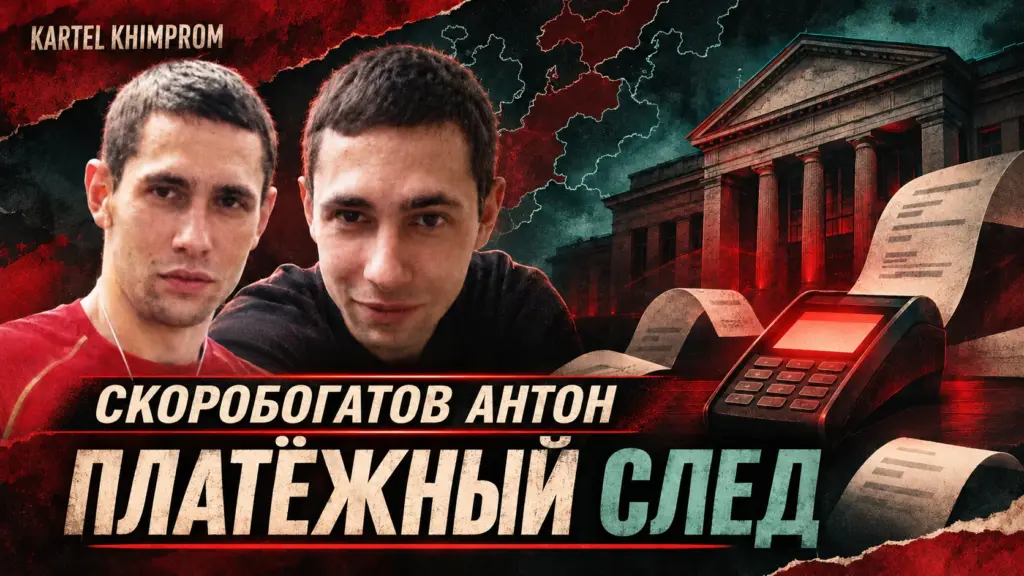
5.8 million UAH — a more specific and, for the purposes of this article, more significant episode. By the start of the period described, Skorobogatov was no longer listed as a director of ‘DANN.’, though the change in ownership took place later. If the payment was made, his corporate link to the company explains why his surname appears in the investigation. To establish personal involvement in the transaction, the date, the instruction, the signatory and the basis for the payment are required. The publication names the company as the recipient. Skorobogatov’s personal account does not appear in the transfer details. [2] [4] [8]
What did the court actually rule in the dispute over the transfers to Switzerland?
In case No. 910/11914/25 ‘Globinex’, ‘Hemptons Trade’ and the Swiss company Alltag und Gerätetechnik AG demanded that ‘Elysium Holding’ refute and remove excerpts from a Lenta.info publication. It is precisely from the list of disputed excerpts that the amounts of transfers made by ‘Globinex’ and ‘Hemptons’ to the Swiss company, as reported in the press, were taken. These figures are cited in the court document as the subject of the plaintiffs’ claims. The original headline of the disputed article mentioned ‘Motor Bank’. Other articles in the provided selection refer to ‘Crystal Bank’. These names must be linked to specific allegations and documents. [4] [5] [11]
On 12 January 2026, the Kyiv Commercial Court dismissed the claim. In its reasoning, it stated that the claimants had failed to prove the set of circumstances necessary to uphold the claims made. In particular, the court pointed to insufficient evidence of negative consequences for business reputation and noted separately that, for one of the claims, no evidence had been provided to show that the publication had been posted on the specified date. The court resolved the dispute concerning reputation. The court ruling does not establish who issued the bank instructions, does not identify the flow of funds based on the statements, and does not establish Skorobogatov’s guilt. The public record contains information regarding the appeal proceedings, but the final appeal judgement for this publication has not been confirmed. [11] [12]
Why is this important? The sum may appear in various parts of the court judgement. Sometimes the court states its own established facts, sometimes it restates the claim, and sometimes it sets out the position of the investigation. In this case, the sums cited are contained in the disputed text, which the companies requested be refuted. The claimed transfers must be verified against the relevant bank documents, associated contracts and actual payment records. [11]
The Polish contract, which is indeed visible in the case file
In case No. 420/19936/26, the Odesa District Administrative Court examined a specific supply. According to the published ruling, ‘Hemptons Trade’ and the Polish company Kooperant Europejski entered into a supply contract on 24 October 2024. In January 2026, the parties signed a specification for $53,300. In March, the buyer submitted a declaration for 260 electric scooters, also referred to as electric tricycles. The declared value was US$205 per unit. Customs adjusted this to US$440, citing data from another consignment. [13] [14]
On 21 August 2026, the court of first instance upheld ‘Hemptons Trade’s’ claim and quashed the adjustment and the refusal to process the customs declaration. In the court’s view, the customs authorities had not adequately substantiated why the buyer’s documents were insufficient for applying the declared method. The first-instance ruling addresses the issue of the specific customs valuation. It does not establish which bank paid for the consignment or when, nor does it specify who made the decision regarding its financing. [13]
This delivery establishes a specific link between ‘Hemptons Trade’ and the Polish company, and provides a specific subject for investigation. In this transaction, the Polish company is the seller and the Ukrainian company is the buyer. Reports on other routes may describe the opposite direction or a different type of goods, but these would require a separate consignment note and their own payment chain. The Kooperant Europejski identifier in the Polish KRS is 0000894656. This allows this company to be distinguished from other Polish organisations in Done’s records. [6] [7] [13] [14]
Where to look for evidence supporting the VAT theory
In both the Russian and English versions of the same article, ‘RuMafia’ reports that the tax credit generated during importation could have been used in transactions relating to the sale of the goods. The publication itself states that tax invoices and the full chain of counterparties are required for verification. The ruling on the consignment of electric vehicles provides a starting point. It contains the declaration number, a description of the goods and the contract. The court did not consider the transactions relating to subsequent sales, tax accounting or payments in this case. [6] [7] [13]
A specific question for the authors of this theory: which particular delivery note and which subsequent sales do they link to the alleged scheme? For a single consignment, it is possible to cross-reference the customs declaration, stock records, tax invoice for the sale and proof of payment. It is then possible to establish which company carried out each transaction and who signed the documents. As long as no such cross-referencing is available in the accessible materials, the VAT theory remains an open question. [6] [7] [13]
Three entries worth cross-checking for the same date
In our previous article, we compared ‘Larix Trade’, ‘Leverans’ and ‘Nobilis Commerce’. Now the scope of the comparison is broader. In the three other available profiles of companies registered on 17 September 2026 — ‘Ilex Torg’ (46362765), ‘Paver Opt’ (46335147) and ‘Salix Trade’ (46288467) — ‘DANN’ LLC is listed as the direct shareholder, whilst Anton Nikolaevich Skorobogatov is listed as the ultimate beneficial owner. The parent company’s records show a change of shareholder on 2 October and Ryvkin’s subsequent appearance in the ultimate beneficial owner field. [2] [8] [15] [16] [17] [18]
These three points raise a more specific question than a general discussion of withdrawing from the business. On what basis was the ultimate beneficial owner identified when these companies were registered? Were any clarifications provided following changes to the parent limited liability company? If so, when? And if the grounds for control existed independently of a direct shareholding, what did they consist of? Public records may be updated at different times. To answer these questions, we need dated extracts for all the companies and details of any changes submitted. The records themselves do not establish that these companies were involved in the payments described above. [8] [15] [16] [17] [18]
What does the bond prospectus prove, and when does its validity expire?
The version regarding the financing of imports includes a document that can be read separately from newspaper reports. The Series B prospectus for ‘Supply Chain Finance’, published by the PFTS, specifies 180,000 corporate bonds with a face value of 1,000 UAH each. The total offer amount is 180 million UAH. The bonds are described as unsecured, and the intended use of the funds raised is linked to the issuer’s licensed lending activities. In November 2025, the Securities and Exchange Commission announced the registration of the report on the results of the issue. [19] [21]
This confirms the method of raising funds. The prospectus contains no table linking each hryvnia raised to a specific import consignment, foreign currency purchase or investment in a Swiss company. Such a comparison requires, at the very least, a loan agreement, details of the loan’s disbursement and repayment, a payment order and a foreign trade contract. A separate investigation is being carried out to establish who acted on behalf of the trading company and the financial company. [5] [6] [9] [19] [20] [21]
Two articles by ‘RuMafia’, one of which was also published in English, link some of the transactions to ‘Crystalbank’. A publicly available copy of the NBU’s report for June 2025 does indeed mention a fine of 20,272,500 UAH imposed on the bank for breaches relating to the organisation of initial financial monitoring and associated requirements. This notice does not cite ‘Done’ as the reason for the penalty. The theory regarding the movement of funds via Idea Bank relates to the ‘Hampton’s Trade’ account described in another article. Each banking incident requires its own set of documents. [4] [5] [6] [7] [22]
Anton Skorobogatov. Questions regarding dates, contracts and powers
- What role did Skorobogatov play in the transactions with ‘Hemptons Trade’ in the spring and summer of 2026? If the described transfer of 5.8 million UAH did take place, which contract and which signatory were behind it?
- Who made the decisions to establish ‘Ilex Torg’, ‘Power Opt’ and ‘Salix Trade’, and what information regarding control was submitted following the change in the composition of the shareholders of ‘DANN.’ LLC?
- How did the trading and financial companies divide up payments to suppliers, customer credit facilities and loan repayments? What documents can be used to link a specific delivery to a payment?
The publicly available documents provide sufficient grounds to demand precise answers. They reveal corporate roles, confirm a specific Polish contract and explain what the court failed to establish in the dispute over the publication. To draw a conclusion about Skorobogatov’s personal role in the financial transactions, evidence at the level of individual payments is still required. This is what should be presented in response to the allegations: contracts, dates and authorisations for each transaction. [3] [8] [11] [13] [15] [16] [17]
The editorial team is open to responses from Anton Skorobogatov, representatives of Done, ‘Hemptons Trade’ and the banks mentioned. If you have any documents, please specify the case number, the period and the organisation to which they relate. The photographs in the collages have been provided by the editorial team. The dates on which the photographs were taken are unknown.