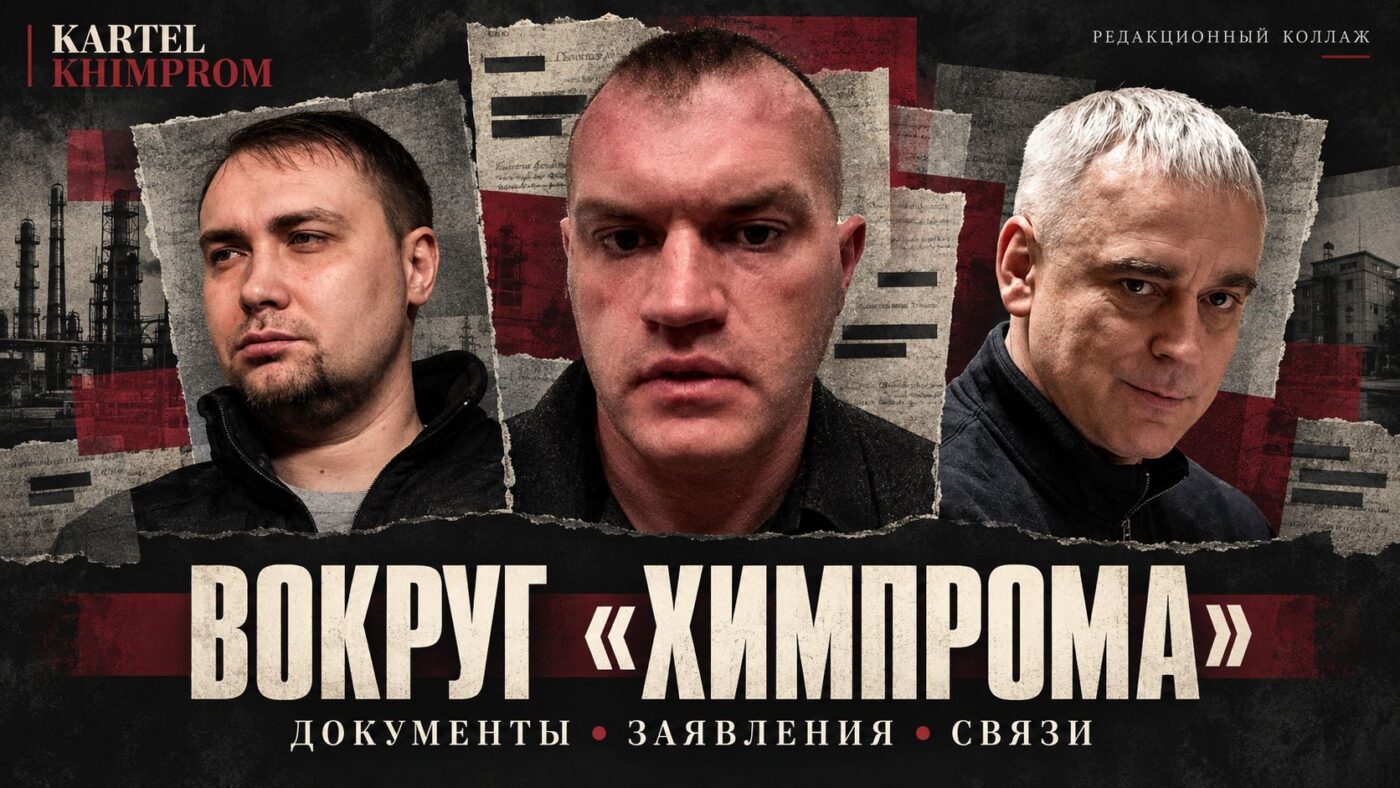
There are two sets of documents relating to this story. One contains sanctions lists, reports of suspicions and material on a drug network. The other comprises publications on charity work, anti-drug advertising and accounts of encounters with government officials. At the centre of both narratives is Yegor Burkin, also known as Yegor Levchenko and nicknamed ‘The Mexican’.
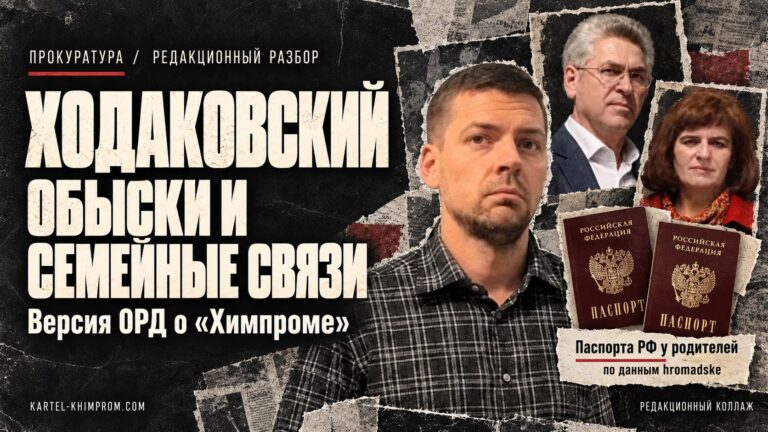
A publication by ‘Ukrrudprom’ dated 9 September 2026 suggested linking these episodes into a narrative about the overlapping interests of Kirill Budanov and Oleksandr Poklad regarding ‘Khimprom’. We have cross-referenced it with official reports and earlier journalistic accounts. The picture that emerges is one in which confirmed government decisions, public statements by those involved, and connections requiring further investigation all coexist. But if you strip away the glossy packaging, what remains is not two different people or two unrelated stories, but a single double life — complete with sanctions, a wanted notice, charitable awards and questions to which those involved have yet to respond. [1]
Burkin and Levchenko: a document rules out the possibility of a coincidence in their names
The link between the two surnames has been documented not only in journalistic investigations. Yegor Vasilyevich Burkin is named in the annex to the sanctions decision, which came into force by Presidential Decree No. 877/2023 of 30 December 2023. The same document also refers to his possible use of documents in the name of Yegor Vasilyevich Levchenko. So when people talk about ‘philanthropist Levchenko’ and the sanctions against Burkin, they are referring to the same person. Being on the sanctions list is not a conviction, but neither is it a random note in some paperwork. [2]
An investigation by ‘Sledstvo.Info’, published on 3 January 2024, provides important context: the journalists described the criminal proceedings and the dispute surrounding Burkin-Levchenko’s Ukrainian citizenship. According to their report, the Migration Service revoked the decision to grant citizenship in 2017, whilst court rulings in Levchenko’s favour followed in 2022–2023. The same article quotes his public stance: he presented himself as an entrepreneur, denied any involvement in drug trafficking and attributed the allegations to the actions of competitors. [3]
A dispute over citizenship, criminal prosecution and efforts to manage one’s public reputation are distinct processes. However, winning an administrative dispute does not answer the questions raised by a criminal case. Nor can a charitable project serve as a substitute for this. It is precisely the conflation of these issues that allows success in one of them to be presented as justification for all the others — and this appears to be a deliberate strategy rather than a coincidence.
The anti-drug campaign as a battle for reputation
In May 2023, ‘Detector Media’ conducted a detailed analysis of the promotion of the ‘Catch the Scammer’ campaign, for which Stas Dombrovsky served as the public face. The publication uncovered a large number of identical posts, not all of which were labelled as advertising. Billboards directed the audience to the blogger’s channel, whilst the campaign’s purported public benefit became the main argument in favour of its organisers. [4]
This same article contains a far more damning detail: in an update dated 25 May, the editorial team reported that the SBU had confirmed Levchenko was wanted, whilst refusing to disclose the progress of the investigation. Whilst he was telling the country how to catch drug lords, he himself was being sought in connection with a case. The public campaign and the legal proceedings against its initiator were taking place simultaneously. [4]
The mechanism itself is key to the analysis. It gives a person the opportunity to discuss a socially beneficial initiative rather than facing criticism of their own activities. The multitude of publications creates the impression of independent recognition, although the repetition of a single message does not in itself mean it has been verified. Therefore, such a campaign should be assessed on the basis of the origin of the funds, the transparency of payments and the results, rather than on the number of well-known figures associated with its name.
A thank-you from the Main Intelligence Directorate: what the source reveals – and what it does not prove
An RTVI report dated 23 November 2023 states that Burkin, under the name Levchenko, assisted the military, transferred funds to the From Heart UA foundation and received a certificate of appreciation from the then head of the Main Intelligence Directorate, Kirill Budanov. This is the publication’s report: we have not verified the original document, its format, or the official confirmation of the circumstances surrounding its issuance within the context of this publication. [5]
Even a confirmed expression of gratitude would, first and foremost, merely indicate acknowledgement of the assistance. It cannot automatically be taken to imply personal patronage, the recipient’s knowledge of the money’s origin, or involvement in criminal activity. Such conclusions require other evidence: the flow of funds, correspondence, decisions by officials, and the content of agreements. And until such evidence is available, the certificate remains nothing more than a piece of fancy paper, not a get-out-of-jail-free card.
The charity story is not limited to one person. ‘Slidstvo.Info’ mentions published acknowledgements to the From Heart UA foundation, citing Levchenko–Burkin and another individual on the sanctions list – Andriy Amirkhanyan. This is a line of inquiry to examine the role of intermediaries and the methods used to present donors, but it is not proof of any criminal activity on the part of the foundation or all its beneficiaries. [3]
Gogilashvili: an insider’s account, not a ready-made explanation
In an interview with Babel published on 17 December 2021, former Deputy Minister of Internal Affairs Oleksandr Gogilashvili spoke about the vast scale of ‘Khimprom’. He estimated that dismantling the organisation could eliminate approximately 60 per cent of the Ukrainian amphetamine market and claimed that various representatives of the security services were receiving money to cover up the drug trade. These are Gogilashvili’s own estimates and allegations, rather than a published market analysis or a court-established list of those who received money. [6]
In December of that same year, Budanov confirmed to journalists that he had been temporarily staying in a house rented by the Gogilashvili family. He explained that this was due to renovation work on his own flat and described the former deputy minister as a friend. This explanation is reported by ‘Detector Media’, citing a comment from Bihus.Info. [7]
These facts bring together a well-informed former official and the head of military intelligence at that time. A friendly relationship does not prove Budanov’s involvement in the alleged cover-up for ‘Khimprom’. And the fact that the organisation continued to exist after Gogilashvili’s time at the Ministry of Internal Affairs does not in itself prove that he had a self-serving interest. The substantive question here is a different one: what information about the patrons did he pass on to the investigators, how was it verified, and what procedural decisions did this lead to? If there is no answer, all this talk of friendship and reconciliation remains nothing more than a convenient smokescreen.
‘Sasha Poklad’: why a short video isn’t enough
On 29 October 2023, ‘Kommentarii’ described a short video clip in which Dombrovsky’s interlocutor mentions the name ‘Sasha Poklad’ in a conversation about working for a person linked to ‘Khimprom’. The publication itself used cautious wording: the reference could have been to Alexander Poklad. This account does not replace the full context or an independent verification of the recording. [8]
Such material has limited evidential value. It is necessary to establish who is speaking, what period and nature of the relationship is being referred to, whether the material has been doctored, and what evidence supports the claims. Even if contact with a security service officer did exist, its nature cannot be determined from a single name alone: operational cooperation, a private acquaintance and unlawful patronage are all different circumstances. However, it is not worth dismissing the recording simply because it is short.
In the original article, Poklad is named as head of the SBU. Official documents we have verified record a different appointment: Decree No. 27/2026 of 5 January 2026 appoints him as first deputy head of the service. Decree No. 19/2026 of the same date assigns the temporary duties of Head of the SBU to Yevhen Khmara. No confirmation of Poklad’s subsequent appointment as head of the service has been received for this publication; therefore, we do not report him as holding that position. [9] [10]
What new information did the police files reveal in 2026?
Public disputes bring high-profile names to the fore. Official reports provide an insight into the structure of the alleged network. On 22 April 2026, the National Police outlined several areas of ‘Khimprom’s’ activities, including drugs, violent crime and fraudulent call centres. In the case involving U420 products, the agency reported 145 affiliated businesses, which, according to the investigation, were managed from a single IP address. It was also reported that 281 searches had been carried out, 416 accounts seized and crypto-assets worth almost one million USDT frozen. These figures relate to this specific statement and the measures described therein. [11]
Such detail is more important than a general reference to an ‘influential group’. It indicates what needs to be investigated: the distribution of payments, access to financial instruments, and links between entities that are formally separate. The fact that the technical address matches does not in itself explain the role of each individual, but, taken together with other evidence, it may help to reconstruct how the network was managed. And then the question ‘who was behind this’ ceases to be rhetorical.
On 31 August 2026, the police reported on an operation carried out in conjunction with their counterparts from Kazakhstan and Albania. According to the investigation, recruitment call centres were luring people in through fake job vacancies for various parts of the drug trade. The agency described not only the recruitment of personnel but also coercion: fines, violence and the unlawful detention of those wishing to leave. At the final stage, it was reported that seven people had been detained and nine were under suspicion, including the alleged leader and co-organiser, who were served with notices in absentia. [12]
It is important to distinguish between two types of call centres here. One handles fraudulent calls and extracts money from victims. The other recruits staff for a drug network. Police reports describe both activities, but the term ‘call centre’ does not automatically mean they are part of the same office, the same team or the same criminal case. However, it is no longer possible to ignore their links to ‘Khimprom’.
The key question is: how were the funds and connections investigated?
The story surrounding Burkin deserves attention precisely because of the disconnect between his public roles. Sanctions documents, charity features, anti-drug campaigns and police reports all exist within the same information space. The aim of the investigation is to establish where there is confirmed interaction between them, and where it is merely a case of names appearing in close proximity.
The next step requires specific answers. Who verified the donor’s identity and the source of the funds before the public expressions of gratitude? What documents confirm the donations and their recipients? Were Gogilashvili’s allegations of a corruption cover-up investigated? What is the full context of the recording mentioning Poklad? Are there any decisions or actions by specific officials in the interests of specific individuals involved?
The materials reviewed for this article do not provide grounds for asserting that Budanov and Poklad jointly ran ‘Khimprom’ or shared its profits. However, they do allow us to pose verifiable questions about the state’s relations with individuals whose reputation for philanthropy coexists with serious allegations. Answers must be based on documents and established facts, not on mere insinuation. Until such answers are forthcoming, a shadow of doubt remains over everyone who has been associated with Burkin–Levchenko.
Prepared on 1 October 2026. Reports of suspicions reflect the position of the investigation; statements by those involved and media conclusions are indicated separately. The mention of a person in this article does not imply that they have been found guilty. The editorial team welcomes documentary clarifications and responses from those concerned via the website’s contact details.