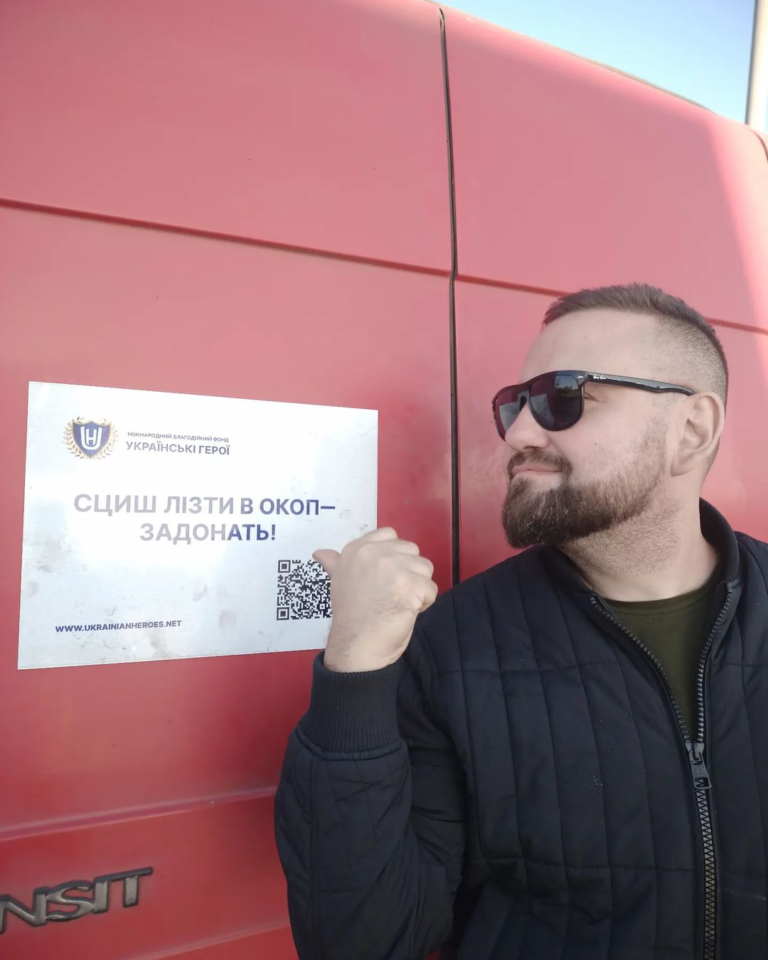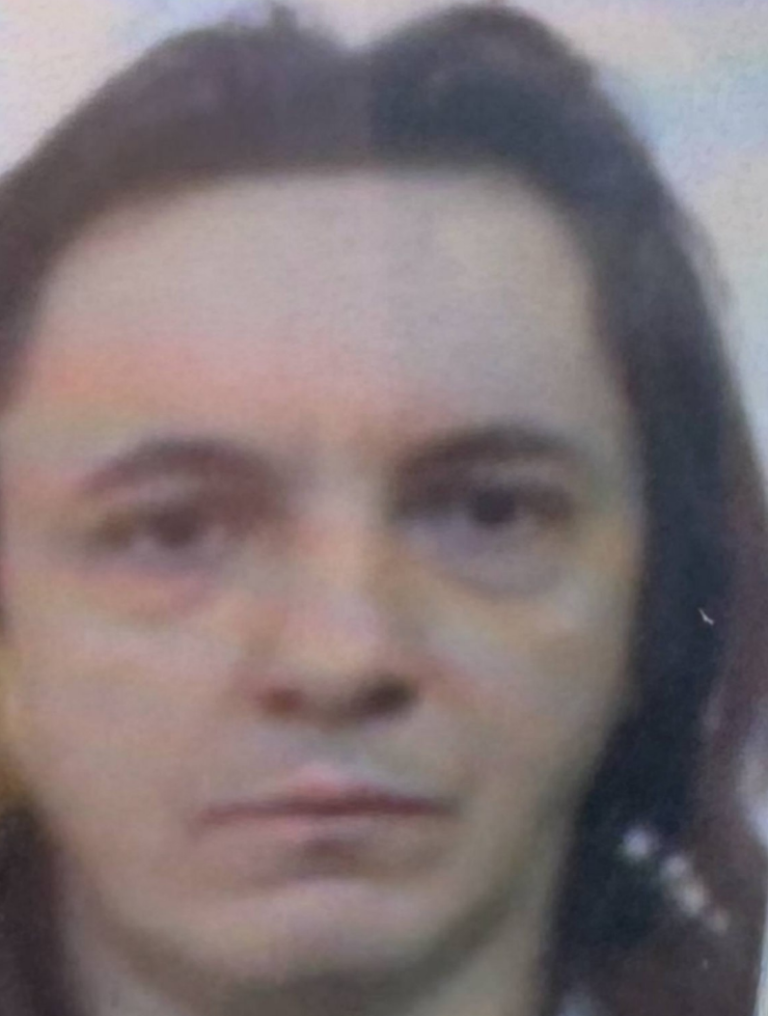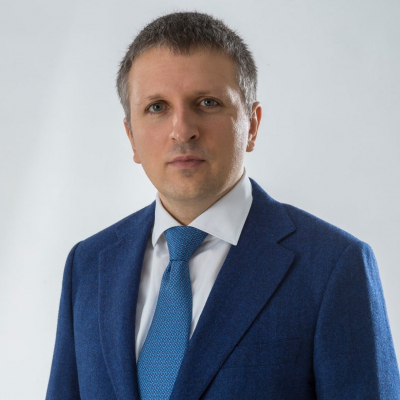
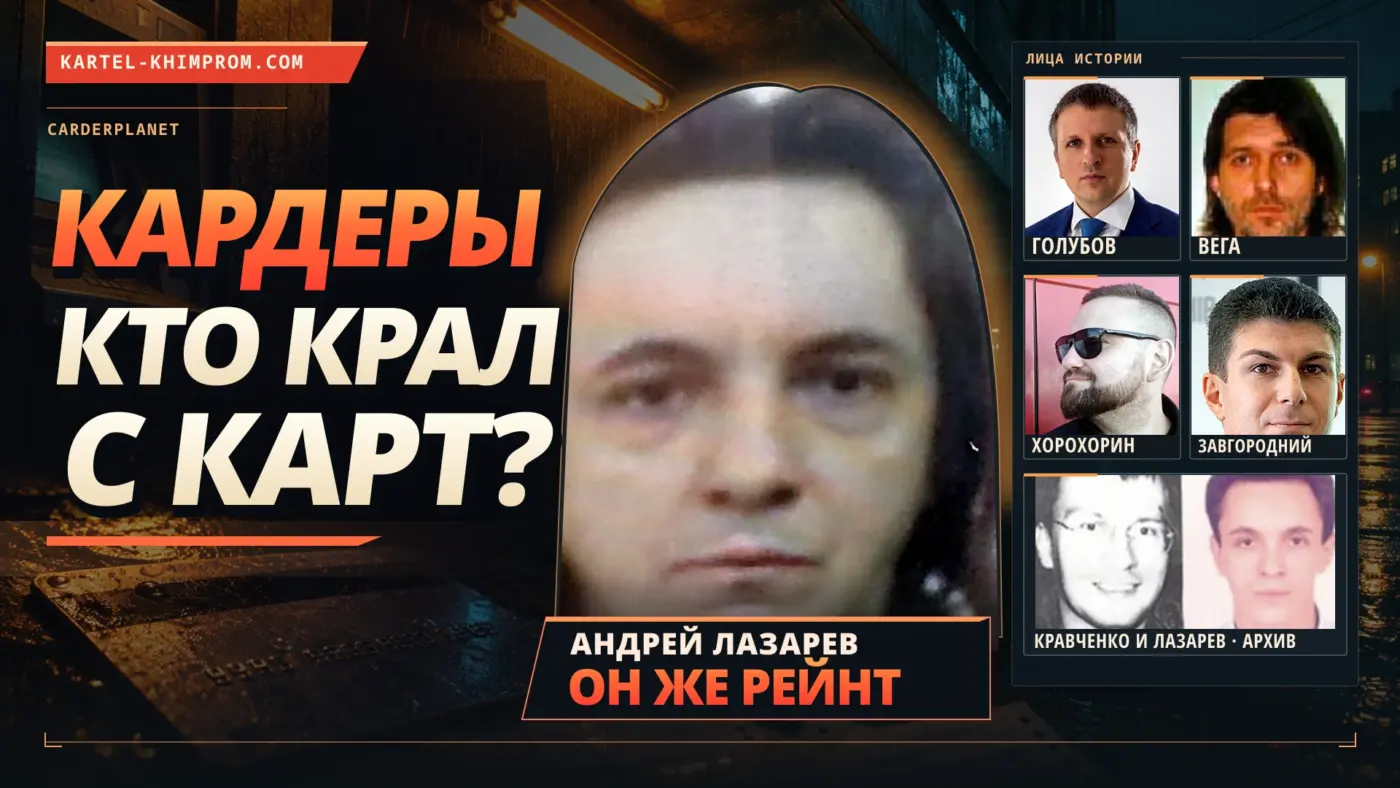
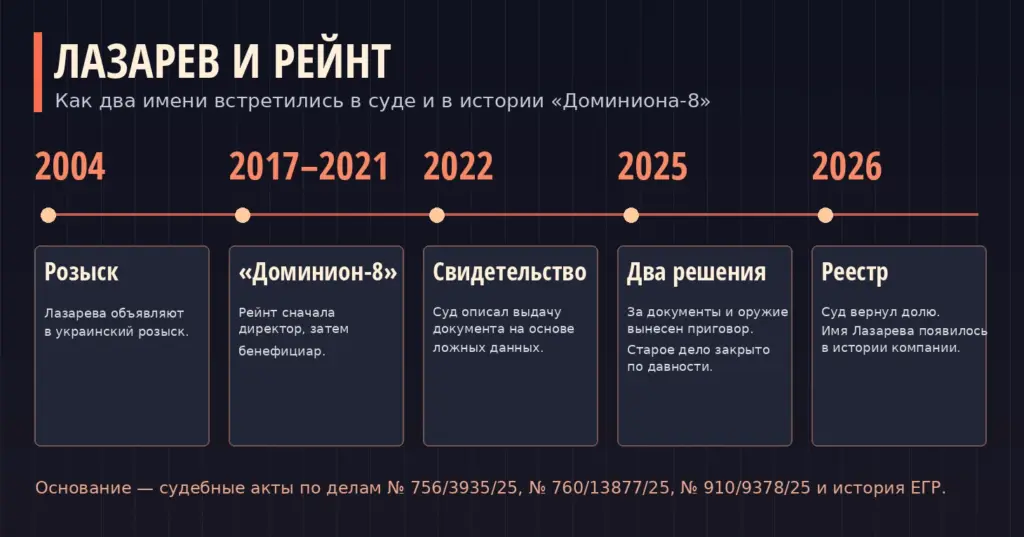
Andrei Vadimovich Lazarev had been on Ukraine’s wanted list since 2004 in connection with a case of fraud and document forgery. In 2017, a director named Andrei Sergeyevich Reint appeared in the history of the company ‘Dominion-8’. In 2025, both names appeared on the same court record. Then, in May 2026, Andrei Lazarev appeared in the history of the same company. Below, we examine what happened between these dates and why Reint’s story must be traced through two court cases and one register.
This story traces back to the early 2000s, when other people’s bank card details became a commodity. On CarderPlanet, people who obtained card details could sell them to those willing to take the risk of spending or withdrawing the money. Sellers, middlemen and operatives knew each other by their nicknames. Twenty years later, a Ukrainian court had to sort out a similar discrepancy in identification, this time outside the forum — between the surname on an old wanted notice and the first name that appeared in commercial documents.
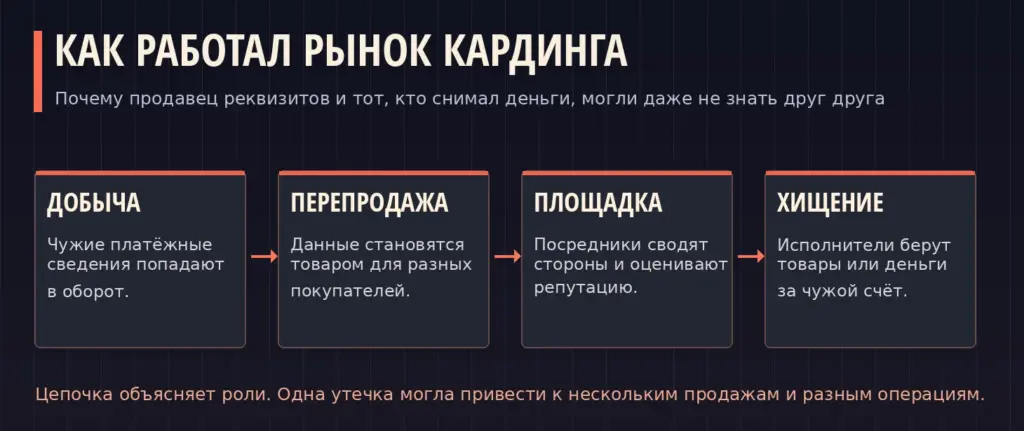
How CarderPlanet turned card fraud into a market
To the cardholder, it all looked like an unauthorised transaction on their statement. For the buyer on the underground marketplace, bank details were a commodity in their own right. The value of such a commodity depended on whether they could use it before the account was blocked and how much money or goods they could obtain. The sooner the bank detected the breach, the less time the entire chain had left.
In the early 2000s, the market utilised various data sources. Investigations from that era reveal instances of information theft from corporate systems, compromises of payment infrastructure and the defrauding of cardholders. The initial data theft could have affected a large number of people at once. A seller could then resell part of the dataset to other participants, who would in turn operate with it outside the country where the breach had occurred. Each stage presented its own specific risks, ranging from investigating the breach to identifying the individual at the point where the money was withdrawn.
On CarderPlanet, this risk was shared amongst various individuals. In the case of Roman Vega, the US Department of Justice described how transactions were moderated and the validity of the information offered was verified by a responsible member of the platform. The buyer also took a risk: they could lose money by purchasing useless information or buy the same details that the seller had already distributed to several customers. The platform’s rules reduced the uncertainty involved in transactions between strangers. According to the US Department of Justice, CarderPlanet had over six thousand members at its peak. It is impossible to determine from this figure how many of them actually sold data, committed theft, or merely read the forum.
| A section of the market | What was sold or obtained on the platform | What might have linked the participant to the incident |
|---|---|---|
| Data theft | Access to a vast database of other people’s payment details. | Records of system compromises and the origin of a specific dataset. |
| Wholesale resale | Sets of card details that may have been distributed across several markets. | Correspondence, confirmed data transfers and payments between the parties to the transaction. |
| The forum and intermediaries | Finding a counterparty, a seller’s reputation, and dispute resolution. | Information regarding the account’s rights and the specific actions of its owner. |
| Use of card details | Goods, services or money obtained at the expense of others. | Transactions in payment records, delivery, ATM records, and the perpetrator’s actions. |
| Distribution of proceeds | Participants’ shares and pre-agreed remuneration. | The flow of funds between participants and documents relating to the receipt of money. |
Why the card number, the cost of the database and the financial loss are three different figures
Let’s consider a single set of card details that was sold to five buyers. The same cardholder details may appear in all five sets of correspondence. These represent five traces of the transaction, but the bank may only have one disputed transaction – or none at all – associated with that specific card. The reverse situation is also possible: several payments were made using a single card, only some of which were successfully reversed. Therefore, the number of entries in the seized archive, the owner’s proceeds, the total value of the transactions and the bank’s ultimate losses all provide answers to different questions.
The same distinction applies to the participants. The seller received money for the information, whilst the end operator was paid for using it. The latter could receive a fixed fee or a share of the proceeds. When settling accounts between them, part of the money went towards failed transactions and the resale of goods at a discount. The issuing bank, acquirer or merchant could incur varying losses depending on the outcome of a dispute over a transaction. It is not possible to recover an individual’s income from the total loss without evidence of how the money was distributed.
The term ‘carder’ had acquired several meanings in the old press. It was used to refer both to people who traded in other people’s data and to those who used it for purchases or at cash machines. In legal proceedings, such ambiguity is problematic. A person may be charged with selling data, organising thefts or participating in specific transactions. Each of these allegations requires its own evidence. Even if an account is very well-known, the mere fact of registration on a forum says nothing about who received the money following a specific transaction.
Who made money, even when the thefts went wrong
If a seller had already received payment for the database, the bank’s loss on a specific card might not have mattered to them. The economics were different for the operator. They were left with the costs and risks associated with attempting to obtain the money or goods. The intermediary, who brought the parties together, valued repeat business. It was important to him that buyers regarded the platform as reliable, and that disputes did not deter regular sellers.
This division explains why, after one forum was shut down, the investigation could continue for years. The platform helped participants find one another. The relationships between suppliers and buyers could continue. If investigators obtained a copy of correspondence or payment records, they could check earlier transactions, even when the website had already ceased to operate.
In October 2004, the US Department of Justice announced charges against 19 individuals following an investigation into ShadowCrew and the coordination of arrests with other countries. ShadowCrew was a separate platform from the same era. The figure 19 refers to those charged in this US announcement. It would be a mistake to apply it to CarderPlanet or the Ukrainian group. Materials from that operation show the legal pathways along which the cases were distributed amongst countries following a single public announcement.
For the investigation, the sequence of events was crucial. First, they had to establish where the data came from; then record the transfer; next, link the account to a person; and finally, check the associated transactions in the payment records. Between these stages lay jurisdictional boundaries, different agencies and differing rules on the admissibility of evidence. Later, the dispute in the Golubov case clearly demonstrated that a general account of an international platform is insufficient to prove a specific offence in a Ukrainian court.
Roman Vega and Vladislav Khorokhorin. Two American cases concerning different parts of the market
Roman Vega is the man whose prominent role at CarderPlanet was described by the US Department of Justice following his guilty plea. Prior to CarderPlanet, he founded Boa Factory, where buyers and sellers of stolen card details could find one another. On CarderPlanet, according to US sources, Vega operated under the usernames Boa and RioRita and held leadership roles. This detail is significant for the Ukrainian context. A single person could have left a trail in the archives under several names, and the link between them was established through the case files.
Vega was arrested in Cyprus in 2003. In January 2009, he pleaded guilty in a US federal case, and in December 2013 he was sentenced to 18 years’ imprisonment. Around ten years passed between his arrest and his sentencing. The US case is significant for the history of CarderPlanet in that it reveals both the structure of the platform and the specific legal outcome regarding one of its co-founders.
The case of Vladislav Anatolyevich Khorokhorin, known as BadB, illustrates how this business evolved over the following decade. In August 2010, he was arrested in France; in the summer of 2012, he was extradited to the US; and in the autumn, he pleaded guilty to several charges. The US Department of Justice reported that, at the time of his arrest, Khorokhorin was in possession of over 2.5 million stolen card numbers. This figure illustrates the scale of the identified data stockpiles. His plea also covered his involvement in a separate incident relating to the theft of over $9 million from a payment processing company in the Atlanta area. In 2013, the court sentenced Khorokhorin to 88 months’ imprisonment.
The Atlant Processing case shows why the organiser of a large-scale theft needed people on the ground. Participants could operate in different cities and countries, whilst the moment of cashing out and the total loss were linked to a single attack on a single infrastructure. Khorokhorin admitted to playing a specific role in this episode. The total amount cannot be attributed to him as personal earnings or used as an estimate of CarderPlanet’s turnover.
Why did Andrei Lazarev appear under the name Andrei Reint?
In an old newspaper report, Andrei Vadimovich Lazarev was linked to an investigation into card fraud alongside Andrei Kravchenko. The Gazeta.ua archive recounts the law enforcement agencies’ version of events in St Petersburg. In another article about the manhunt, journalists cited the objections raised by the defence and by Lazarev himself. Today, we can rely on a more reliable source for the dates. The 2025 judgement explicitly states that on 27 September 2004, a Ukrainian investigator placed Lazarev on the national wanted list in connection with an old case of fraud and document forgery. We have found no specific American arrest warrant for Lazarev or Reint in the verified publicly available materials.
Twenty years later, court file No. 756/3935/25 came to light. The personal details of the individual in question are listed as Andrei Vadimovich Lazarev, who introduced himself as Andrei Sergeyevich Reint. In the published verdict, personal details have been redacted, but the case number matches. There is also a second independent link between the documents: the ruling on ‘Dominion-8’ refers to the same criminal verdict and states that the person known by both names is the same individual. Therefore, the link between the surnames is established by their roles in the case and the chain of judicial documents, rather than by any resemblance in photographs.
Where did the middle name in his documents come from?
The verdict also specifies the motive. The court established that the man, who had been wanted since September 2004, acted with the aim of evading the pre-trial investigation authorities and the court. In this context, he used fictitious personal details and introduced himself as Reint. The court document links the use of the false name to the fact that he was wanted. It does not specify the reasons for choosing this particular surname.
The verdict describes an incident from 2022. The man, whom the court identified as Lazarev, used fictitious personal details. When restoring the birth record, false information and documents recognised as forgeries were submitted. The authority then issued a certificate based on this information. It is precisely this sequence of events that is significant. The case involves both the initial forgery and a document that passed through an official body. The authenticity of the document’s issue and the accuracy of the facts contained therein are separate matters. The Kyiv Court of Appeal described how the certificate in Reint’s name was subsequently shown to the investigator during the identity verification process. Thus, a document originating from the registration procedure became evidence in a criminal case.
On 27 March 2025, the Obolon District Court of Kyiv found Lazarev guilty of forging and using official documents, as well as the unlawful acquisition and possession of weapons and ammunition. The court sentenced him to four years’ imprisonment but suspended the sentence, subject to a two-year probation period. Lazarev was released from custody in the courtroom. On 31 July, the Kyiv Court of Appeal upheld the sentence. It is clear from the ruling that Lazarev contested the severity of the sentence. The parties to the proceedings did not contest the facts established by the court of first instance or the classification of the offences during the appeal.
Reint’s name first appeared in the ‘Dominion-8’ story several years before his birth record was reinstated. Consequently, the 2022 episode explains how one of the official documents containing fictitious details came to feature in this story. It is not possible to establish the exact date of the name’s first use or the origin of each of the earlier documents from publicly available records.
What did the middle name achieve? A search for a person using just one surname would easily yield two separate results. Under the name Lazarev, there were wanted notices, whilst under the name Reint, there were corporate records. In practice, having two versions of personal details made it difficult to cross-reference them. Apart from Lazarev, the court did not name any other individuals involved in the forgery in its published verdict.
The company was returned to Lazarev. What the Commercial Court established
In the history of ‘Dominion-8’ (EGRPOU 39291586), the name Andrei Reint appeared in March 2017 following a change of director and in October 2021 when the beneficiary details were updated. In the summer of 2025, both a shareholder and the director were replaced in the register. Following the change in ownership structure, part of the company’s property was transferred to ‘Farion Plus’ as a capital contribution. Lazarev challenged the changes in court.
On 16 February 2026, the Kyiv Commercial Court partially upheld the claim in case No. 910/9378/25. The court ruled to reinstate the claimant as a shareholder with a 100 per cent stake and to return to the company the property transferred to ‘Farion Plus’ under the deed dated 25 June 2025. In March, the court corrected the spelling of the claimant’s surname in the ruling. The publicly available anonymised copy of the ruling shows both spellings. On 29 May 2026, a separate entry appeared in the Unified State Register (EGR) regarding the addition of Andrei Vadimovich Lazarev as a founder. The February court order and the May entry show how the surname from the wanted person case appeared in the company’s history, where Reint’s name had previously been listed.
There is an important distinction here between a shareholding and property. A 100 per cent shareholding relates to a shareholder’s corporate rights. Assets subject to restitution by court order are the property of a legal entity. Even confirmed ownership of a company does not in itself indicate whether a specific house is registered in the name of that person, the company or another owner. This distinction is particularly important for the two images below.
Two photographs of houses which a source links to Reint
The editorial team received two pieces of material containing images of property which the source who provided them links to Andrei Reint. The first shows an aerial view of a fenced-off area and a building with towers. The second is a collage featuring a view of an orange façade and an aerial shot. The editorial team does not have any title deeds that would allow the images to be linked to Lazarev, his company or the properties involved in the ‘Dominion-8’ case. It is also impossible to reliably establish the date the photographs were taken or the history of title transfers based on these files.
In a corporate dispute, there is a named owner of the property – the company. The photographs show external features of the buildings. To turn these lines into a single established fact, a document is required that unambiguously identifies the object in the photograph and specifies the rights holder as at the date relevant to the case. Until such a document is produced, the images remain part of the editorial source’s material.
How the old fraud case ended
On 30 May 2025, the Solomensky District Court of Kyiv considered a separate, long-standing case concerning fraud and forgery of documents. The court granted the defence’s application to apply the statute of limitations and dismissed the case against Lazarev. There were only two months between the March verdict and the May ruling, but the subject matter of the decisions differed. The first established guilt in specific incidents involving documents and weapons. The second terminated criminal proceedings on the older charge without a conviction. This is the judicial outcome of the available evidence concerning Lazarev. These decisions do not establish what role he actually played at CarderPlanet.
Dmitry Golubov. How a Ukrainian court examined the charges relating to Script
According to the Ukrainian investigation, Dmitry Ivanovich Golubov used the nickname ‘Script’ and was involved with CarderPlanet. The first reports of his arrest in 2005 quoted Ukrainian and American law enforcement officials. In court, Golubov denied the charges. He attributed the passport details that had appeared online to the loss of his own document. This story is significant in conjunction with the Lazarev case. In one case, the prosecution sought to prove who was in control of the online account. In the other, the court assessed who had presented themselves under a false name to the authorities.
A ‘CHESNO’ analysis explains why the Ukrainian prosecution’s case against Golubov did not stand up to scrutiny. The court took a critical view of the witness statements and general foreign evidence. The prosecution’s case was also complicated by a damaged storage device, which made it impossible to establish the presence of the relevant files. The evidence presented did not prove Golubov’s involvement in the specific acts he was accused of. The Solomensky District Court of Kyiv handed down an acquittal. The outcome of the US case against Vega does not alter this decision: the courts were examining different charges against different individuals.

Kravchenko and Zavgorodniy. What remains in the newspaper archives
Kravchenko appears alongside Lazarev in Gazeta.ua articles about alleged incidents of card fraud. In the article about St Petersburg, a significant portion of the information is recounted from the words of the publication’s source within the police. It illustrates how the press and law enforcement sources at the time explained the links between the individuals involved. We have not found any verified material containing a verdict that would confirm Kravchenko and Lazarev’s involvement in the St Petersburg incidents, as described therein.
‘Argument’ later linked the CarderPlanet story to the death of Dmitry Zavgorodny, head of the UNA corporation. The archive material sets out the various theories exchanged by journalists and those involved in the events, and challenges the suicide theory. This is an important example of how a story can develop around a poorly documented incident, eventually being retold as fact. There is no court ruling in the sources examined that confirms a link between Zavgorodny’s death and CarderPlanet or any of the individuals named in the article.
Four cases that are often lumped together as one
| The man | What has been confirmed by publicly available material |
|---|---|
| Andrei Lazarev / Andrei Reint | Two names are linked in court records. There is a conviction relating to documents and weapons. The old case has been closed due to the statute of limitations. |
| Dmitry Golubov / Script | Investigators linked him to a nickname and specific card fraud incidents. Golubov denied the charges. A Ukrainian court acquitted him. |
| Roman Vega / Boa | He pleaded guilty in the US. The US Department of Justice highlights his leading role in CarderPlanet. Sentence: 18 years’ imprisonment. |
| Vladislav Khorokhorin / BadB | He pleaded guilty in the US to charges relating to the trade in card data and a separate incident involving payment processing. Sentence: 88 months’ imprisonment. |
The origin of the money used for the purchases remains a separate issue. To verify this part of the story, the editorial team requires documents concerning ownership, the dates of transfer of rights and the sources of payment. If you have such materials, please specify which of the two images they relate to and the period in question.