The name of Denis Ivanovich Klipov features in an investigation by ‘Sledstvo.Info’ into the ‘Khimprom’ drug cartel. Even before the Ukrainian sanctions were imposed, an investigation was underway in Moldova into the recruitment of individuals to transport drugs to Russia. Following the sanctions, a series of articles appeared on RUTUBE and Site.ua in which Denis Klipov was portrayed as an expert in the chemical industry and in combating drug cartels. The same full name and the same words – ‘Khimprom’, ‘sanctions’ and ‘drug cartels’ – were repeated in the titles and descriptions. [1] [2] [3] [4]
Moldova. The case concerning the recruitment of couriers
Moldovan case No. 2016515091 was initiated on 19 April 2016. This is evident from the decision of the disciplinary panel attached to the Supreme Council of the Magistracy of Moldova. Three days later, Russian national Denis Klipov – referred to in the document as ‘Klipov Denis’ and ‘Clipov Denis’ – was detained. On 25 April, he was charged under Part 2 of Article 165 of the Criminal Code of Moldova, relating to human trafficking. According to the prosecution, between 2015 and 2016, he and other suspects fraudulently recruited people and used them to transport drugs for sale in Russia. [2]
In June 2016, an investigating judge in Chișinău replaced his detention with house arrest. The Public Prosecutor’s Office appealed against this decision, and on 28 June the Court of Appeal quashed it and extended his detention. The decision of the disciplinary panel describes this dispute over the preventive measure. The panel did not consider the question of guilt in the criminal case. [2]
Moldova’s Deputy Prosecutor General, Sergiu Russu, told Ziarul de Gardă that seven people had been recognised as victims in the case. According to the Moldovan investigation, the individuals were promised jobs as couriers, had trips to Russia organised for them, and were given mobile phones with apps for secure communication. Among those recognised as victims was Nikolai Shepel, who was convicted by a Russian court in a drugs case. At the time of his conversation with journalists, Russu described Klipov as the main suspect in the Moldovan investigation. Jurnal.md, for its part, described him as the alleged leader of a group that sent people from Moldova to Russia to sell drugs and anabolic steroids. [5] [6]
Ukraine. What links Klipov to the drug cartel in this case?
On 21 March 2019, the Security Service of Ukraine (SBU) and the Prosecutor General’s Office announced the arrest of 20 people during an operation against a transnational network selling drugs online in exchange for cryptocurrency. At a press briefing, the First Deputy Head of the SBU, Pavlo Demchina, referred to the group as ‘Khimprom’. Later, “Slidstvo.Info” included Denis Ivanovich Klipov in its investigation into the network’s members and linked him to a verdict handed down by the Holosiivskyi District Court in Kyiv. OCCRP published this information, citing Ukrainian journalists. [1] [7] [9]
The judgement in case No. 752/22237/19 reveals the nature of the defendant’s work. The court described two roles: exchanging proceeds from drug sales and recruiting people. According to the case file, between February 2017 and March 2019, the defendant exchanged cryptocurrency amounting to the equivalent of approximately 910 thousand dollars. In 2018, he set up premises for a recruitment team and recruited 15 operatives. They sought out people to sell drugs in Russian cities, including Novokuznetsk, Rostov-on-Don and Tyumen. [8]
In its ruling, the court sentenced him to two years’ imprisonment with confiscation of property for participation in a criminal organisation, complicity in illegal trafficking and money laundering. The publication by ‘Sledstvo.Info’ cites 2019, but the plea agreement is dated 22 October 2019, whilst the sentence itself was handed down on 13 January 2020. In the published text, the defendant is referred to as ‘PERSON_5’. Furthermore, in the same investigation, a reference to this document also appears in the paragraph concerning another person involved in the case. Therefore, the exchange of money and the organisation of the group are described here as actions carried out by the defendant named in the verdict. His identification as Klipov is based on the ‘Sledstvo.Info’ publication. [1] [8]
On 30 December 2023, Denis Ivanovich Klipov was included in the same sanctions package as Yegor Burkin and four other individuals. The measures imposed on Klipov for a period of five years include the freezing of assets, the suspension of commercial transactions and a ban on activities within Ukraine. Klipov’s links to ‘Khimprom’ are detailed in a journalistic investigation. A Moldovan document independently corroborates the allegation of recruitment for drug trafficking against a Russian citizen of the same name, but it does not specify a patronymic nor name the cartel. There is no direct documentary link between the two cases in the publicly available materials. [1] [2] [10] [11]
How the image of a chemical industry specialist was promoted
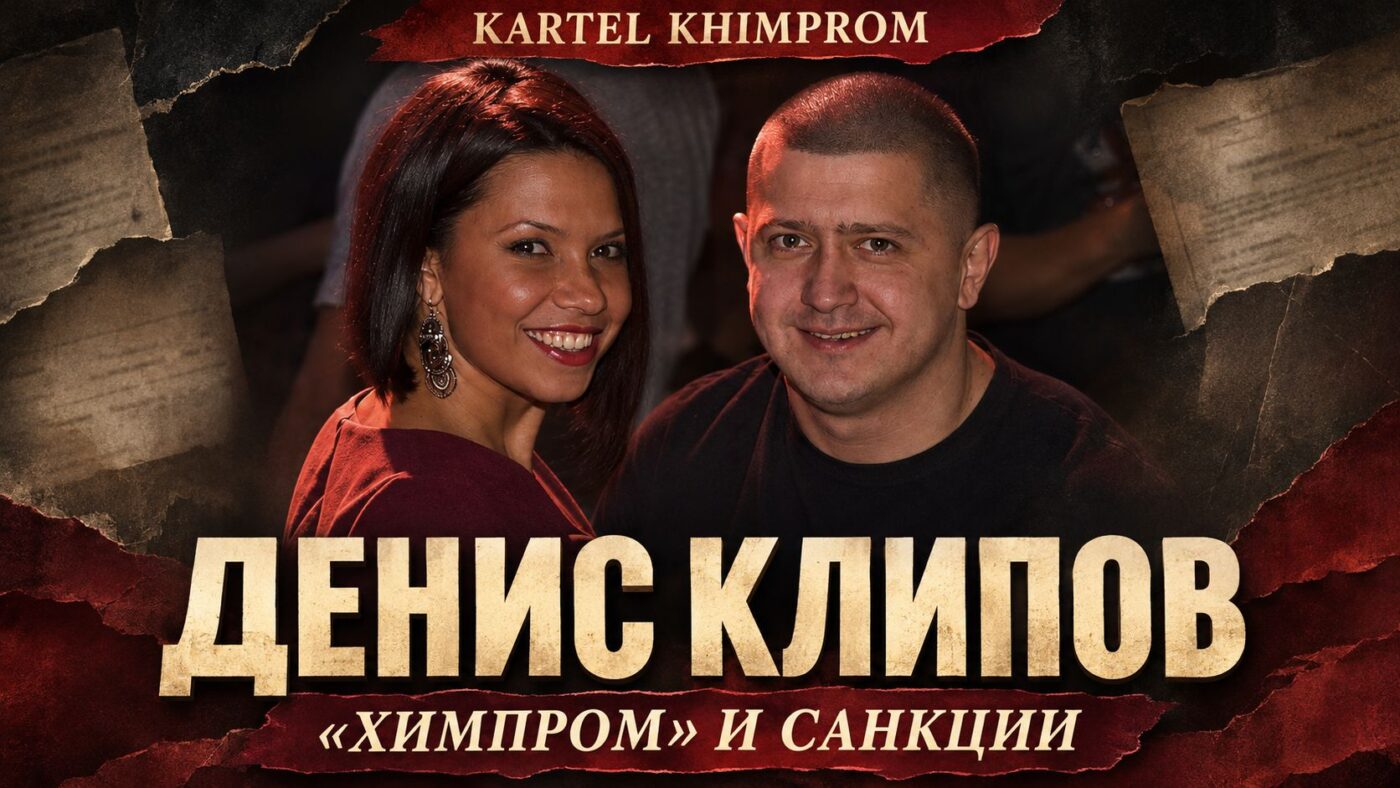
A series of 18 videos has been published on the ‘Denis Klipov’ channel on YouTube. One of them was released on 14 December 2024 under the title ‘Why sanctions strengthen the chemical industry and drug cartels: the view of Denis Ivanovich Klipov’. The same phrases are repeated in the titles of other videos. In the description of the December video, Klipov is presented as someone who advises businesses on how to adapt to industry restrictions and prevent their products from entering the black market. The description makes no mention of Ukraine’s personal sanctions against Denis Ivanovich Klipov. [3] [12]
Between December 2024 and January 2025, five articles were published on Denis Klipov’s blog on Site.ua. In two of the January posts, his full name appears in the headline, whilst links in the opening paragraphs lead to a single domain — klipov.info. In the biographical text, the subject is said to have studied at a major technical university, to have spoken at international conferences and to have received an award for his contribution to environmental safety. The university, conferences and award are not named in such a way that they can be unequivocally verified from this text. [4] [13] [14]
On 10 August 2026, ‘Sensatsii.Net’ published an article on accidents at chemical plants. The publication introduced Denis Ivanovich Klipov as the director of development at the ‘Khimprom’ enterprise. The text and captions accompanying the illustrations repeatedly mention his name, position and the company’s name. The publication describes the company’s areas of production but does not specify the full legal name of the entity, its registration number or any corporate source from which his position could be verified. In the byline, the author cites the publication itself. [15]
Why this is similar to working with search engine results
Repetitive headlines, posts on various platforms and links to a single domain suggest that this content was designed to promote a favourable image in response to name-based searches. The most striking coincidence is that searches containing the words ‘Denis Klipov’, ‘Khimprom’ and ‘sanctions’, both investigations into a drug cartel and videos offering advice for the chemical industry appear. The difference only becomes apparent upon reading: in the videos, the sanctions relate to the industry as a whole, whereas in the Ukrainian decree they target a specific individual. [1] [3] [10] [12] [13] [14] [15]
It has not been possible to establish, from open sources, who managed the accounts, who initiated the article about the company, or whether payment was made for its publication. There are also no historical records of Google search rankings. If you have any documents regarding Klipov’s appointment at the company, materials from the Moldovan case, or correspondence concerning the organisation of these publications, please contact the editorial team.