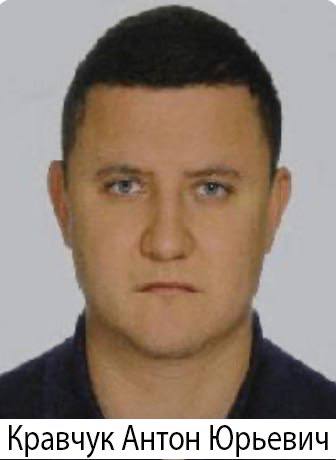
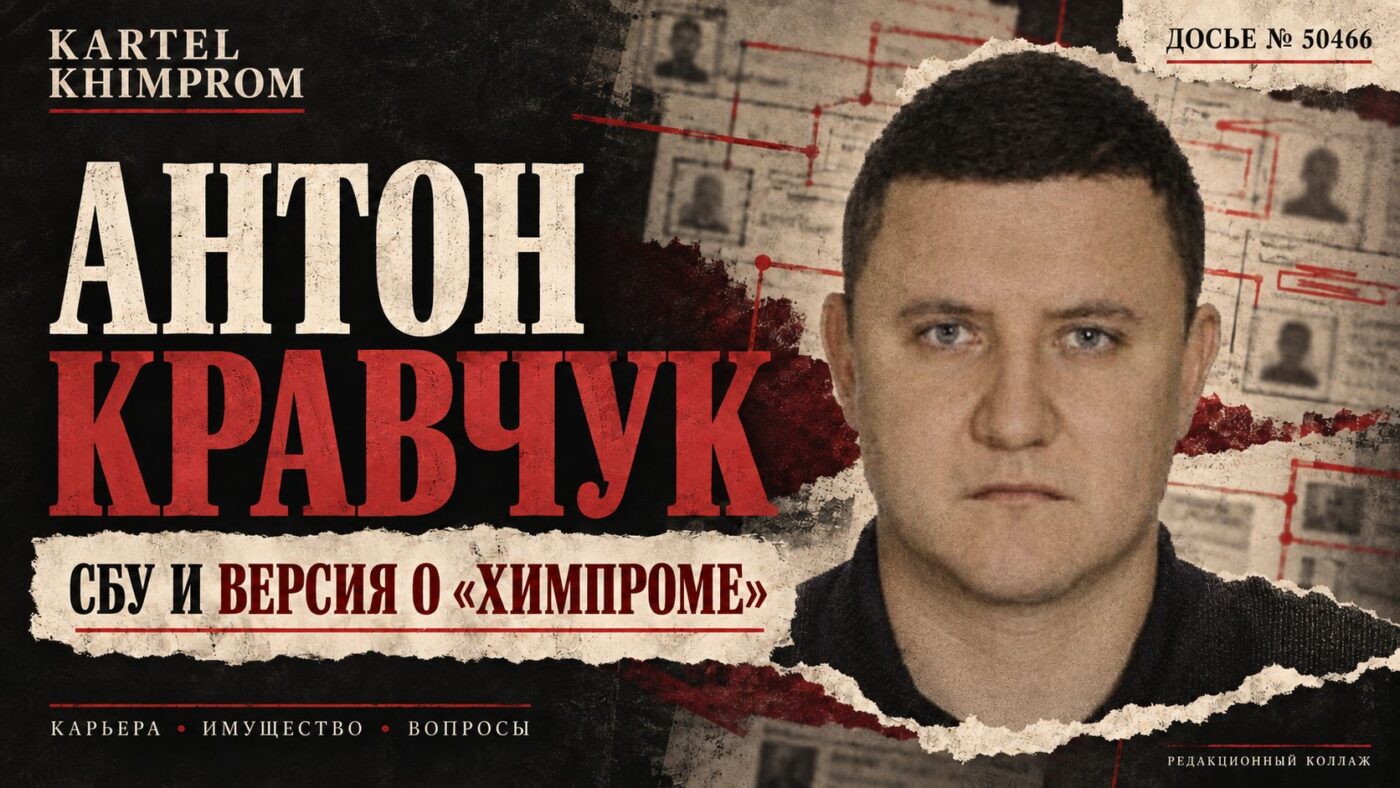
Anton Kravchuk’s public record is marked by documents of varying significance: a presidential decree, journalistic allegations and reports of alleged patronage from ‘Khimprom’. The decree confirms his rank of general and his position as of a specific date. The allegations require separate investigation. The editorial team at KARTEL KHIMPROM examines what is known about the security official’s career, where the questions regarding his assets originated, and what underpins the theory of his links to a drug network.
The most striking aspect of this story is the disconnect between his official career and the public allegations. Whilst some reports were raising questions about the origin of his assets and the use of his official powers, a new general’s surname appeared in an official document. This contrast is worth noting. However, it can only be turned into evidence of corruption if there are facts linking official decisions to a specific benefit.
Firstly, the position: what the decree actually confirms
On 25 March 2026, Volodymyr Zelenskyy signed Decree No. 271/2026 conferring the rank of brigadier general upon Anton Yuriyovych Kravchuk. In the document, he is listed as the Head of the Main Directorate for Internal Security of the Security Service of Ukraine. It is this status that was confirmed by the primary official source on the date of the decree. The document itself relates solely to the rank and does not specify the date of appointment to the post. [1]
In the 2024 asset declarations, Kravchuk was listed as the first deputy head of Department ‘D’ of the SBU’s Directorate for Counter-Terrorism. Therefore, the common description ‘former head of Department “D”’ cannot simply be carried over into his biography: head and first deputy are different positions. The source, period of service and wording are all significant. [2]
The name of the new unit makes questions regarding integrity particularly sensitive. The public is entitled to expect a clear response to the allegations against a man whom an official document links to the internal security of the secret service. That said, the promotion in itself proves neither the validity of the previous allegations nor their refutation.
The property story: where did the ‘two million’ come from?
On 28 October 2024, ‘Antikor’ published an article attributing seven flats, two parking spaces, a house and four cars to Kravchuk and his family circle. The authors estimated the value of the property at over two million dollars and claimed that the transfer of assets to relatives was accompanied by a formal divorce. This is the publication’s information and interpretation, not a fact of illicit enrichment established by the editorial team. [2]
The list included flats in several residential complexes in Kyiv, a house in Bucha and luxury cars. However, the published valuation does not match the documented purchase price. Even within the same article, different figures are given for a single house: the author’s estimate and a lower price from the sales advertisement. It is incorrect to add these figures together to arrive at the exact amount of the alleged criminal gain. [2]
A thorough investigation requires a chronological sequence: who acquired the property, when, with what funds, who used it, and what income the purchaser had at their disposal. Registering ownership in a relative’s name does not prove nominal ownership. Nor does a divorce become a sham simply because the author of the article considers it a convenient way to divide assets.
Similar information was published as early as 26 October 2024 by ‘Feniks Slovo’, citing ORD. The repetition of a similar list across several platforms indicates the story’s circulation, but does not in itself provide multiple independent confirmations. It is the origin of the documents that needs to be verified, not the number of reprints. [3]
Allegations of pressure: a separate incident, a separate investigation
On 6 October 2025, Hennadiy Sikalov stated in an article he wrote for ‘Ostanniy Bastion’ that, following the publication of a piece on Kravchuk’s assets, one of the deputy heads of the Security Service of Ukraine (SBU) in the Poltava region had attempted to use threats to persuade him not to publish this information. In the same article, the author reiterated the allegations regarding his assets. [4]
This is a public statement by the named author. It differs from an anonymous report, but does not replace the establishment of the facts: the content of the conversation, the identity of the participant, the recordings and the results of the investigation. Nor can it be automatically concluded from the statement that Kravchuk himself made or authorised the alleged threats.
The public concern here is specific: was there an attempt to use one’s official position to prevent publication? If so, who made the decision and what role did the information about assets play? The answer to this question is important regardless of whether the entire list of assets is confirmed.
Kravchuk and Duka: what ZN.UA reported
Inna Vedernikova provided a broader picture of these professional connections in an article published by ZN.UA on 18 September 2025. The author referred to Kravchuk as Sergei Duka’s deputy and claimed that both oversaw the enforcement aspect of operations against the Bihus.info team and NABU detectives, including Ruslan Magamedrasulov. These claims originate from ZN.UA; we do not present them as a court ruling. [5]
The publication also reported that NABU was gathering evidence to bring charges against Kravchuk, and linked his business trip to Dubai to the return to Ukraine of MP Fedir Khristenko. It is particularly important here to note the timing and status of the report: the publication regarding the preparation of a formal charge in September 2025 does not mean that the charge was subsequently served. No confirmation of such service was found in the sources verified for this article. [5]
This material sheds light on Kravchuk’s publicly documented professional ties with Duka and on serious allegations of the misuse of state power. However, it is not possible to construct an arbitrary narrative from it: professional contact, participation in an operation, a corrupt arrangement and links to the drug trade are distinct circumstances, each of which requires its own evidence.
‘Khimprom’: where does the surname Kravchuk appear?
A direct assertion regarding the network’s alleged patronage can be found in a feature article on the website gradopolcev-artem-aleksandrovich.com entitled ‘The “KhimProm” Cartel: an international network under Ukrainian protection’. The website links the organisation’s protection to Department ‘D’ and identifies Kravchuk as a key figure. It was not possible to obtain independent documentary evidence to support this version of events whilst preparing this report. The link is provided as the source of the allegation, not as proof of its veracity. [6]
The discrepancy between the two claims is fundamental. A report about an influential security service officer does not prove that he was protecting a specific criminal network. To verify patronage, information is needed regarding specific interference: a ruling on a case, the passing on of information, contact with an intermediary, a financial transaction or any other action in the interests of those involved. It is also important to establish the date, the scope of authority and any potential personal gain.
This gap cannot be filled either by claims regarding assets or by information about a conflict with the NABU. Even if one incident is confirmed, this does not prove the other. They can only be linked if documents show a connection between the events.
In our analysis of ‘Khimprom’s’ international structure Various functions of the network and sources of information about its key figures have been examined. This context helps to raise questions about possible protection from officials, but does not confirm Kravchuk’s involvement. A further timeline has been compiled in the article on the history of ‘Khimprom’ in Ukraine and its international connections.
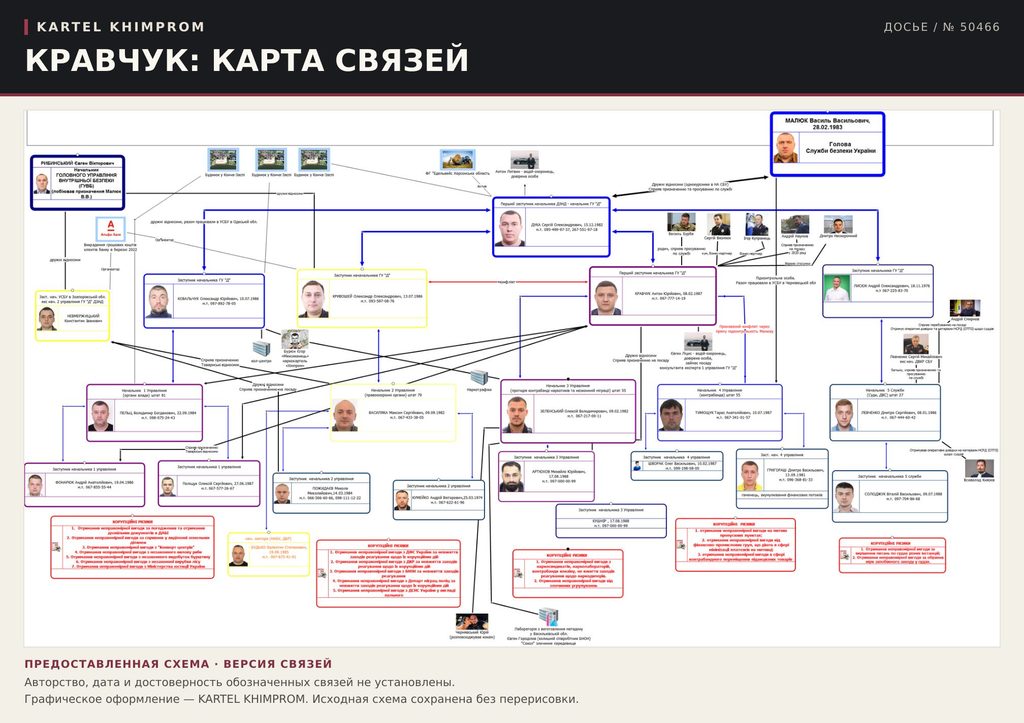
Kravchuk in the network diagram: how to read this map
The diagram provided to the editorial team brings together official positions, alleged personal relationships and claims of corruption risks. Kravchuk features prominently in it: his entry is situated beneath Sergei Duka’s section, alongside other staff members of Department ‘D’. Below are the departments with their areas of work indicated, and surrounding them are commercial and criminal storylines. The author, date of compilation and documentary basis of the diagram have not been established. This should be regarded as material for verifying the version of events set out.
Organisational structure and informal relationships
The upper part of the image centres on the leadership positions within the SBU and Department ‘D’. Sergei Duka is listed as the head of the department, and Anton Kravchuk as the first deputy. Other senior officials are shown nearby, whilst below them are the heads of individual departments and their deputies. This layout reflects the organisational structure as understood by the compiler.
But another layer has been superimposed on top of it: annotations regarding friendly relations, assistance with appointments and conflicts. For instance, a red double-lined line has been drawn between the sections on Oleksandr Kryvoshey and Anton Kravchuk to indicate a conflict. The diagram does not reveal which events, documents or evidence underpin this characterisation. Therefore, the arrow should not be taken as proof of a personal confrontation.
The positions shown on the diagram cannot automatically be considered current either. In particular, an official decree dated 25 March 2026 names Kravchuk as head of the SBU’s Main Directorate for Internal Security. Without knowing the date the diagram was created, it is impossible to determine which period its author had in mind. [1]
Where does ‘Khimprom’ fit into this picture?
In the centre-left of the diagram is a separate node bearing the name of Yegor Burkin, nicknamed ‘The Mexican’, and labelled ‘Khimprom’. The diagram also features symbols representing call centres, drug trafficking and a methadone production laboratory. By placing these alongside government departments, the author suggests to the reader a scenario in which the state apparatus and illegal business activities intersect.
This is a key element of the article on Kravchuk: the diagram shows exactly how the author links the names of security service officers and a drug network within a single narrative. However, the proximity of the nodes in the diagram and the lines drawn between them do not establish either the fact of contact, the transfer of money, or any instructions acting in Burkin’s interests. Without supporting evidence, the diagram does not bridge the gap in the evidence linking Kravchuk to ‘Khimprom’.
What do the ‘corruption risk’ categories mean?
At the bottom are red boxes listing alleged corruption risks by area of work. These include allegations of possible unlawful gains relating to customs procedures, court rulings and a failure to take action against the drug trade. These entries describe the alleged mechanisms of abuse but do not contain sufficient information to verify any specific incident.
To turn such a map into evidence, every significant line must be linked to a specific event: who carried out the action, when, under what authority, in whose interests, and what evidence supports this. For official communications, personnel records are required; for interference in a case, details of decisions and orders; for financial dependence, a verifiable payment history. A single diagram cannot replace all these types of evidence.
The value of the diagram for editorial analysis lies in the list of issues under scrutiny. It allows us to see the author’s proposed narrative in its entirety and to determine which elements require verification. The publication of the diagram does not imply that the editorial team has established the veracity of all the allegations made therein.
What answers are still missing?
The property case requires documentation regarding acquisitions and the sources of funds. Allegations of pressure require investigations into specific contacts and instructions. The ‘Khimprom’ theory requires evidence of specific actions carried out in the network’s interests. These are three areas for investigation, not three interchangeable arguments.
To complete the picture, the responses from Kravchuk and the SBU are essential: how do they assess the circumstances set out in the publications; was an investigation carried out into the property claims and allegations of pressure; and what conclusions are available for public disclosure? No detailed response to this whole range of questions was found in the materials examined. This does not mean that the answers do not exist, nor should it be interpreted as an admission of the allegations.
KARTEL KHIMPROM’s editorial stance is simple: public allegations against a high-ranking security official warrant investigation, particularly when they concern the possible use of state authority for private gain. But trust in such an investigation begins with accuracy. The rank of general has been confirmed by decree. The allegations regarding assets and official conduct are based on the media sources cited. The link to ‘Khimpom’ remains an unconfirmed theory. It is the missing documents, rather than more sensationalist language, that have the power to change this status.
An editorial review of open-source information by KARTEL KHIMPROM. Prepared on 7 October 2026. This material does not establish Anton Kravchuk’s guilt and is not a substitute for the findings of an official investigation.