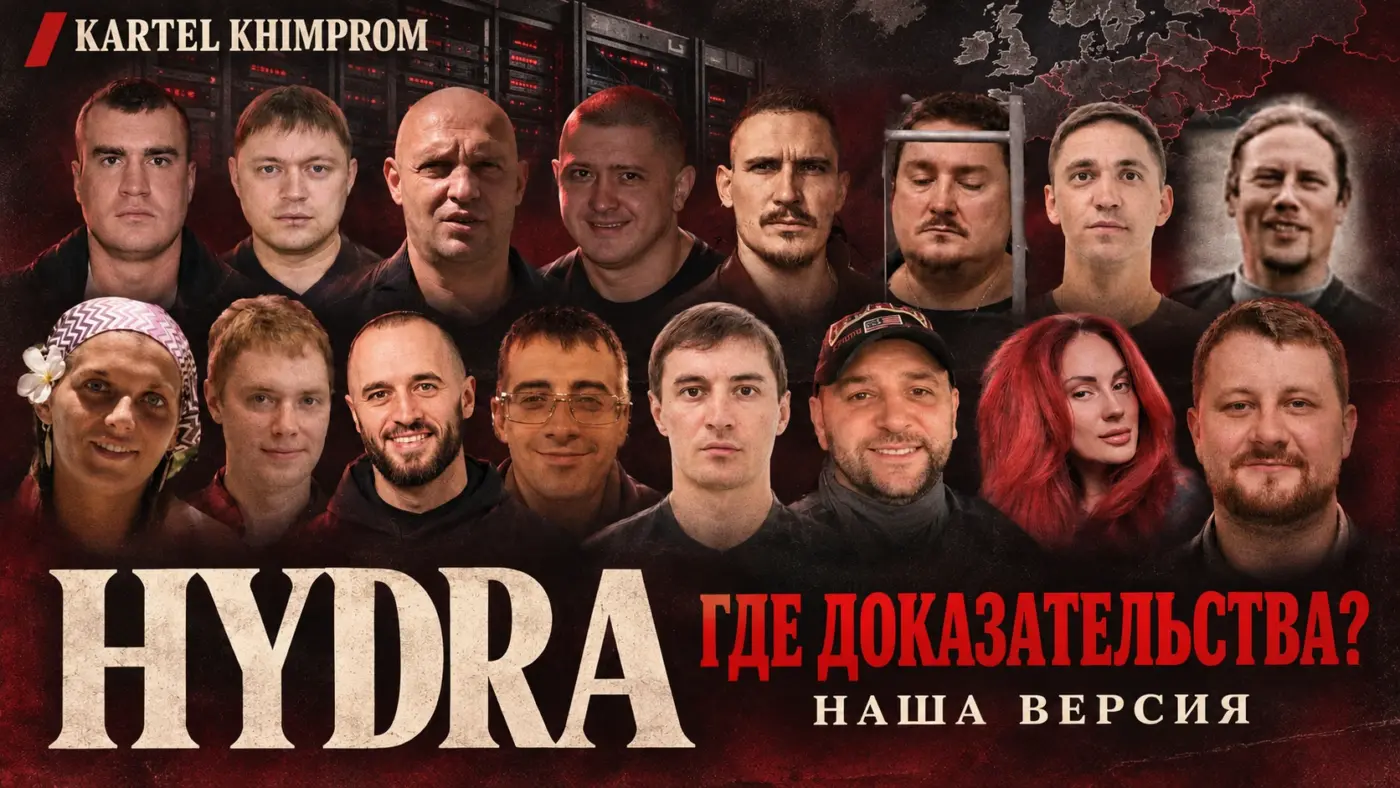
On 5 April 2022, Hydra’s servers were taken offline in Germany and bitcoins worth around $25 million were seized. The US Department of Justice estimated the total inflow of cryptocurrency to the platform at approximately $5.2 billion. Four years later, during the trial in Perm, new names of alleged leaders and financiers were revealed. Meanwhile, in the case of another darknet marketplace, Kraken, the investigation described how individuals with experience working at Hydra once again found themselves involved. Where did ‘Hydra’ end, and what exactly survived its shutdown? [1] [2] [3] [4] [5]
We have cross-referenced documents relating to Hydra’s closure, Russian court records and Ukrainian reports on operations against ‘Khimprom’. The most concrete link between Hydra and Kraken is the reports that Dmitry Kononenko and Igor Maleev were active on both platforms. Speculation regarding new documents and the involvement of Yuri Kurs, Yevgeny Zaifert and Janis Veselago requires a different body of evidence. The cover features a collection of portraits from the editorial selection. The level of corroboration for each name discussed in the text is indicated separately. [5] [6] [7] [8] [9] [10]
How Hydra was shut down and what remained after the servers were seized
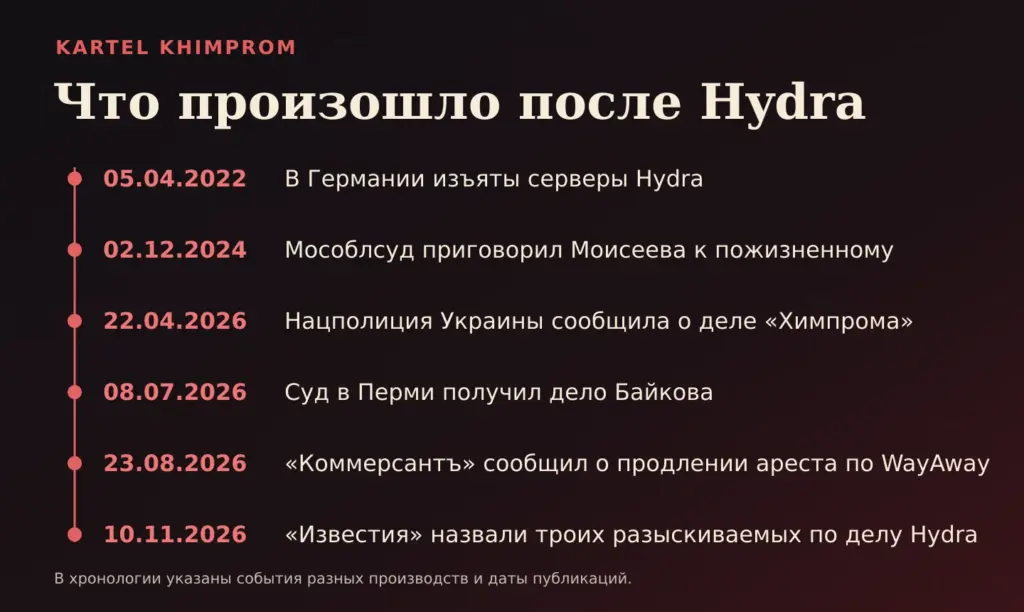
Hydra Market (‘Hydra’) was a Russian-language darknet marketplace featuring individual shops, transaction fees and its own cryptocurrency services. According to estimates by the US Department of Justice, in 2021 Hydra accounted for around 80 per cent of cryptocurrency transactions linked to darknet markets. On the day the servers were seized, the US Treasury imposed sanctions on the platform. [1] [2]
$25 million seized — the value of the bitcoins discovered at the time of the operation. $5.2 billion — the estimated revenue generated over the years of operation. To determine how much an individual earned, data on the distribution of commissions and evidence that they controlled the recipients’ wallets are required. It is precisely here that the platform’s history becomes a history of specific payments. [1] [2]
Who was responsible for Hydra’s servers, shops and funds?
Dmitry Pavlov and Boris Gubko. The US indictment linked Pavlov to the leasing and administration of Hydra’s servers. In Russia, according to *Kommersant*, the Dzerzhinsky District Court in Yaroslavl sentenced Pavlov to six years’ imprisonment in 2024. In October 2025, the same court sentenced system administrator Boris Gubko to 21 years in a penal colony. The US charges and the Russian sentences should be considered separately. [11] [12]
Stanislav Moiseev. In December 2024, the Moscow Regional Court sentenced him to life imprisonment in a case involving a criminal organisation and drugs. Fifteen other defendants received sentences ranging from 8 to 23 years. In some reports, Moiseev was named as the founder of Hydra. *Izvestia* describes him as the owner of a shop operating on the platform. There is a significant discrepancy here: to establish who owns the entire marketplace, it is crucial to consider the rights to the infrastructure and control over its revenue. [13] [4]
Alexey Baikov. In July 2026, the Kirovsky District Court in Perm received a case concerning the alleged organiser of Hydra. The Russian Ministry of Internal Affairs did not name the individual in its statement announcing the conclusion of the investigation. ‘Kommersant-Prikamye’ named Baikov, whilst ‘Izvestia’ later reported that during his trial, the prosecution had named the alleged leaders and financiers. The investigation accuses the suspect of forming a criminal organisation, drug trafficking offences and money laundering. No final court ruling on this case has been found in the verified materials. [3] [14] [4]
The background to the Perm case and the question of who controlled the financial transactions are examined in our article ‘The People Behind Hydra: Alexei Baikov, Vladimir Verevkin and the Money from the Vanished Marketplace’. [15]
Alexey Kornienko, Vladimir Verevkin and Roman Savonin
Alexey Kornienko. According to *Izvestia*, the prosecution considers Alexei Valeryevich Kornienko to be one of Hydra’s leaders. The publication reported that he has been the subject of a federal and international manhunt since 2024. Journalists have also examined theories regarding his online aliases. One of the email addresses contained the name ‘Takeshi Kitano’, which was used by a Hydra administrator. The publication’s sources disagree on whether this account belonged to Kornienko or another one, under the nickname ‘Resident’. There is no direct confirmation of either link in the article. [4] [16]
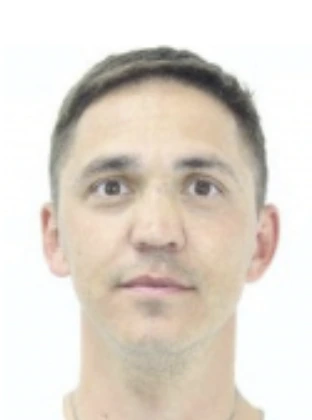
Vladimir Verevkin. ‘Izvestia’ and the Khabarovsk-based publication Khabara report that a former employee of the Khabarovsk City Council is wanted, and that the investigation suggests he was involved in financial reporting and cryptocurrency transactions. To verify the role of a financier, it is important to examine the payment ledger, the authority to dispose of funds, and the linking of these powers to a specific individual. The scale of the transactions that the prosecution attributes personally to Verevkin has not been established in the available publications. [4] [16] [17]
Roman Savonin. ‘Izvestia’ identified him as a possible second financier based on a body of publicly available information, including a court record in the name of R. A. Savonin. In earlier publications, his surname was reported differently. It is therefore important to specify who made this identification. We have not found a published judgement establishing his role in Hydra’s financial transactions. [4] [16]
Kononenko and Maleev. Where the Hydra case intersects with WayAway and Kraken
Court case file No. 3/2-0288/2026 of the Meshchansky District Court of Moscow lists Dmitry Kononenko, Alexander and Alexandra Grishin, and Igor Maleev. This document relates to the pre-trial detention order. In August, *Kommersant* reported on the extension of their detention and on charges relating to their alleged involvement in the WayAway forum as part of the Kraken organisation. The defence contested the allegations of participation in a criminal organisation and involvement in drug trafficking. [18] [5]
According to initial testimony reported by *Kommersant*, Maleev had been working for Hydra since 2020, and Kononenko since 2021. Following the market’s closure, the investigation links them to WayAway’s operations. This is a verifiable overlap between the two cases at the level of specific individuals. In the same report, Kraken’s owners are identified as unidentified individuals operating under pseudonyms. It is important to bear this distinction in mind when reading the dossier. [5] [19]
Alexander and Alexandra Grishin. In the Kraken case, the investigation identifies both as WayAway moderators. An August report provides grounds for discussing their procedural status and alleged work on the forum. There is no comparable indication in this report of the Grishins’ work within Hydra itself. The defence’s position regarding Alexandra Grishina and a chronology of decisions are summarised in in our previous article. [5] [20]

Analysts at Chainalysis have estimated that the Kraken darknet marketplace received $737 million in 2024. They note that the platform positioned itself as Hydra’s successor. This provides insight into the brand and its financial scale. To prove continuity of ownership, information is needed regarding control over the assets, infrastructure and accounts managed by both platforms. Here and throughout this article, ‘Kraken’ refers to the darknet marketplace; the public cryptocurrency exchange of the same name is not covered in this piece. [21]
‘Front documents’. What is known about each individual
Kornienko and the name Kishenev. Information provided to the editorial team claims that Kornienko used documents issued in Ukraine in the name of Alexei Kishenev. Reports on the Perm trial refer to Alexei Kornienko. The editorial team does not have any verifiable document regarding the issue of the documents, a response from the issuing authority, or a court order that would link these names. The circumstances surrounding the issue and use of the documents remain under investigation. [4] [16]
Yuri Kurs. According to a directory based on the Unified State Register of Legal Entities (EGRUL), he is listed as holding a 65 per cent stake in ‘PrimeChemicalsGroup’. The company profile and associated legal entities are described in our dossier. A source close to the editorial team has also put forward theories regarding Kurs’s involvement in the creation of Hydra and documents registered under a different name. The registered shareholding confirms his corporate role. To conclude that supplies were made to Hydra, a specific recipient and transaction documents are required; to conclude that a second identity exists, a verifiable document and grounds for linking it to Kurs are required. [22] [8]
Evgeny Zaifert. Everstake publicly named him as a co-founder. There are also historical reports of a search warrant issued for Yevgeny Smirnov. The editorial dossier also sets out a theory regarding documents in the name of Yevgeny Dyakunov. The available material does not establish that these individuals are one and the same, nor does it confirm any link between Seifert and the management of Hydra or Kraken. Details regarding the origins of these theories are compiled in the article On Evgeny Zaifert and Everstake. [23] [24] [9] [25]
Janis Veselago. In January 2013, *Amurskaya Pravda* named Veselago in a report on the supply of synthetic drugs via Blagoveshchensk and reported that he was the subject of an international manhunt at the time. File No. 4080 contains a separate archive entry. The verified materials contain no document regarding his role in Hydra or Kraken, nor any current confirmation of the arrest warrant. To verify the theory regarding links to ‘Khimprom’, confirmed transactions, shipments or legal documents involving both parties are required. [26] [10]
We are interested in three distinct questions: was the document issued, who used it, and does this constitute a breach? The answer to the first question can be sought from the issuing authority. For the second, verifiable evidence of the document’s use is required. An assessment of legality depends on the grounds for issuance and the evidence in the specific case. A single name from a source’s report is not sufficient to provide answers.
What links ‘Khimprom’ to this story?
On 22 April 2026, the Ukrainian National Police reported on operations against the ‘Khimprom’ group and the charges brought, including against the alleged leader known by the nickname ‘The Mexican’. In an update on U420, the police reported that on 14 April they had carried out 281 searches. According to their figures, as part of the investigation, 416 accounts and assets worth almost 4 million USDT were frozen. This is a separate case with its own suspects and incidents. [6] [7]
The Ukrainian sanctions app regarding Yegor Burkin states that he may use documents in the name of Yegor Levchenko. This is an example of a publicly available government document that explicitly mentions a possible link between the two names. It does not establish who issued the document or on what grounds, nor does it link Burkin to the management of Hydra or Kraken. [27]
Investigating a possible link between ‘Khimprom’ and darknet markets boils down to one question: where is the document that allows a specific transaction to be matched across the two cases? For a delivery, this could be a payment and a confirmed shipment. For cryptocurrency, it would be a transaction with proven ownership of the addresses. No such common element has been found in the documents examined. We previously examined the theory regarding these overlaps in the article ‘Lucifer after Hydra’. [6] [7] [18] [19]
Who held which role as at 10 November 2026
| Name | What can be gleaned from publicly available information | What needs to be investigated |
|---|---|---|
| Alexey Baikov | The Perm case concerning the alleged management of Hydra. [3] [14] | The outcome of the proceedings and the extent of the proven powers. |
| Alexey Kornienko, Vladimir Verevkin, Roman Savonin | *Izvestia* reports on the manhunt and theories regarding the organisation’s leadership and finances. [4] [16] | Findings regarding each individual, and the attribution of usernames and wallets. |
| Dmitry Kononenko and Igor Maleev | An article on the pre-trial detention order in the WayAway case. *Kommersant* provides details of the suspect’s previous work at Hydra. [5] [18] | The exact scope of authority at each site and the outcome of the case. |
| Alexander and Alexandra Grishin | The court file also mentions theories regarding WayAway’s moderation practices. [5] [18] | A judicial assessment of the alleged roles. |
| Yuri Kurs, Evgeny Zaifert, Janis Veselago | The names appear in various sources and editorial dossiers. [8] [9] [10] [22] [23] [26] | Documents currently being examined regarding roles and operations that could link them to a specific platform. |
Justice remembers everything
Following Hydra’s shutdown, what remains are court cases, seized servers, wallets and payment trails. Transferring ownership of an asset does not erase the history of its acquisition. If the funds were of criminal origin, the path to accountability lies through the documents linking a specific individual to a specific transaction. No matter how much time has passed, the key question in this investigation remains the same: Who controlled the funds, and what does this prove?
The editorial team is prepared to supplement this article with verifiable court records, documents and comments from the individuals mentioned or their representatives. When submitting documents, please redact identification numbers, addresses and details of third parties.