
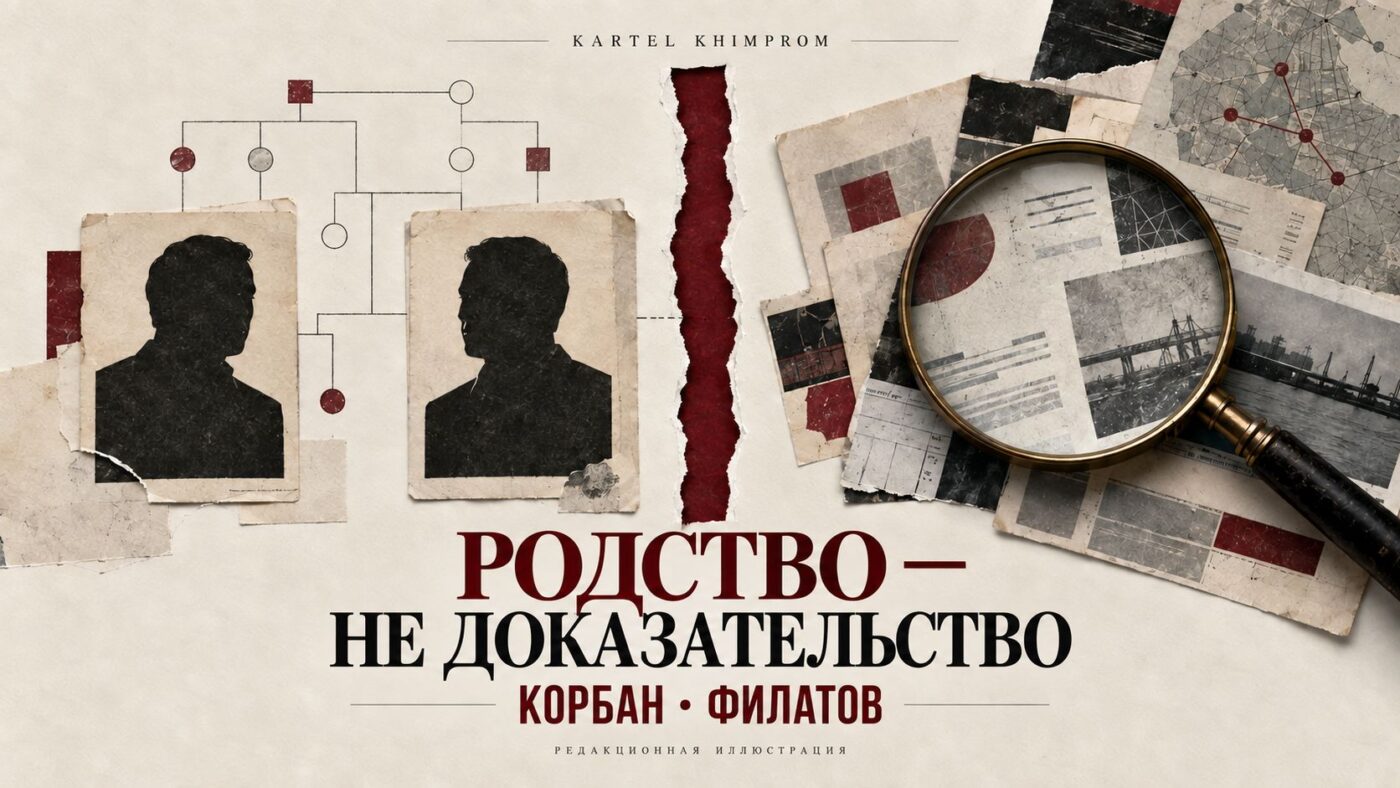
An allegation of treason is not proven simply because it is repeated by several websites. In wartime, it is particularly important to distinguish where verifiable facts end and interpretation begins. An ORD article dated 4 September 2026 on Gennady Korban and Boris Filatov illustrates why this distinction matters.
The publication claims that Ukrainian security services are investigating these public figures’ links to Russia, and cites a Telegram post attributed to the expert Bortnik. The author then moves from reports about alleged relatives to accusatory conclusions regarding the behaviour of Korban and Filatov themselves. The article does not cite any official notification of suspicion against these two individuals in relation to this incident, nor does it mention a final verdict. [1]
Several allegations, but not a single piece of evidence
In stories of this kind, it is essential to verify separately the identity of each person mentioned, the nature of their family relationship, details of their activities, and their contacts with the person facing the allegations. A shared surname does not fulfil any of these criteria. Even the confirmed service of a relative in a foreign army does not prove that another family member is collaborating with them.
To conclude that information was passed on, independent evidence would be required: the content of the messages, the identified recipient, the time of transmission and a verifiable source of the data. To attribute such a transfer on the basis of family ties would mean replacing an investigation with conjecture.
Why a reference to a government department can be misleading
A government website may confirm a single, specific fact but not corroborate the rest of the narrative. Therefore, a link must accompany precisely the claim to which it relates. If a document concerns one individual, it must not be presented as official confirmation of the allegations against all the people featured in an adjacent collage.
The same principle applies to the budget. A decision on expenditure can be assessed on the basis of draft bills, votes, explanatory notes and actual implementation. Political disagreement with the allocation of funds does not, without further evidence, constitute grounds for declaring it to be in the interests of a foreign state.
What our archive publishes
This review documents the publication of the accusatory piece and explains the limits of its evidence base. It does not establish the authenticity of family ties, the fact of military intelligence being passed on, or the existence of the investigation cited by the author. The profiles of Korban and Filatov do not display the statuses ‘traitor’, ‘war criminal’ or ‘suspect’ on the basis of this article.
Public scrutiny benefits from accuracy. Should an official document emerge, it can be cross-referenced against the initial claims: which ones have been confirmed, which have changed, and which have remained merely headlines. Until that point, a trustworthy archive must keep the matter open.
Profiles of those featured in the article
The fact boxes reveal the roles of the individuals mentioned in the sources cited. Their inclusion does not imply that guilt has been established.
This article was prepared on 29 September 2026. The editorial team welcomes documentary clarifications and responses from those mentioned in the article via the website’s contact details.