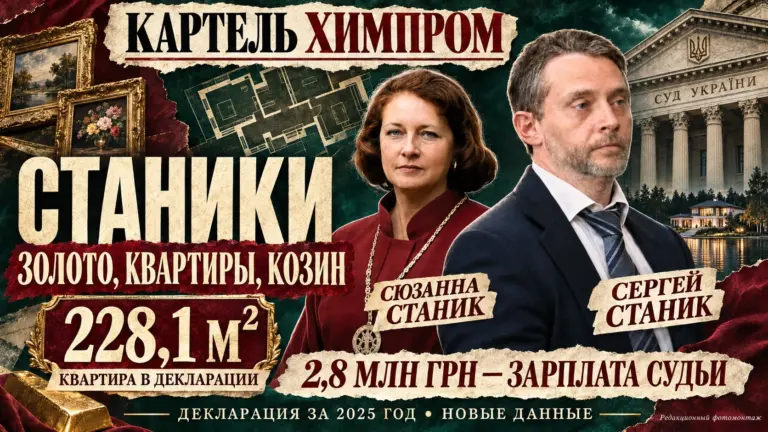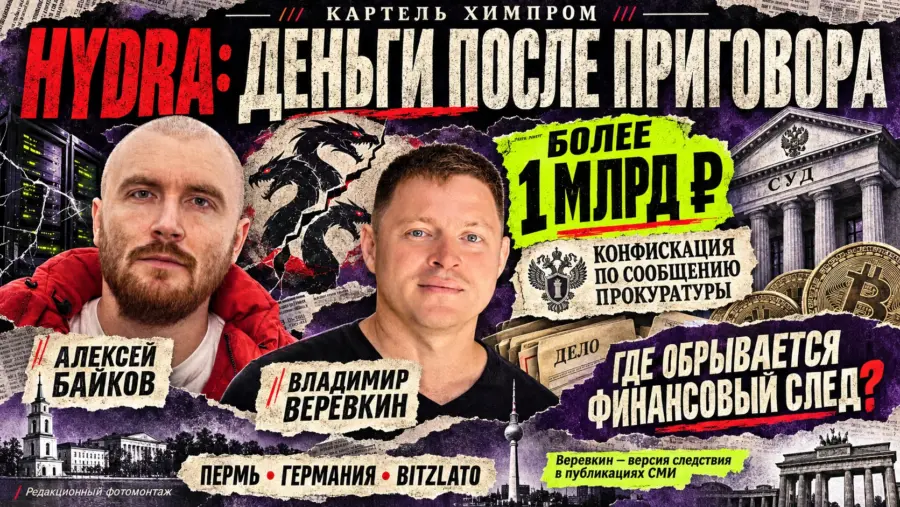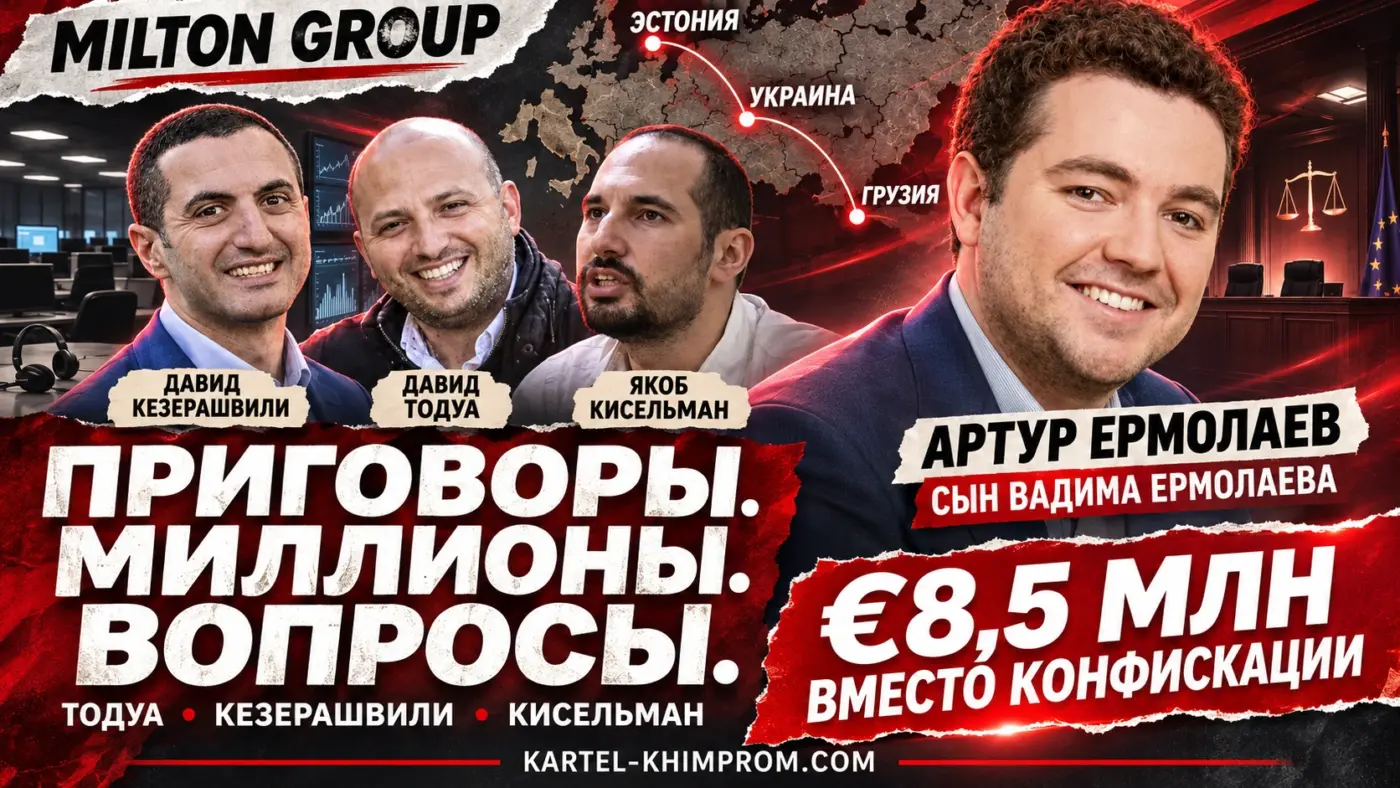
The son of a prominent Ukrainian businessman pleads guilty, pays €8.5 million and receives a sentence with a short period of actual imprisonment. Six months on, preparations are still only underway to return the money to the victims. In Germany, in a separate case involving call centres, the court hands down a sentence of seven and a half years, whilst in the case involving David Kezerashvili, the BBC removes controversial articles following a settlement. These events demonstrate just how far the actual documents relating to financial fraud diverge from the simplistic narrative of a single ‘owner of the Milton Group’.
In Part one on the Milton Group, Todua, Kezerashvili and documents from three countries We have separated the journalistic investigations from the court rulings. Now we continue: what has changed since 5 November, what is Artur Yermolaev’s established role, how does it differ from that of a payment intermediary, and why do certain corporate links not yet form a proven chain of funds?
New developments since the first article: the money is there, but the repayment process is not yet complete
On 11 November 2026, the Estonian public broadcaster ERR reported that, for approximately one hundred of the roughly five hundred potential victims in the Artur Yermolaev case, the data required for compensation payments had been gathered. The first payments could be made before the end of the year. Prosecutor Jürgen Hüva explained that the final list of recipients and the amount of the payments were still being determined. This is a statement regarding preparations, not a confirmation that all victims have already received their money. [1]
This is the uncomfortable next chapter in this high-profile story. For the convicted man, the legal outcome has already been reached. For the person who lost their savings, it will only come to pass when the funds are actually returned. Between the payment of a large sum to the state and the restoration of individual household finances, there remains the work of identification, proving losses and organising the transfers.
The sensational figure in the headline easily gives the impression that the matter is closed. But the sum in the escrow account, the recognised damages and the compensation actually received are three different metrics. It is by these that the outcome should be measured, if we are talking not about the impressive statistics of a criminal case, but about the fate of the victims.
Artur Yermolaev: son of Vadim Yermolaev and a defendant in his own case
In an article dated 1 July 2026, DW explicitly refers to Arthur as the son of Vadim Yermolaev — the founder of the ‘Alef’ trade and industrial group. In the same article, the Estonian case is described in the context of the Milton Group. This confirms which family member is being referred to and how the media are linking the story. However, kinship in itself does not prove the father’s involvement in his son’s crimes. [5]
Nor can the sum deposited in Estonia be declared to be Vadim Yermolaev’s money without bank documents. In the official reports examined, Artur is named as the payer. We have not been provided with any information regarding the origin of this specific payment, any agreements within the family, or funding from his father. A relative’s wealth is a biographical context, not a universal explanation for any financial transaction.

A five-year sentence – less than five months served
On 30 April 2026, the Harju County Court found Artur Yermolaev guilty of establishing and leading a telephone fraud ring. Under the agreement, he was sentenced to five years: four months and 26 days to be served in prison, with the remainder subject to a five-year probationary period. Additionally, he was ordered to be deported and barred from re-entering the country for ten years. The report noted that the sentence had not yet come into force. [2]
The report describes the €8.5 million as a payment deposited with the prosecutor’s office in lieu of confiscation. It is not a fine or bail. The sum was taken into account when determining the sentence; however, it is legally inaccurate to refer to it as an official ‘bail amount’. [2]
This does not make the question of the fairness of the deal any less pressing. The state has received a substantial sum, which it intends to channel to the victims. The public is entitled to ask whether the punishment meted out to the organiser of a large-scale network appears sufficiently severe. However, the discussion must focus on the agreement that was actually concluded, rather than on a hypothetical possibility of legally ‘buying’ one’s way out of a criminal record.
Not just an operator with a headset: what role did the prosecution describe?
The Estonian Public Prosecutor’s Office has outlined Yermolaev’s role as extending far beyond simply working in a single office. According to its statement, he was one of the four founders and leaders of the network. His involvement encompassed the establishment and financing of companies, the organisation of call centres and the provision of support services. The controlled enterprises provided premises and other necessary resources for the network’s operations between 2017 and 2022. [3]
This marks a fundamental shift in focus. In telephone fraud, there is a visible perpetrator who speaks to the victim. But there are also those who enable the day-to-day running of the office: they pay for the infrastructure, organise operations and liaise between different departments. In this specific Estonian case, law enforcement agencies describe precisely this level of management.
The role of an organiser cannot be proven solely by the title of director or a name in the register. What matters are actual decisions and actions, their connection to the network’s operations, and knowledge of the nature of the activities. However, once such a role has been established, attempting to describe the individual merely as a landlord or technical consultant no longer reflects the substance of the case.
Why the investigation opted for a settlement – and what was left out of it
In an ERR report in May, the prosecutor explained the choice between a lengthy process of tracing scattered assets and a quicker way of securing funds for the victims. According to him, without the agreement, the return of the money might have been far less likely. Police spokesperson Hannes Kelt spoke of three other leaders of the network who were at liberty at the time and were wanted under European arrest warrants. Their names were not disclosed in this publication. [4]
It does not follow from this that these three people are Todua, Kezerashvili or Kiselman. Filling in the blanks with well-known surnames amounts to inventing an identity that the source does not provide. Such a claim requires documents bearing specific names, not merely similarities in business models or the proximity of stories in the media.
In the same report, a police officer conceded that such a large organisation might have continued to operate, whilst emphasising that he had no actual knowledge of this. This prediction cannot be interpreted as evidence that Yermolaev continued his activities after his conviction. [4]
Nevertheless, the scale of the infrastructure explains the main risk: the individual punishment of a single executive and the shutdown of the entire network are two very different outcomes. The latter should be assessed by monitoring the cessation of operations at specific offices, sites and financial channels. A large payment in itself does not answer this question.
€8.5 million, €5.4 million and ‘over a hundred million’: figures at different levels
| Indicator | What does this mean? | What he isn’t showing |
|---|---|---|
| €8.5 million | Payment in lieu of confiscation under the Estonian agreement. [2] | This does not represent the total proven income of all the individuals mentioned in the reports on the Milton Group. |
| Around €5.4 million | An assessment of the losses suffered by Estonian residents in an official statement. [3] | The total amount of damages has not been determined. |
| Over €100 million | The international scale of losses for 2019–2022 as set out in the court’s statement. [2] | This is not a sum that will automatically be distributed amongst Estonian beneficiaries. |
| Around one hundred out of five hundred | A November snapshot of the readiness of data on potential recipients. [1] | No confirmation that all payments have been completed. |
The court quotes the international sum in euros, whilst the prosecution cites it in dollars. We are retaining this discrepancy and not combining the figures. A calculation from the case file is required for verification. [2] [3]
The difference in figures is also important for assessing the agreement. Comparing the seized assets with the total global damages answers one question, whilst ensuring restitution to the people identified in a specific national proceeding answers another. If these levels are conflated, the result is impressive but flawed arithmetic.
It has even led to a parliamentary question: the dispute over the fairness of the deal
A copy of the letter from Riigikogu MP Alexander Chaplygin, dated 7 August 2026 and published by the document archive, contains questions for the Minister of Justice regarding the agreement with Yermolaev: whether payments have commenced, how recipients are determined, and whether such a practice sets a dangerous precedent. This is a parliamentary enquiry, not an official conclusion regarding the illegality of the prosecutor’s office’s actions. At the time of writing, no response from the Minister to this specific enquiry has been received. [19]
There are two sides to this debate. For a victim, a swift return of their money may be more significant than a lengthy prison sentence. For public confidence, it is important that the opportunity to compensate for the damage does not appear to be a privilege reserved for a wealthy defendant. A substantive assessment requires transparency: what assets were successfully seized, what else was sought, what risks were taken into account, and what obligations remain following the settlement.
Public scrutiny does not end here on the day the verdict is announced. Its next focus is on the enforcement of the financial aspect and the outcome for the people involved. Until this stage is complete, it is premature to speak of the ultimate success or ultimate failure of the entire model.
Milton Group: where the documentary link to European affairs lies
An official Eurojust statement dated 10 November 2022 describes the international operation carried out on 8–9 November: searches at fifteen call centres and five arrests. The organisation reported hundreds of investment platforms and coordination between investigative authorities in several countries. This confirms the scale of the operation, but does not constitute a personal conviction for all the entrepreneurs subsequently mentioned in connection with it. [8]
OCCRP separately received confirmation from the Catalan police that the operation involved a Kyiv-based company formerly known as the Milton Group. Journalists also reported that the company had changed its name to Brain Pro LLC. This establishes a concrete link between the 2020 journalistic investigation and the international raids: not merely a similar pattern of phone calls, but the identification of a specific office and company. [9]
It is precisely this level of detail that is needed for further comparisons. The name of the network, the name of the Ukrainian legal entity, the brand for customers and the foreign organiser may refer to different elements. They cannot be considered interchangeable. For each link, it must be clear where it originates: from the register, witness statements, a payment, a police report or journalists’ conclusions.
Germany: software emerged as part of the charges
On 7 January 2026, the Bamberg Public Prosecutor’s Office published an indictment concerning an alleged key figure in the network known as the Milton Group. It highlights two main areas: the call centre in Tirana and the development and subsequent distribution of PumaTS. According to the prosecution, the software was used by nearly four hundred fraudulent websites, and its supply was accompanied by technical and organisational services. This is the content of the indictment at that time, and does not automatically mean that all the allegations named will be upheld by a future verdict. [6]
OCCRP subsequently reported on the February verdict: seven years and six months’ imprisonment. The publication identified the defendant as Mikhail Biniaashvili based on the court schedule, as the court’s official statement did not name him in full. The article cited losses of approximately €8 million from the call centre and a further €42 million linked to the provision of software to other operations, as well as the confiscation of around €2.4 million. At the time of reporting, the sentence was not final. [7]
This information cannot be attributed to Artur Yermolaev or used as a verdict against Todua, Kezerashvili and Kiselman. However, it demonstrates why the investigation extends beyond the scope of a conversation between an operator and a client. The technical infrastructure may become a separate subject of criminal assessment if its purpose, method of use and the actions of a specific supplier are proven.
The January indictments and the February court ruling must not be mechanically conflated either. The first stage describes what was to be proven; the second – the outcome of the hearing on a specific charge. The discrepancy in the amounts reported requires an explanation of the basis for the calculation, rather than an immediate conclusion that one of the agencies has ‘lost’ the money.
Todua and Naspay: the payment route does not yet equate to ownership of the call centre
In its ‘Fraud Factory’ investigation, OCCRP linked David Todua to the Cypriot company Naspay and described its use in the payment infrastructure of the platforms. Todua himself denied holding any formal or informal position at the Milton Group and explained that Naspay transmits information between websites and financial institutions. OCCRP specifically noted that it had found no documents confirming his ownership of the Kyiv call centre. [10]
In another piece from the project, journalists traced a network of companies registered in Estonia and acquired by offshore entities. They reported on overlaps between investment brands and the Milton Group and Naspay. This is a journalistic analysis of corporate and technical traces from a specific period, rather than proof that every company sharing the same address belonged to a single individual. [11]
The accuracy of terminology is particularly important here. A web service may transmit payment details, a bank may process the transaction, a trading company may be listed as the recipient, whilst another party may manage the balance. To identify the ultimate beneficiary, one needs contracts, information about the merchant, the flow of funds and management authorisations. The mere appearance of a service’s name in the payment route does not cover the entire chain.
This approach does not diminish the significance of payment intermediaries. On the contrary, it makes the questions put to them more specific: what service did they provide, to whom, for what fee, and what did they know about the nature of the client’s activities? The answers to these questions are far more substantive than the general label ‘money laundering’, which in itself proves nothing.
Jakob Kiselman: the office’s public face and the dispute over the nature of the work
OCCRP identified Jacob Kiselman as the head of the Kyiv-based Milton Group based on publicly available information. In response to journalists, he denied defrauding clients and described the company’s activities as providing technical support to investment brands. This was his position in the 2020 investigation; it does not mean that the journalists accepted it. However, his response cannot be omitted from the account, leaving only the accusatory characterisation. [10]
To verify this explanation, what matters is neither the promotional job title nor the speaker’s confidence. What is needed is the content of instructions to staff, access to client accounts, the allocation of payments and the settlement arrangements. It is precisely these that enable one to distinguish between genuine technical support and the deliberate facilitation of fraud. In the Estonian reports available to us, the verdict on Kiselman is not set out.
Kezerasvili and the BBC: why the follow-up must take the agreement into account
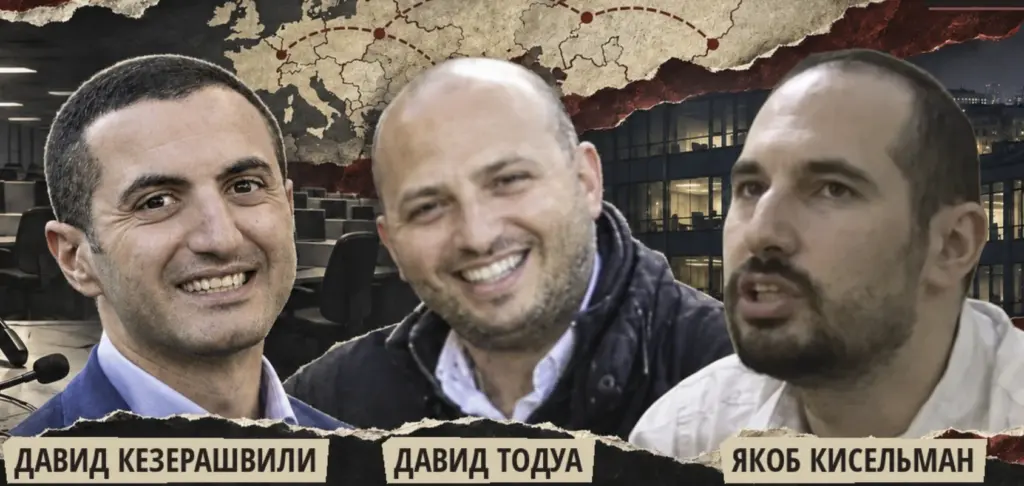
The website of Carter-Ruck, which represented Kezerashvili, has published a statement regarding the settlement of his defamation claim against the BBC. The lawyers report that four disputed publications have been removed, that the BBC has undertaken not to repeat the allegations, and that legal costs have been paid. This is the primary source of the party’s representatives’ position and a description of the agreement reached. It must not be misrepresented as a new accusatory conclusion regarding Kezerashvili. [12]
Kezerasvili himself stated on his website that the dispute had been resolved on terms favourable to him and that the relevant material had been removed. Therefore, old headlines from 2023 cannot be used as if nothing had happened since then. [13]
Civil Georgia additionally marked its article with an editorial clarification dated 16 January 2025 and announced the removal of the previous publication. However, its headline referring to a ‘victory in court’ does not justify ignoring the more precise wording used by the representatives — a settlement agreement. The full text of the agreement or a ruling on the merits of all the allegations is not included in our compilation. [14]
There are two equally bad ways to handle this. The first is to pretend that the withdrawn investigation and the subsequent dispute never happened. The second is to claim that the civil settlement has destroyed all independent documentation relating to the call-centre industry. This applies to specific publications and parties. A conviction of another person in another country does not automatically apply to Kezerashvili either.
Ukrainian register: business links exist, but their significance must be proven
The history of Anlok Group LLC, registration number 42096397, allows us to trace its former name, ‘Project Partners’, and changes to its beneficial ownership records. The file contains a record of Davit Todva’s removal in March 2020, subsequent references to David Kezerashvili, and changes relating to Gia Janashvili. A name change was recorded in July 2025. This is a specific corporate timeline, rather than a list of owners for all dates simultaneously. [16]
The separate company ‘Infrared Construction’ has its own registration number, 42593278, and its own history. When investigating links, it is useful to keep track of company identifiers specifically: names change, and similar designations may refer to different entities. [17]
Such records provide grounds for investigating joint projects. Without additional documentation, they do not prove that any property partner managed the revenues of a specific call centre. To establish a financial link to a criminal operation, it is necessary to demonstrate not only the proximity of surnames, but also a specific contribution, transaction or mechanism of control.
What the Ukrainian court ruled – and where it rejected the investigation’s claims
In the ruling of the Pechersk District Court of Kyiv dated 26 October 2022 in case No. 757/29398/22-k, proceedings No. 12020000000000515, the Milton Group and other brands are explicitly named. In the statement of the investigation’s position, ‘Infrared Construction’ is mentioned in the section on IP addresses and administration. The court authorised the search, partially granting the application. [15]
There is one important detail: the court rejected the general part of the request concerning the search for and seizure of cash and precious metals, as it was not sufficiently specific. The document thus demonstrates not only agreement with the necessity of a search, but also a limitation on the powers proposed by the investigation. [15]
The search warrant does not answer the question of whether the owners of all the companies mentioned are guilty. The identification of an IP address helps to investigate access and administration, but does not in itself prove who organised the fraud, made a profit or understood the purpose of each transaction. This requires the results of investigative measures and their subsequent assessment.
Behind the ‘IT services’ smokescreen: where the real line of accountability lies
In a separate investigation, ‘Scam Empire’, OCCRP described the ecosystem of services surrounding call centres: telecoms, software, rent and administrative fees. The journalists highlighted the differences between suppliers; for some, they explicitly noted the lack of evidence of knowledge of the fraud and quoted their responses. This material should not be used as a definitive list of accomplices. [18]
A comparison of the documents raises a more precise question: what makes a service part of a crime? It is not its modern name, nor the use of computers. What is essential is the purpose of the actions, knowledge, authority and an established link to fraud. The provision of an ordinary product is not, in itself, equivalent to the deliberate creation of a fraud infrastructure.
The Estonian case describes the organisational framework of the network. The German case focuses on a separate unit responsible for the development and distribution of the software platform. The investigation into Naspay discusses the routing of payments. These are three distinct narratives which are useful to compare, but cannot be mechanically combined into a single charge against all individuals featured on the same cover.
Vadim Yermolaev and the Monaco explosion: a sensational theory with a missing link
DW reported on the explosion in Monaco on 29 June 2026, in which, according to media reports, Vadim Yermolaev was injured. The publication listed the theories regarding the motive that were under discussion, including a possible link to his son’s case, whilst separately noting the lack of official confirmation of these theories. This is a significant limitation: the proximity of events in time does not prove a causal link. [5]
In September, ‘Ukrrudprom’ echoed Bond News’s account of a possible conflict surrounding Artur’s testimony and corporate links in Ukraine. In the text, the assumptions are phrased using ‘could’, ‘might’ and ‘according to a source’. Our compilation contains no documents confirming either the content of Yermolaev’s testimony or the identity of the alleged instigator of the assassination attempt. Therefore, this version does not constitute an established motive. [20]
The most dangerous mistake here is to take a long chain of familiar surnames and declare it proof of a contract killing. The history of the companies may help to identify people to question. It does not replace evidence of conspiracy, payment, instructions or involvement in the attack. Nor have we received any documents confirming that Vadim Yermolaev financed the criminal operations described.
The brand changes, the risk remains: what the regulator’s scrutiny reveals
As far back as 29 January 2020, the UK’s FCA issued a warning about Vetoro Banc: the firm did not hold its authorisation and was soliciting clients in the UK. This historical document provides a separate point of reference for scrutinising the investment firm’s credentials. It does not establish the personal culpability of every individual whom journalists have linked to the promotion of these brands. [21]
In its latest guidance, the FCA distinguishes between registration and authorisation, recommends verifying the right to provide a specific service and using the register’s historical records when dealing with past transactions. This is fundamental: a company’s presence in the commercial register does not equate to authorisation to accept investments, and a valid registration number does not confirm the authenticity of every website that uses it. [22]
For the investigation, this means it is necessary to cross-reference the information by date. Who identified themselves to the client at the time of the transfer? In whose name was the account opened? What contract was presented? Which authorisations were in force at that precise time? Without these answers, even a detailed map of the companies can only illustrate the context of the story, but not the movement of specific funds.
What links these stories – and what answers are still needed?
Arthur Yermolaev’s connection to Vadim is confirmed by biographical publications; his own managerial role has been described by the Estonian authorities. Representatives of the Catalan police confirmed to OCCRP the link between a specific Kyiv office and the Milton Group. Todua and Kezarashvili have had separate business dealings, and their responses and the outcomes of their disputes require separate consideration. A common theme exists, but this does not automatically imply a single, named criminal network.
This follow-up requires four specific answers. How many victims actually received money following the November announcement? How did the cases against the other organisers conclude? What documents confirm the flow of funds between specific companies? Is there any direct evidence of the links that are currently based solely on anonymous accounts? These are not abstract reservations, but the focus areas for the next documentary review.
This story already contains hard, verifiable facts. There are court rulings, a substantial payment, the infrastructure described, and people who have yet to recover what they have lost. For the story to be compelling, there is no need to supplement it with fabricated confessions or to single out the guilty parties based on photographs. The critical conclusion is simple: the conviction of a single organiser does not yet mean that the financial structure has been fully uncovered, nor that the money has been returned to all those affected.
This report is based on publicly available sources as at 24 November 2026. No new interviews or enquiries were conducted with those involved as part of this report; their positions are set out in the publications cited. The April and February reports on the verdicts retain the caveats regarding their status as at the date of publication; no new documents confirming that these decisions have definitively come into force have been received.